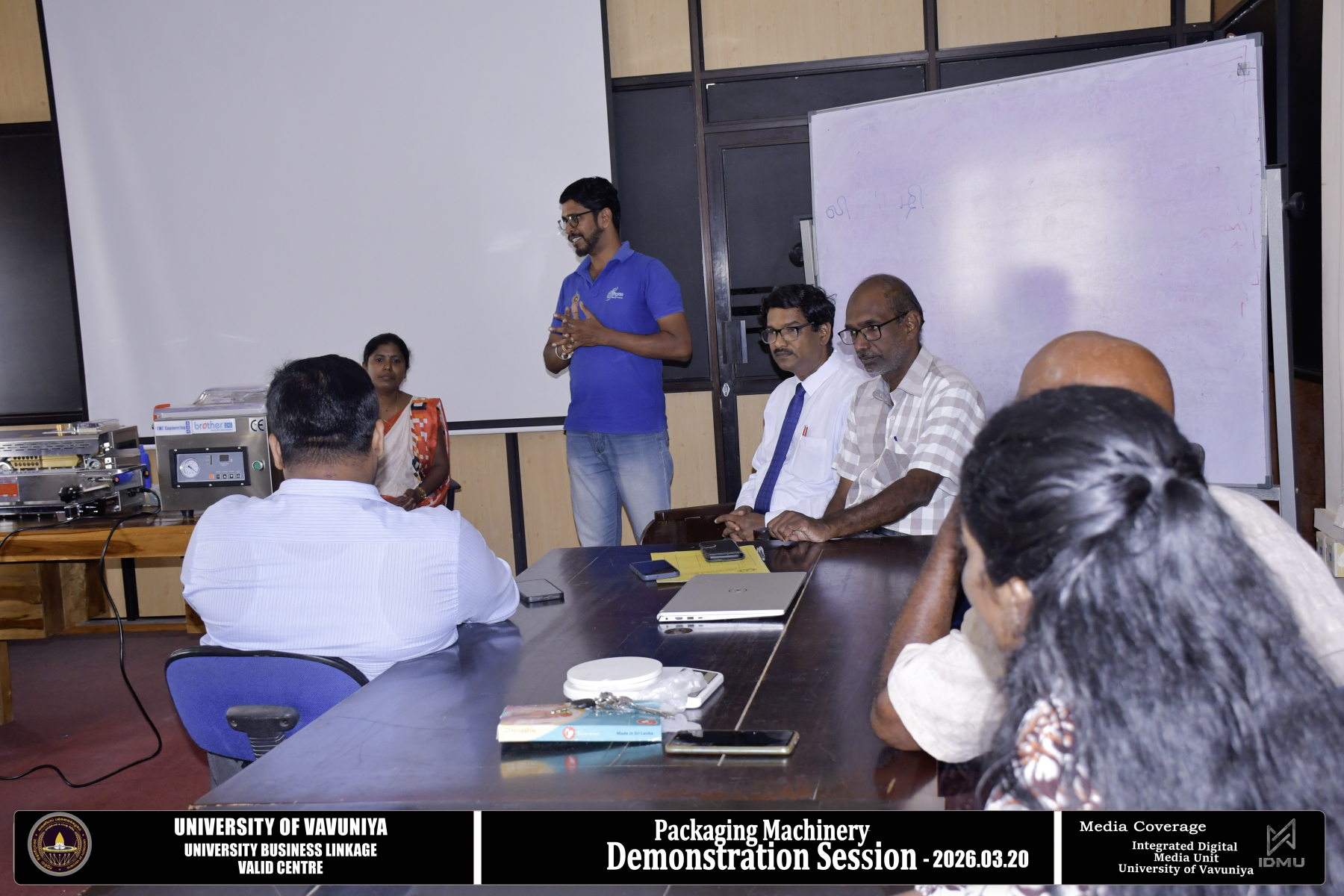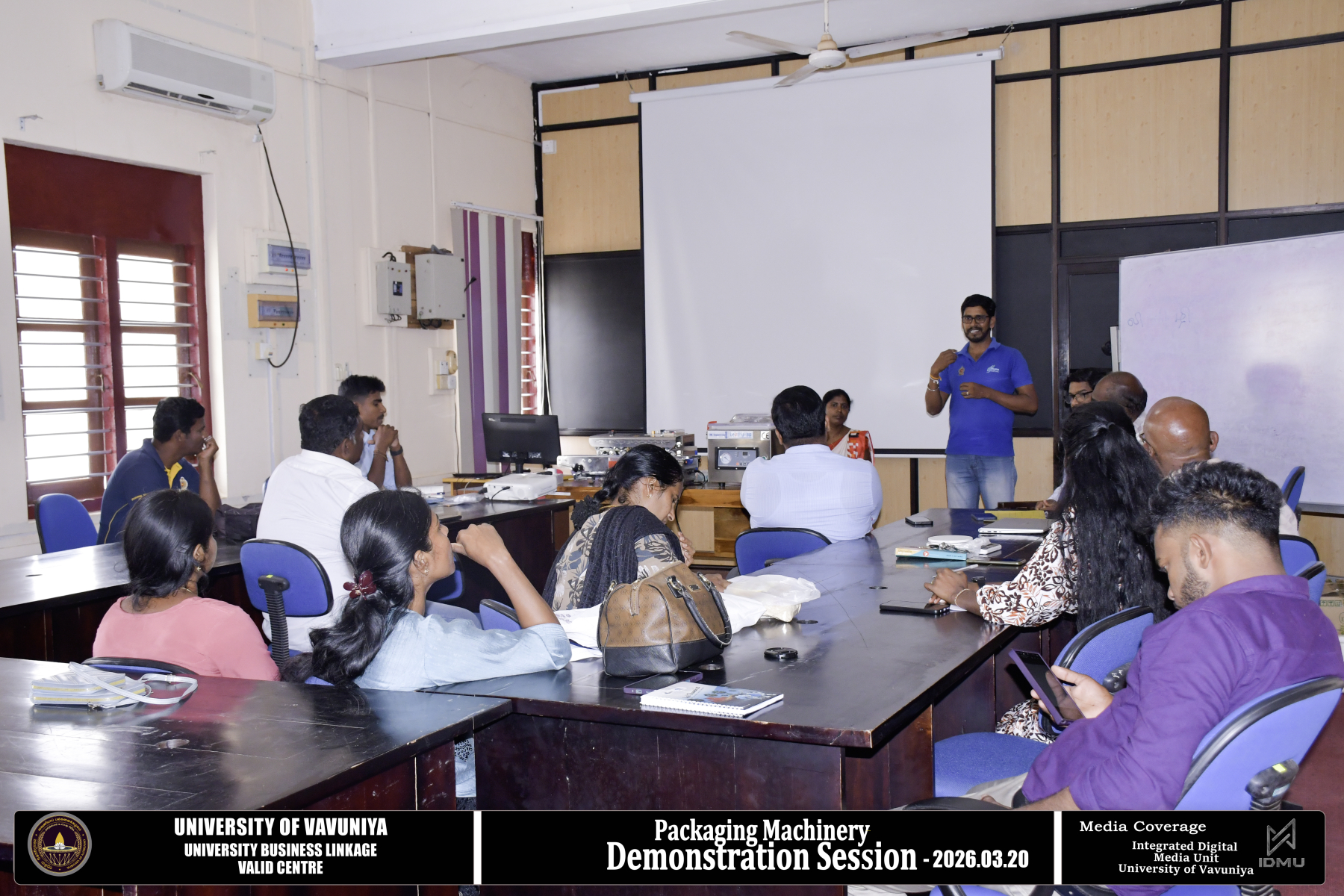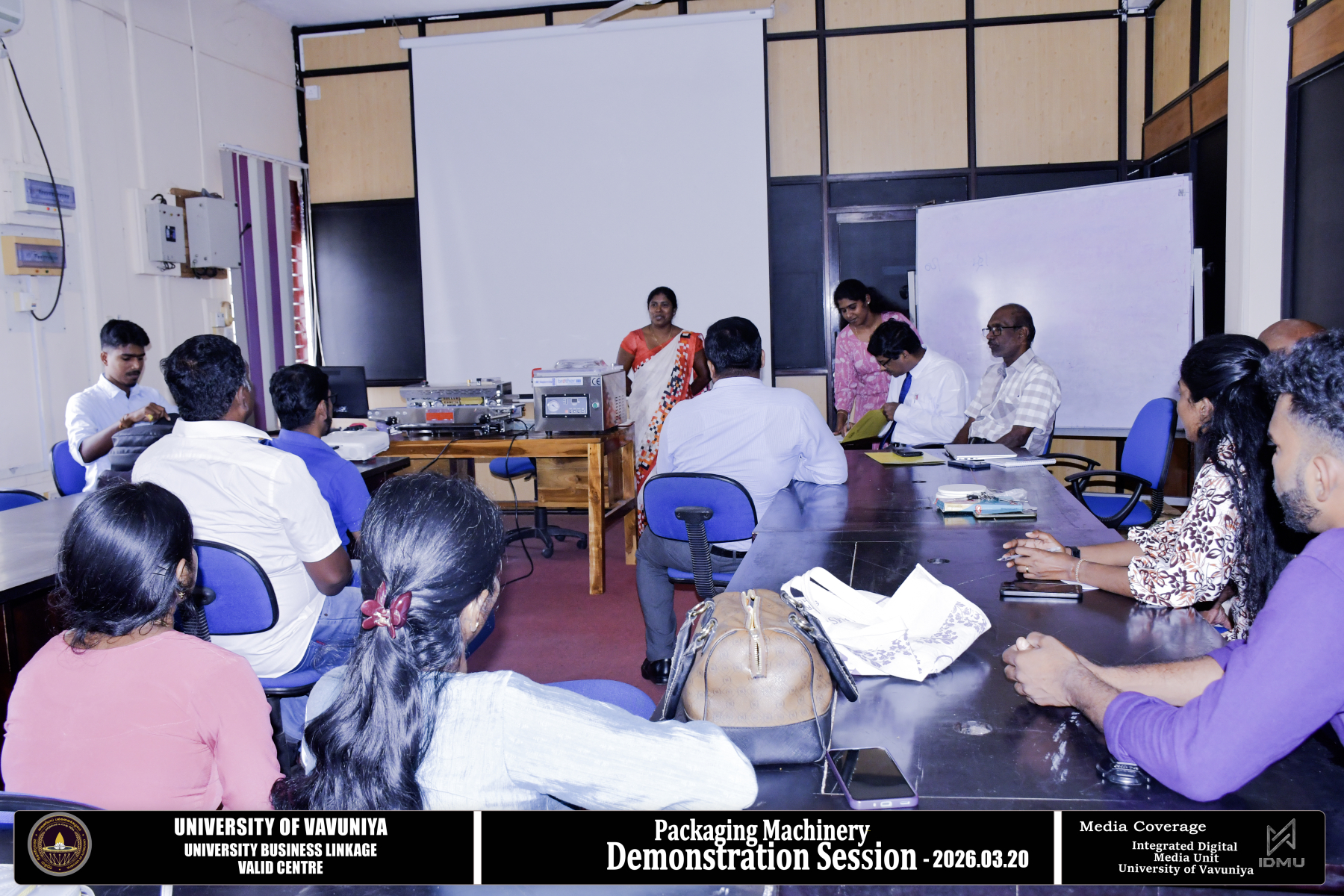





The VALID Centre recently conducted a highly practical packaging machinery demonstration session on 20 March 2026. This vital program took place from 9:00 a.m. to 12:30 p.m. at the VALID Centre, located within the Park Road Premises of the University of Vavuniya.
The VALID Centre organized the session in close collaboration with the University Business Linkage (UBL) Cell. The main objective was to strengthen the technical capacity of Small and Medium Enterprise (SME) entrepreneurs. In particular, the organizers focused on improving practical knowledge and industrial skills in food packaging and preservation.
Official Participation and Industrial Collaboration
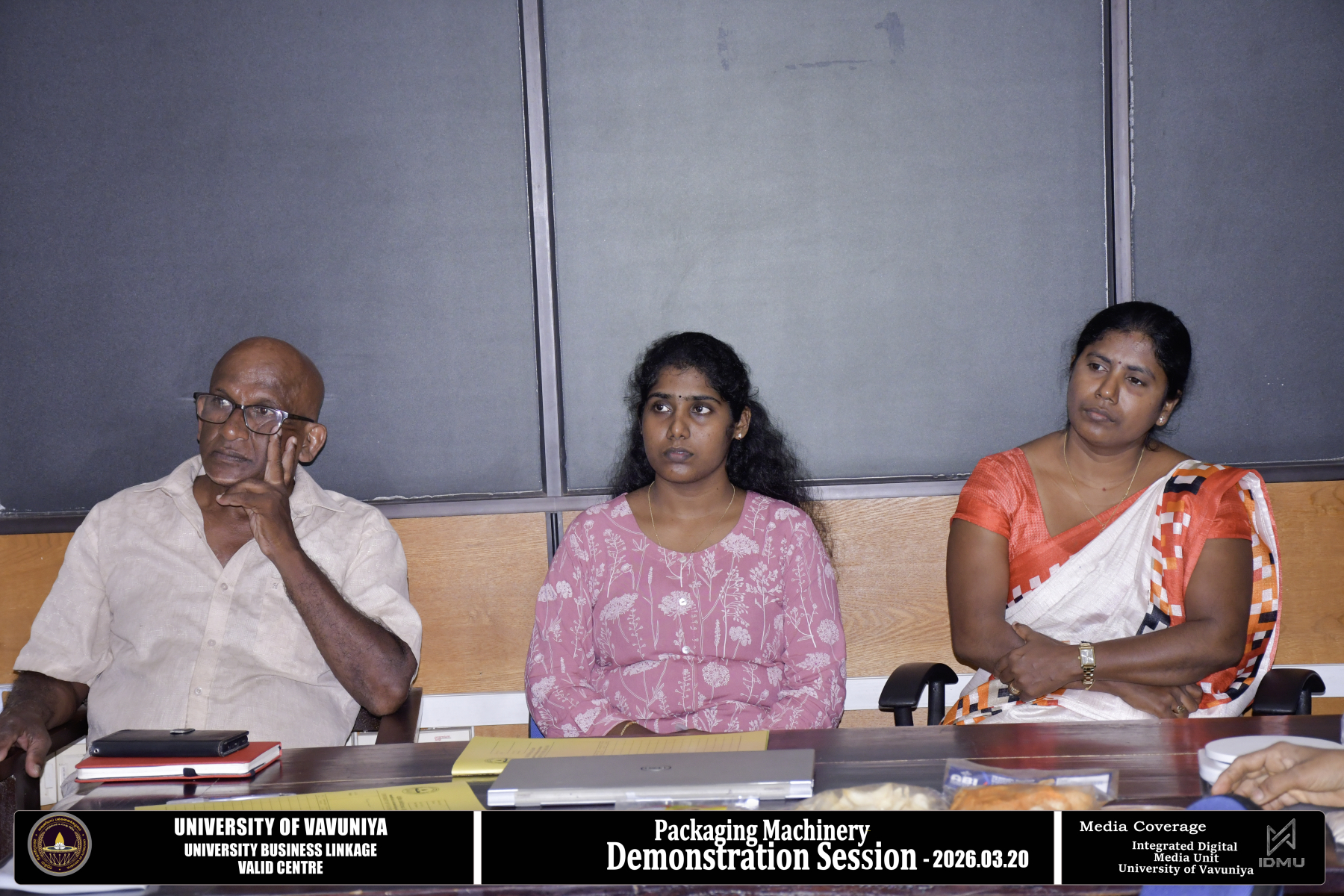
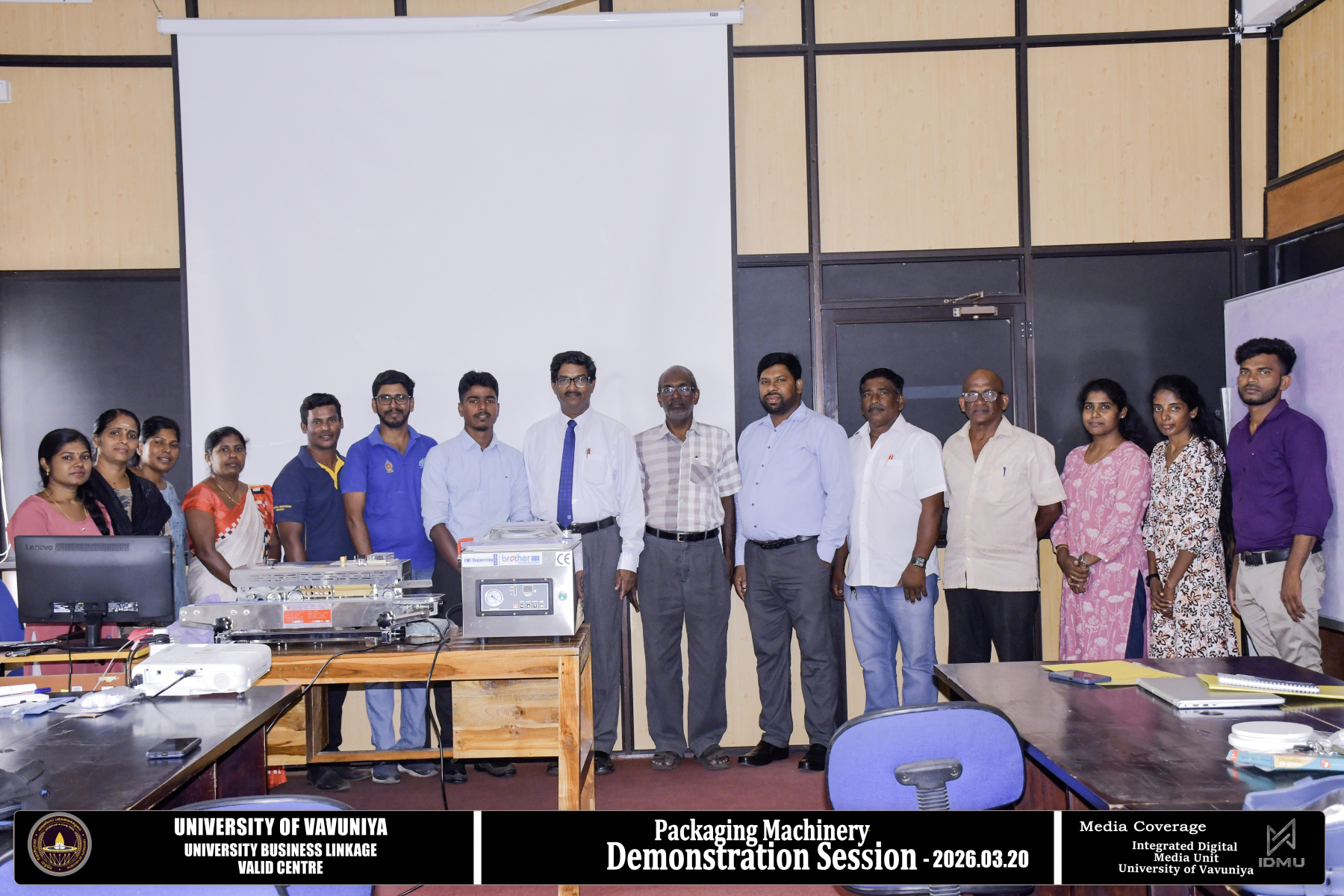
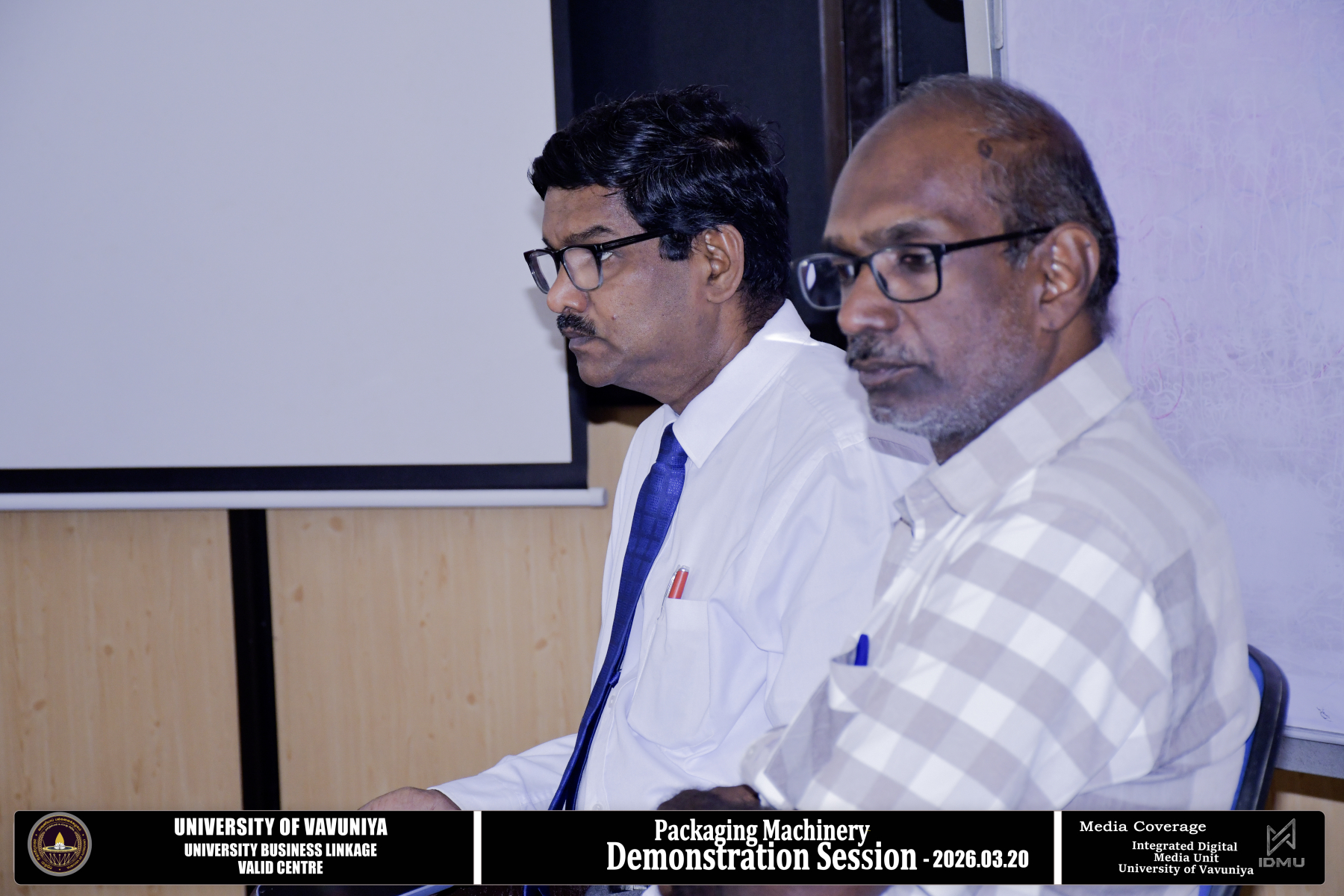
Several key university and regional industry officials attended the event to show their support. The administrative delegation included Prof. A. Atputharajah, Vice Chancellor of the University of Vavuniya, and Mr. M. Nanthakumar, the Deputy Registrar.
In addition, Ms. S. Mathivathany (UBL Director), Mr. P. Sasitharan (SME Sector Coordinator), and Mr. M. Thavendran (District Vidatha Officer, Vavuniya) participated actively. Their presence highlighted the importance of bridging academic resources with regional manufacturing needs.
Technical Highlights of the Packaging Machinery Demonstration Session
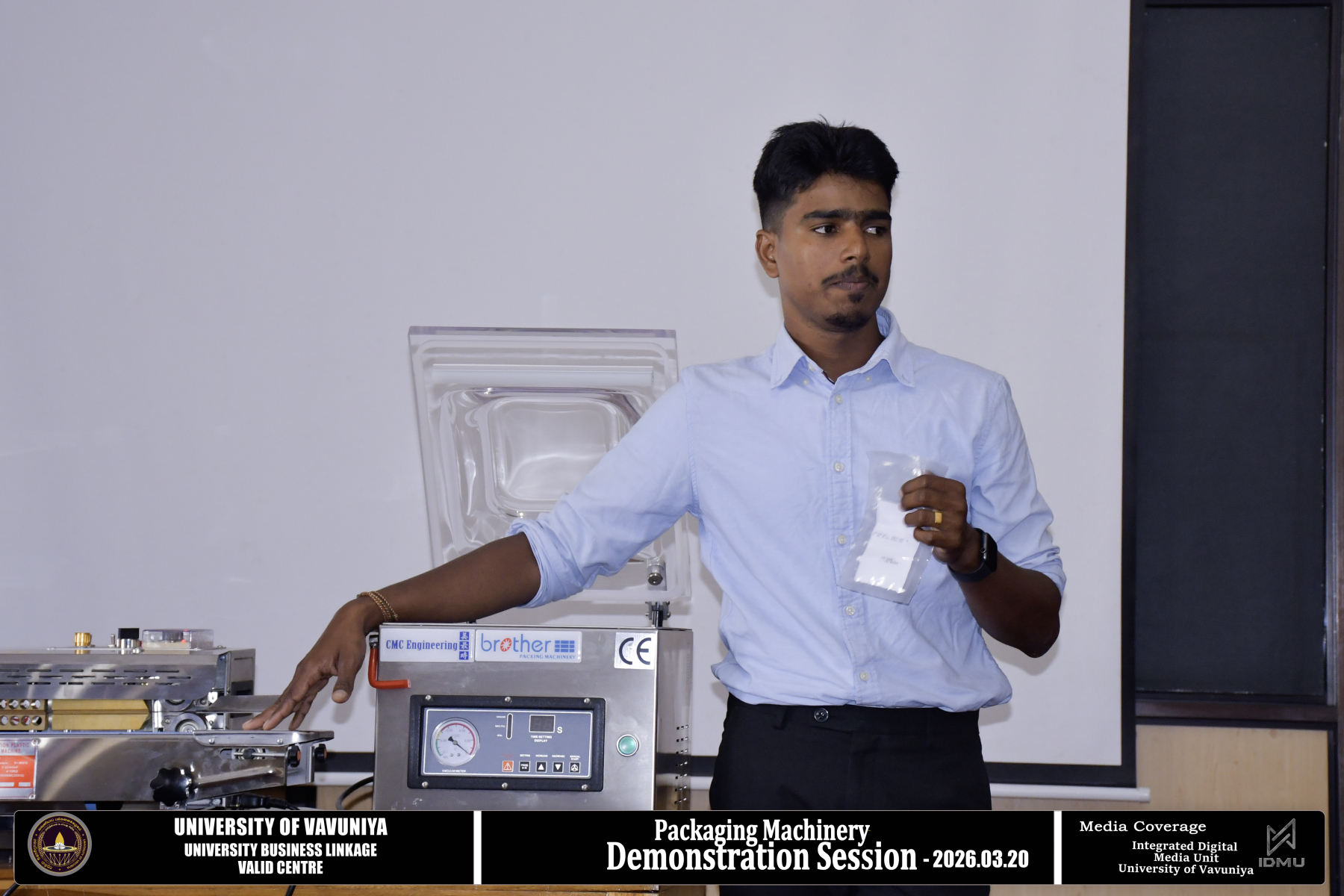
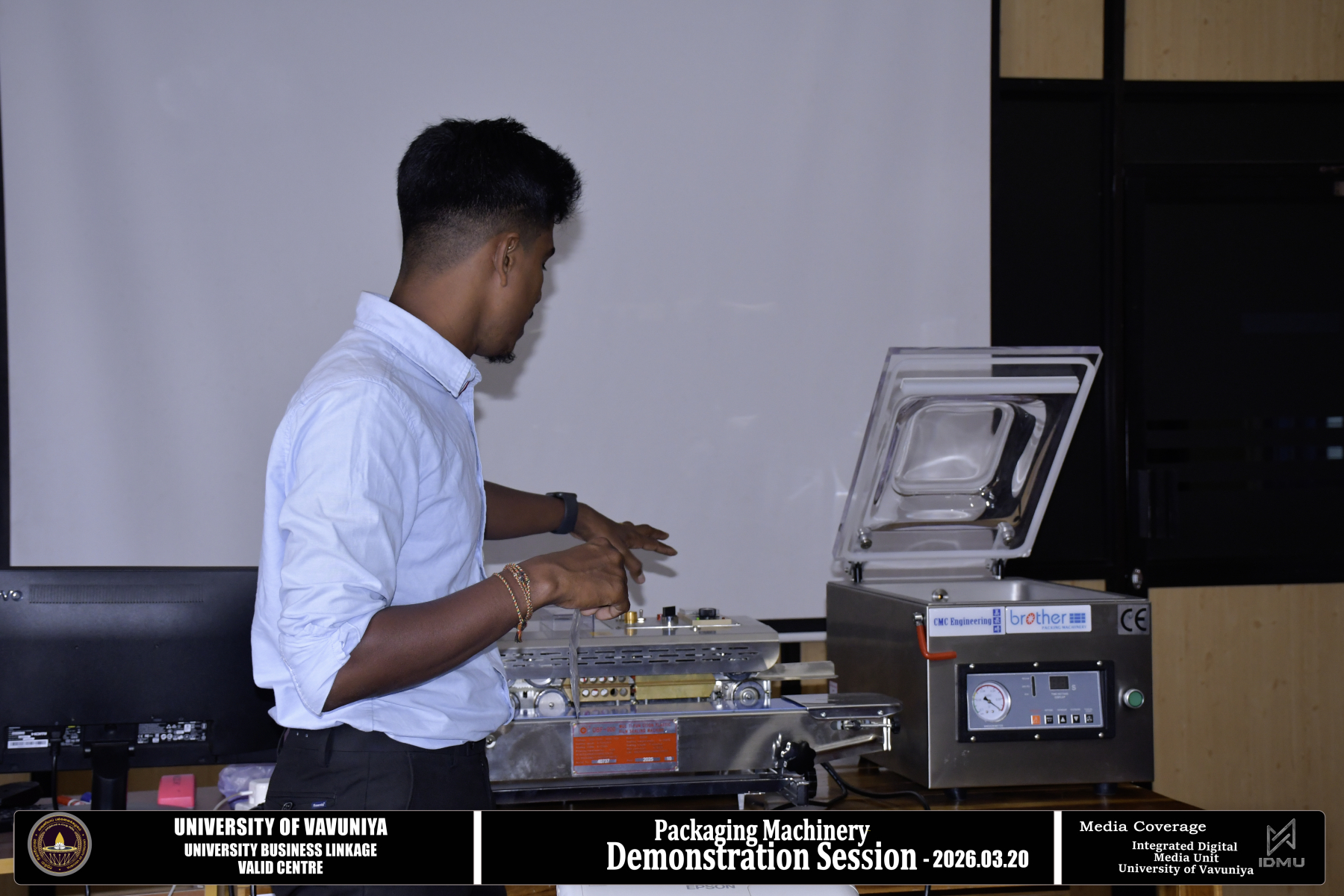
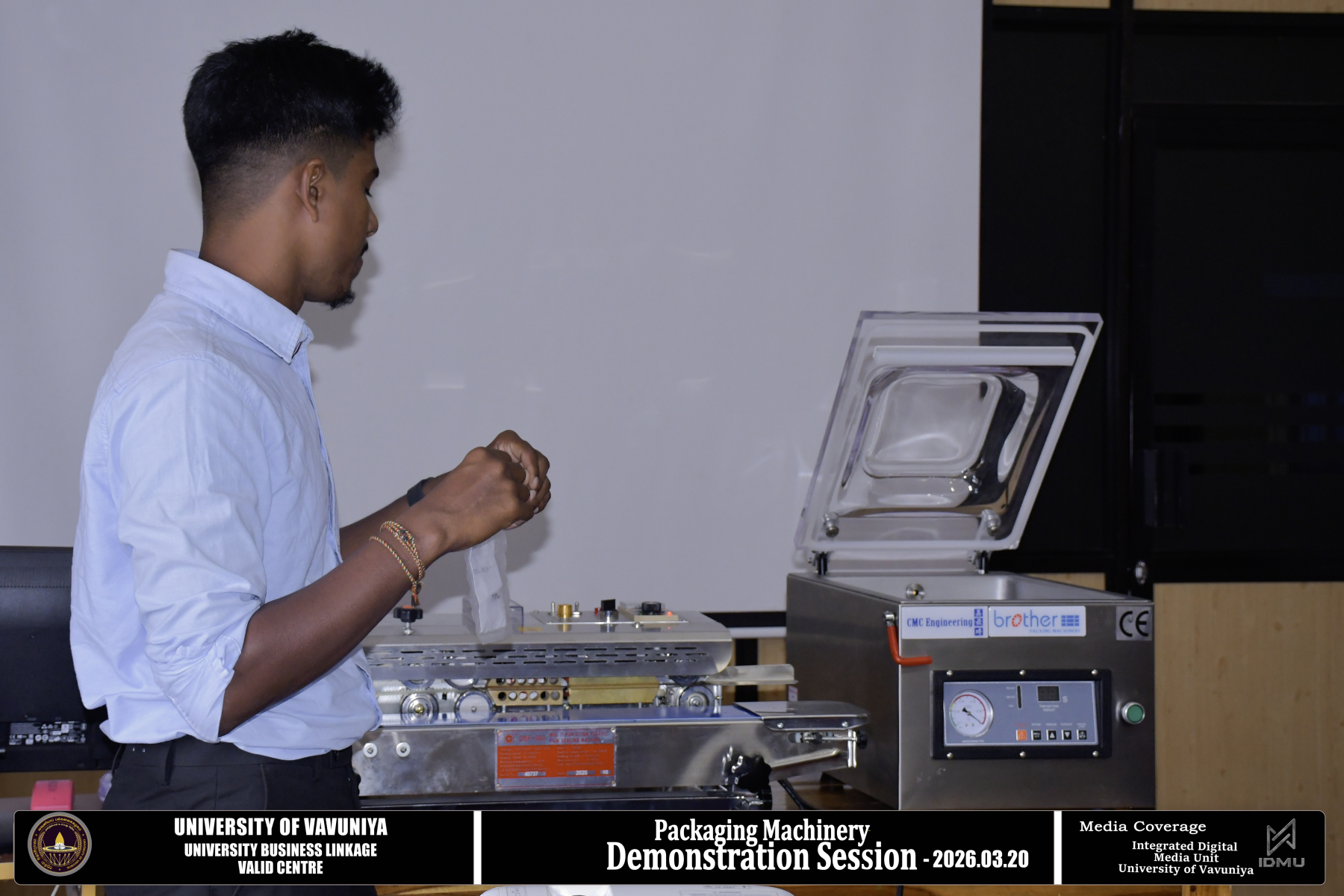
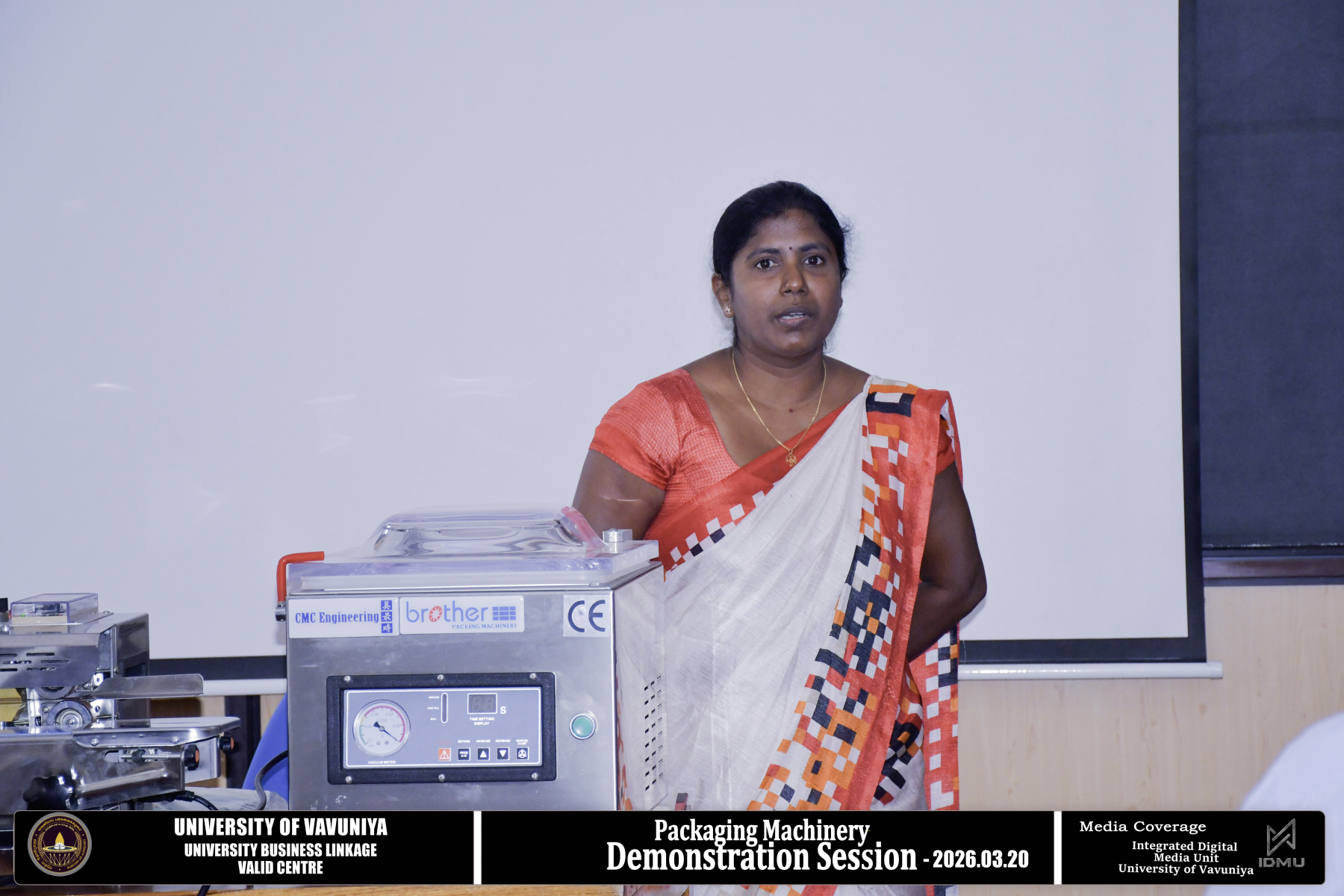
Mr. M. Nilogan, an expert Technical Officer at CMC Engineering, served as the primary resource person. During this packaging machinery demonstration session, he explained modern preservation technologies in detail.
Specifically, his live demonstrations focused on two essential industrial tools:
- Multifunction Sealing Machine: This tool provides secure, airtight closures for diverse material bags.
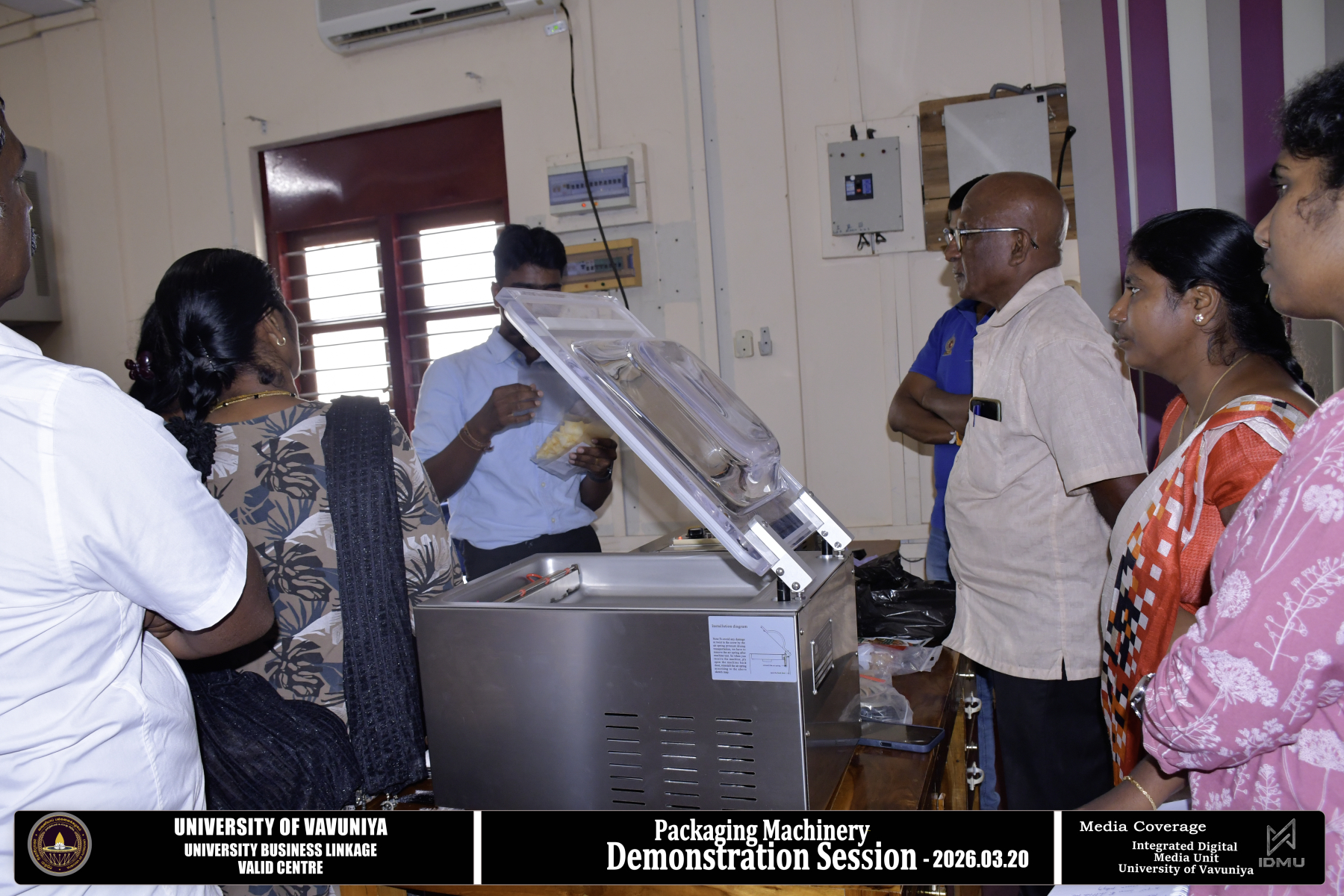
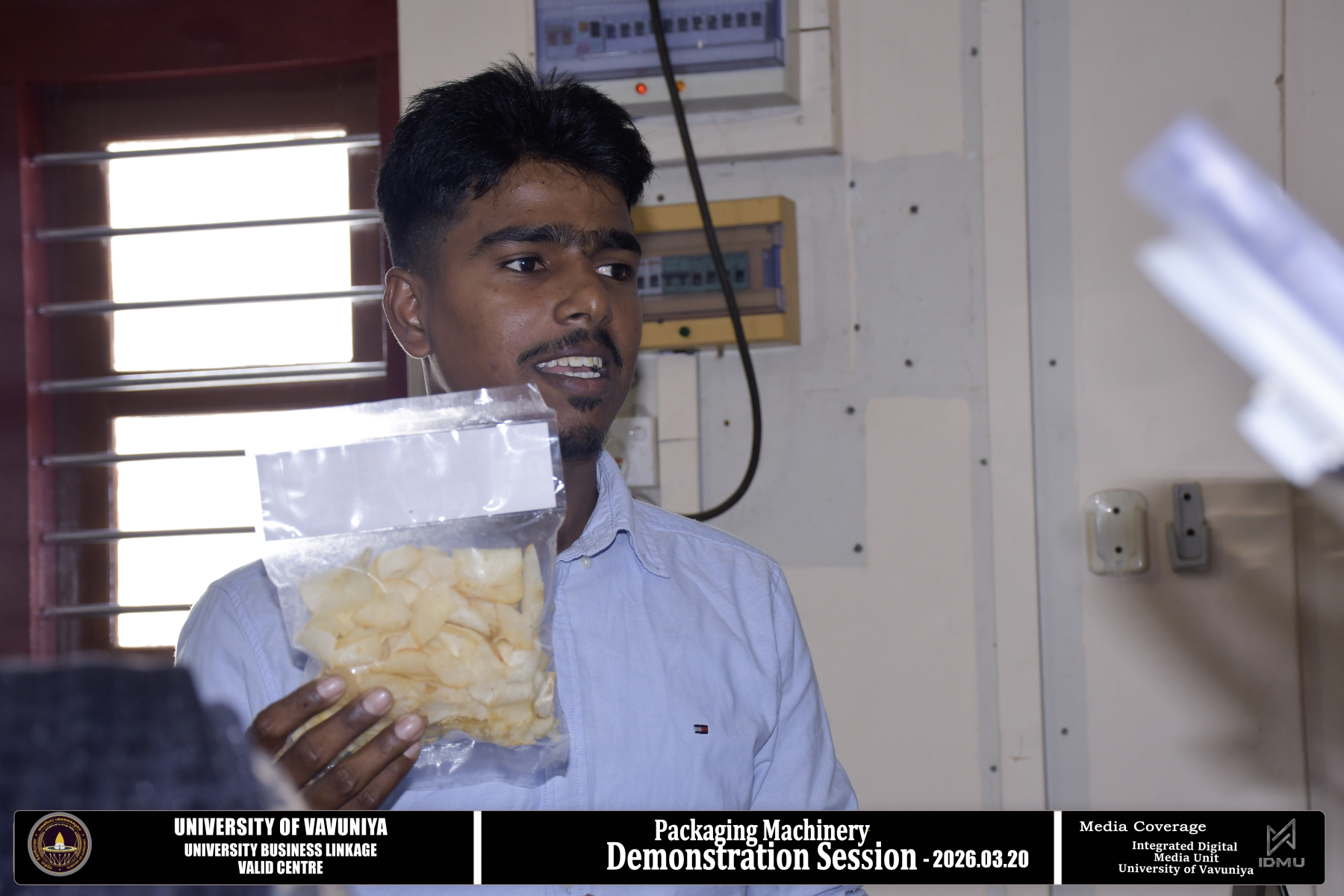
- Vacuum Packaging Machine: This unit extracts oxygen to prevent the growth of aerobic bacteria.
Furthermore, he demonstrated how these specific machines improve product quality and manufacturing efficiency for small factories.
Key Benefits of Modern Packaging Technology
The technical presentation highlighted several critical benefits of adopting automated systems in food manufacturing. These operational advantages include:
- Significantly extending the shelf life of perishable items.
- Reducing microbial contamination through sterile sealing.
- Controlling internal moisture levels to prevent molding.
- Maintaining product freshness, flavor, and color over long periods.
Consequently, food safety improves across the region. This standard increases consumer confidence in locally produced goods.
Regional Capacity Building and Student Engagement
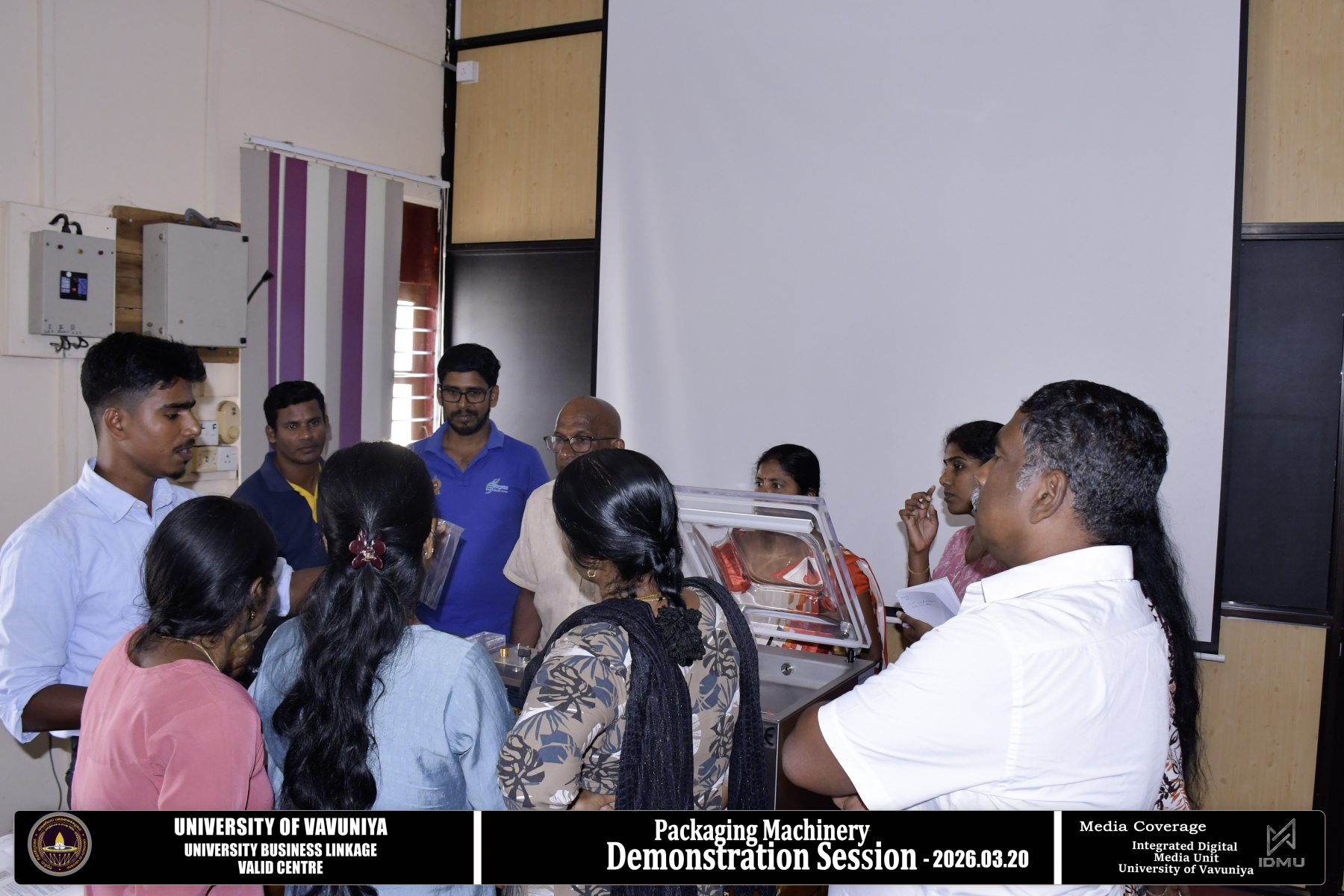
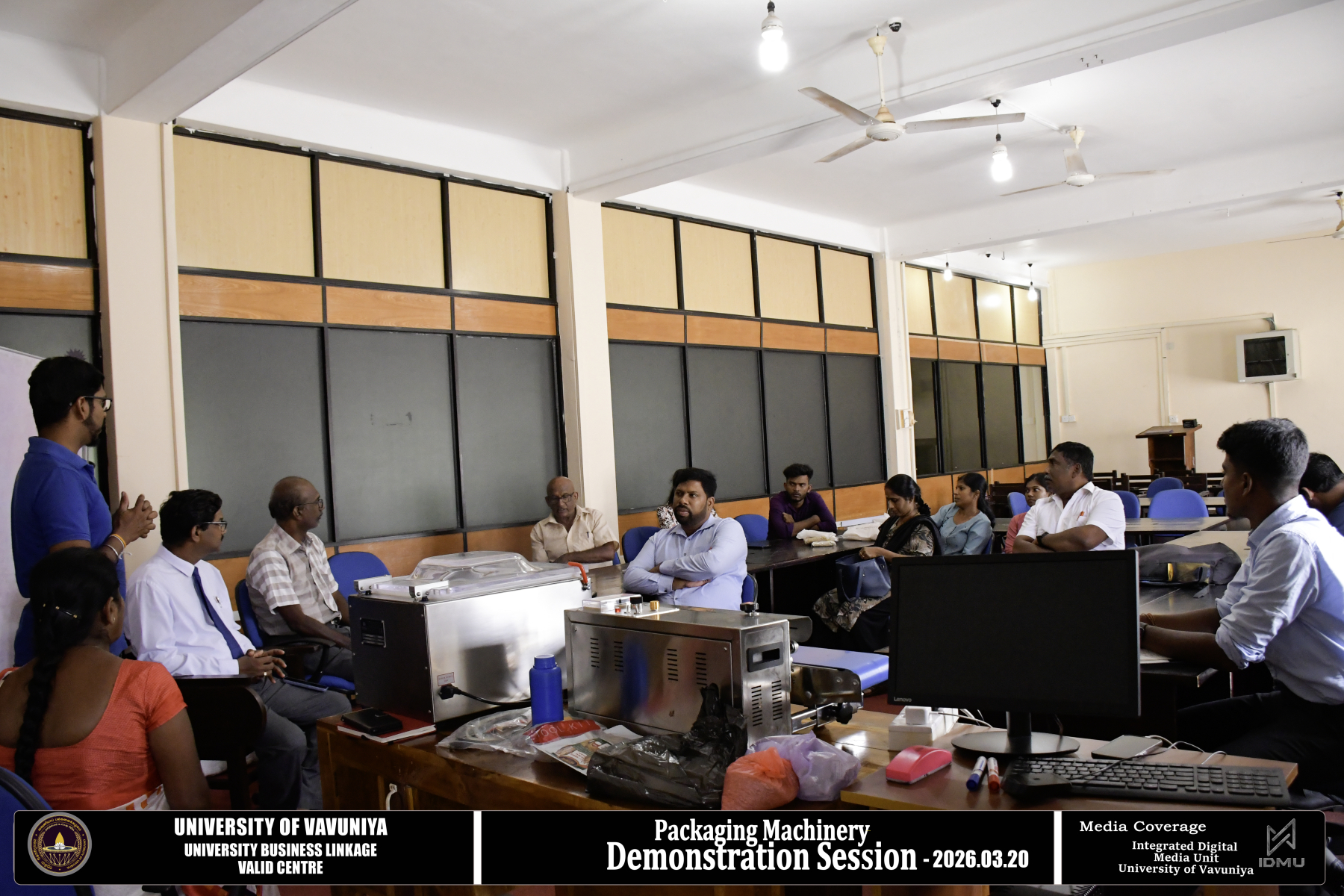
A key goal of this packaging machinery demonstration session was to train local Incubation Centre Officers and Vidatha Unit Officers. These officers will act as primary trainers for regional SME entrepreneurs in future programs. Therefore, the session focused heavily on hands-on learning. This structured approach ensures effective knowledge transfer across the entire Northern Province.
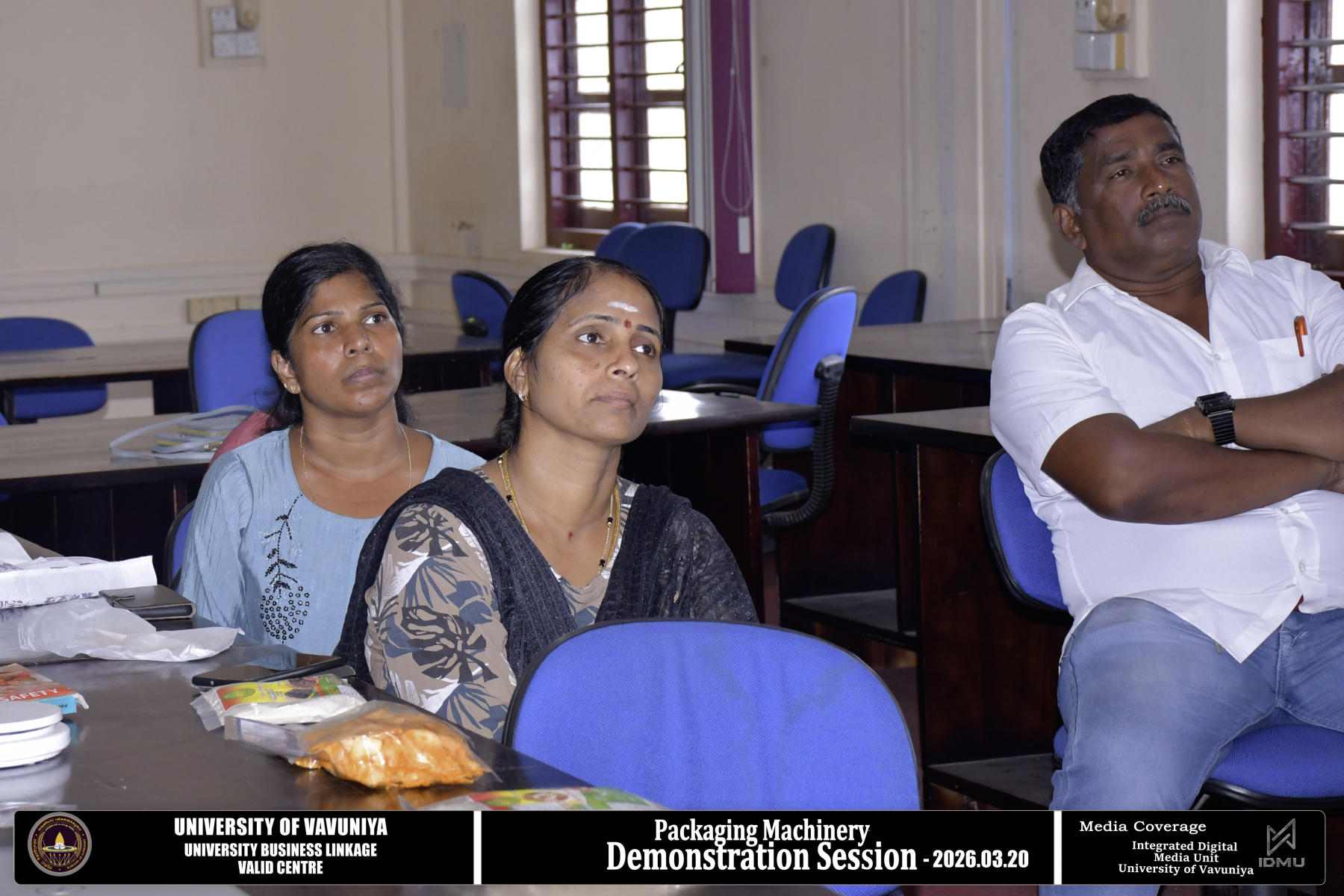
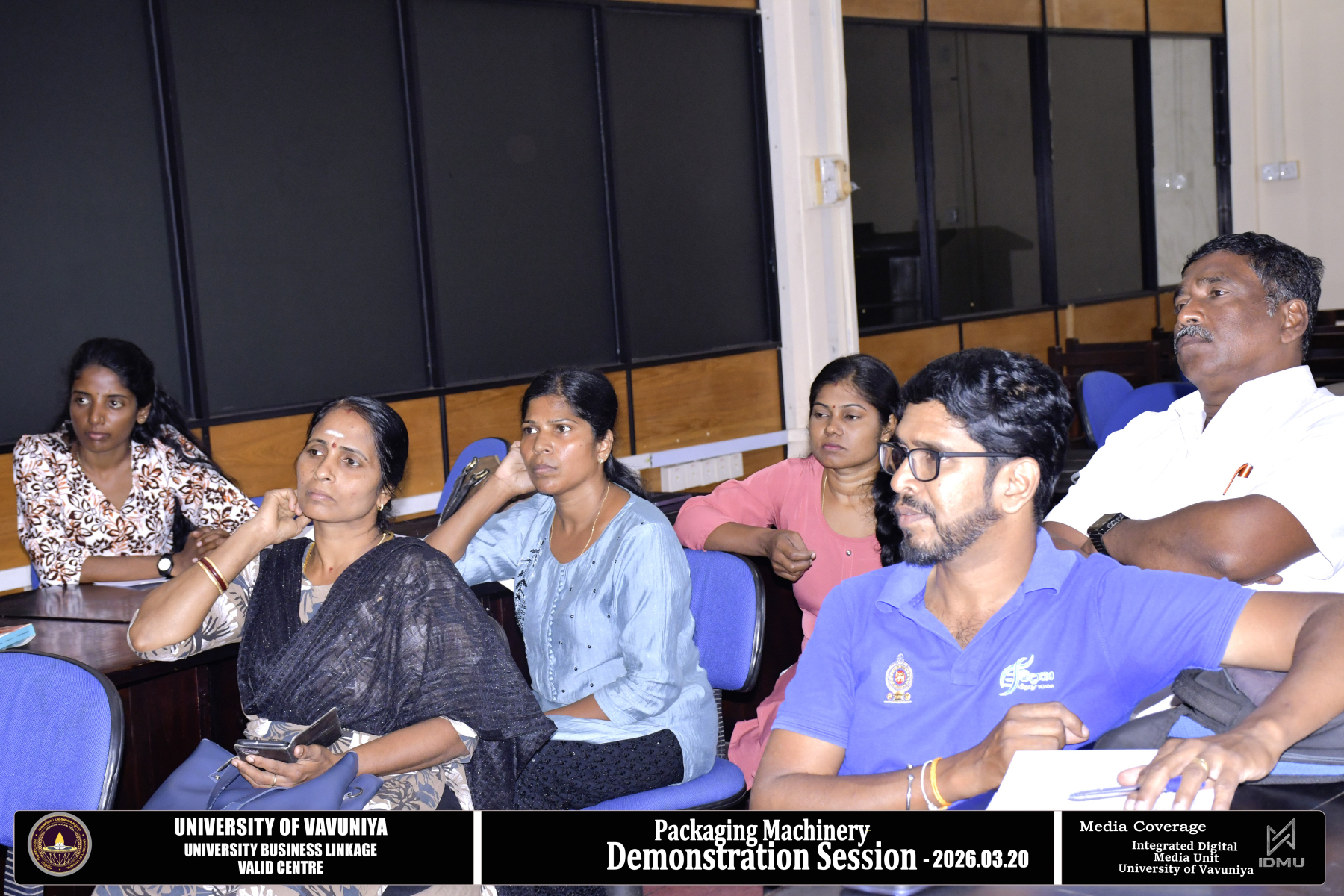
The session recorded active participation from 15 selected individuals. These participants included incubation staff and ambitious entrepreneurs from the Vavuniya District. Moreover, prominent regional enterprises sent representatives to the lab, including:
- MAM Industries
- ThasThusha Traditional Products
- Aarokyam Food Products
- SD Tasty Magics
- Cucku Industry
The interactive nature of the demonstration allowed these local business owners to clarify everyday operational and maintenance challenges.
Long-Term Economic Impact and Conclusion
This targeted program significantly improved the understanding of post-processing quality in food production. Proper seal packaging helps reduce post-harvest spoilage. It also supports compliance with strict national market standards. Consequently, local SMEs can improve their product commercialization efforts and expand their market reach safely.
Overall, this packaging machinery demonstration session marks an important milestone in the development of the VALID Centre. It reflects a successful shift from basic infrastructure development to active capacity building initiatives. In conclusion, this initiative strengthens the local food value chain. It also directly supports national goals in food safety, standardization, and market competitiveness.