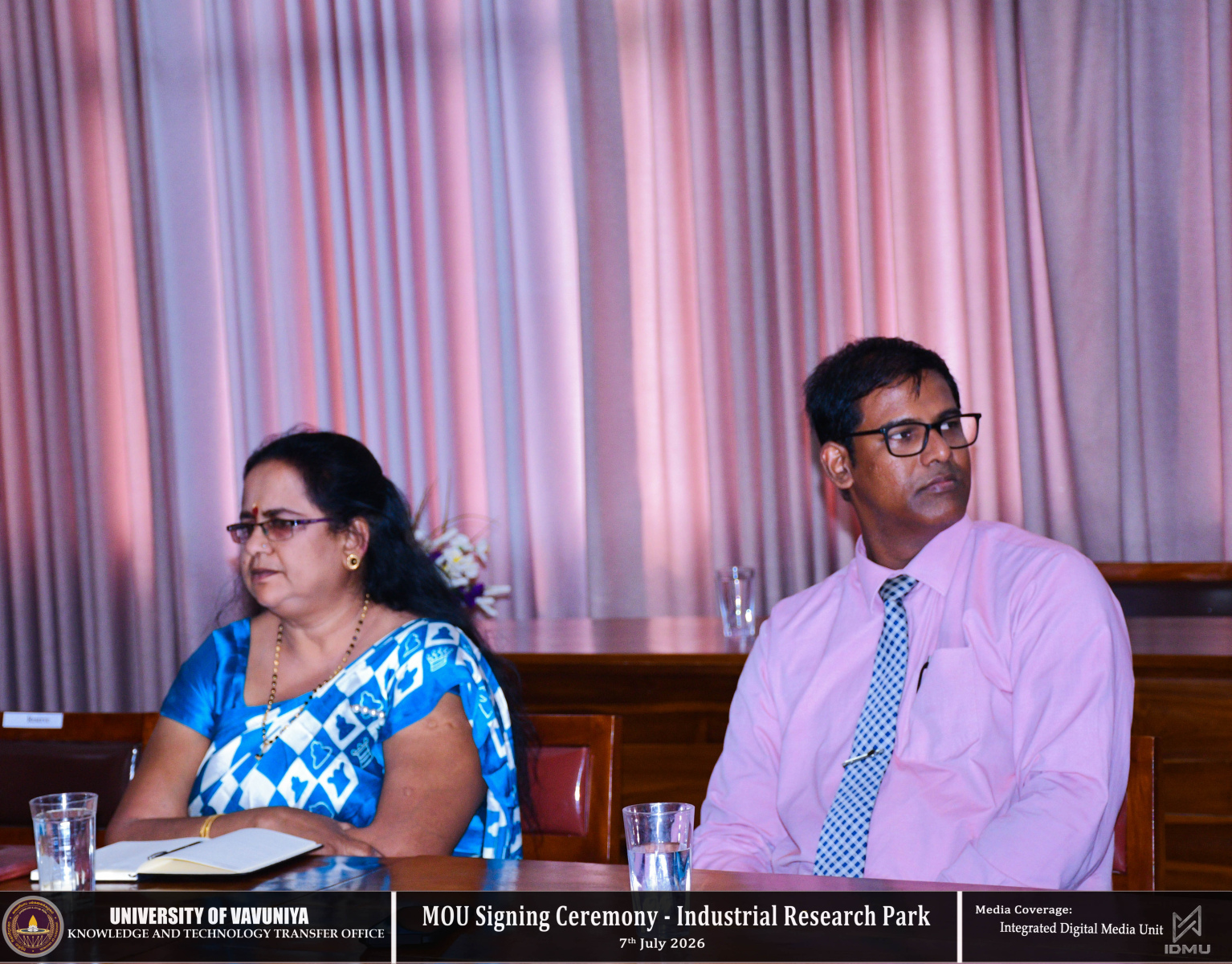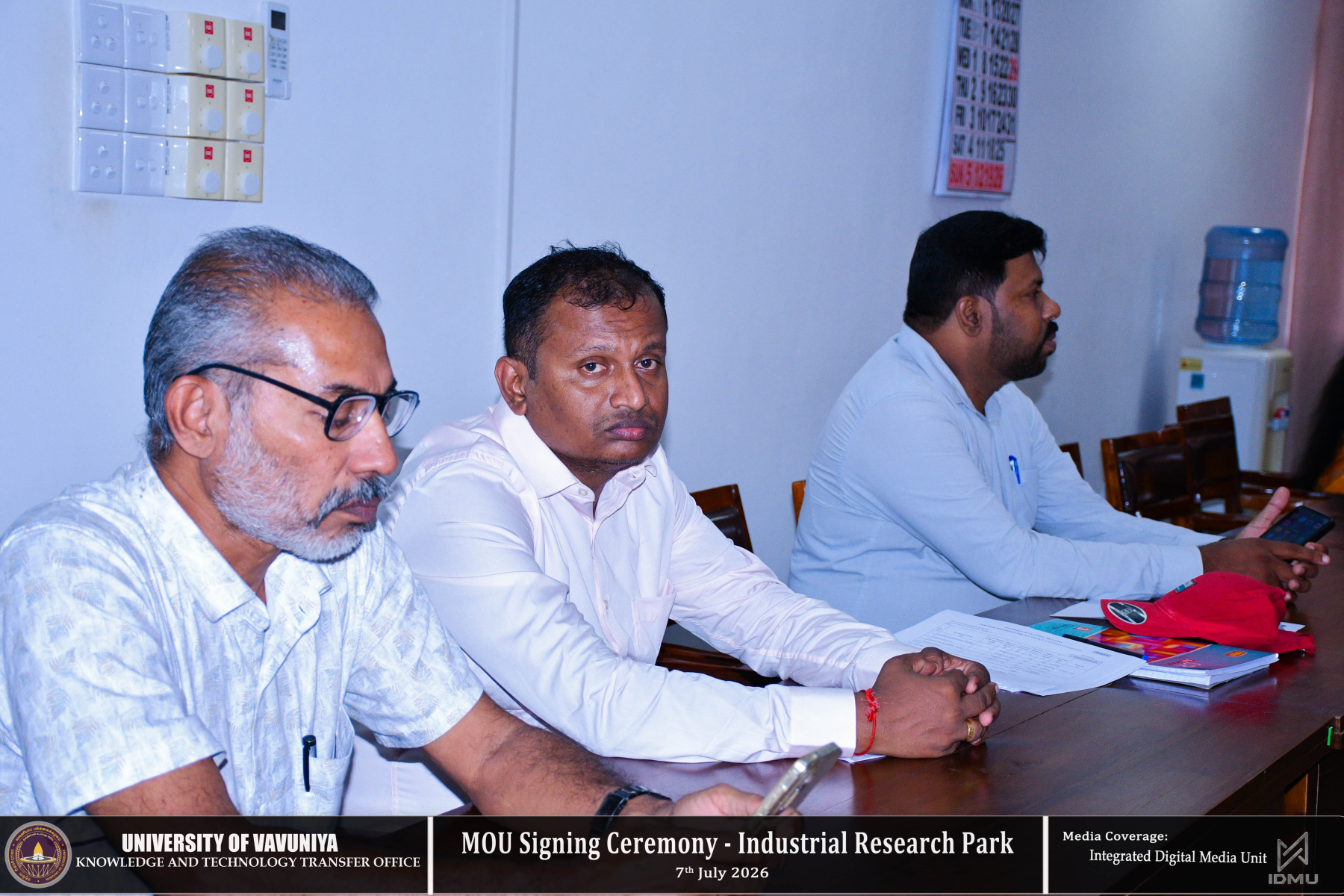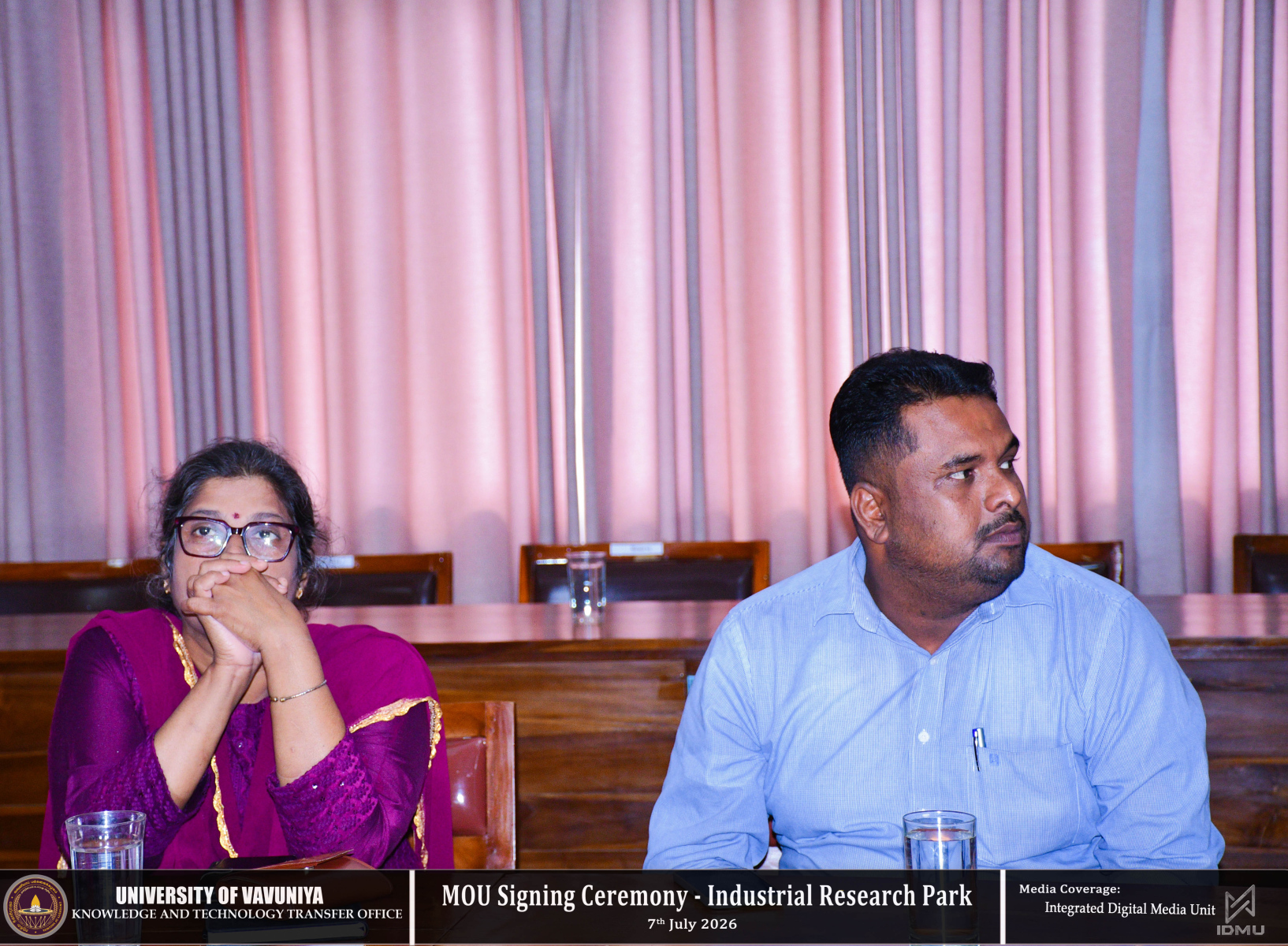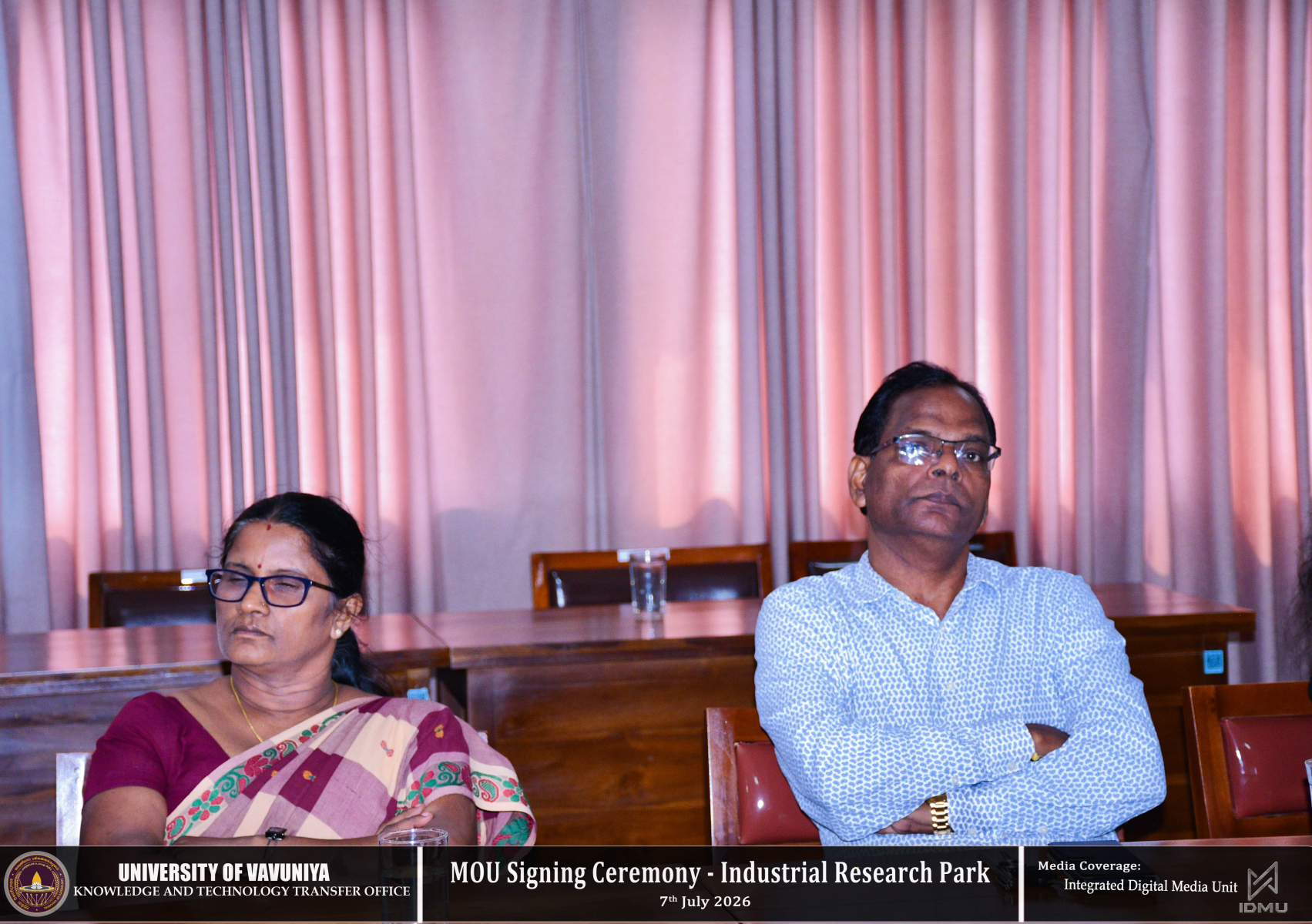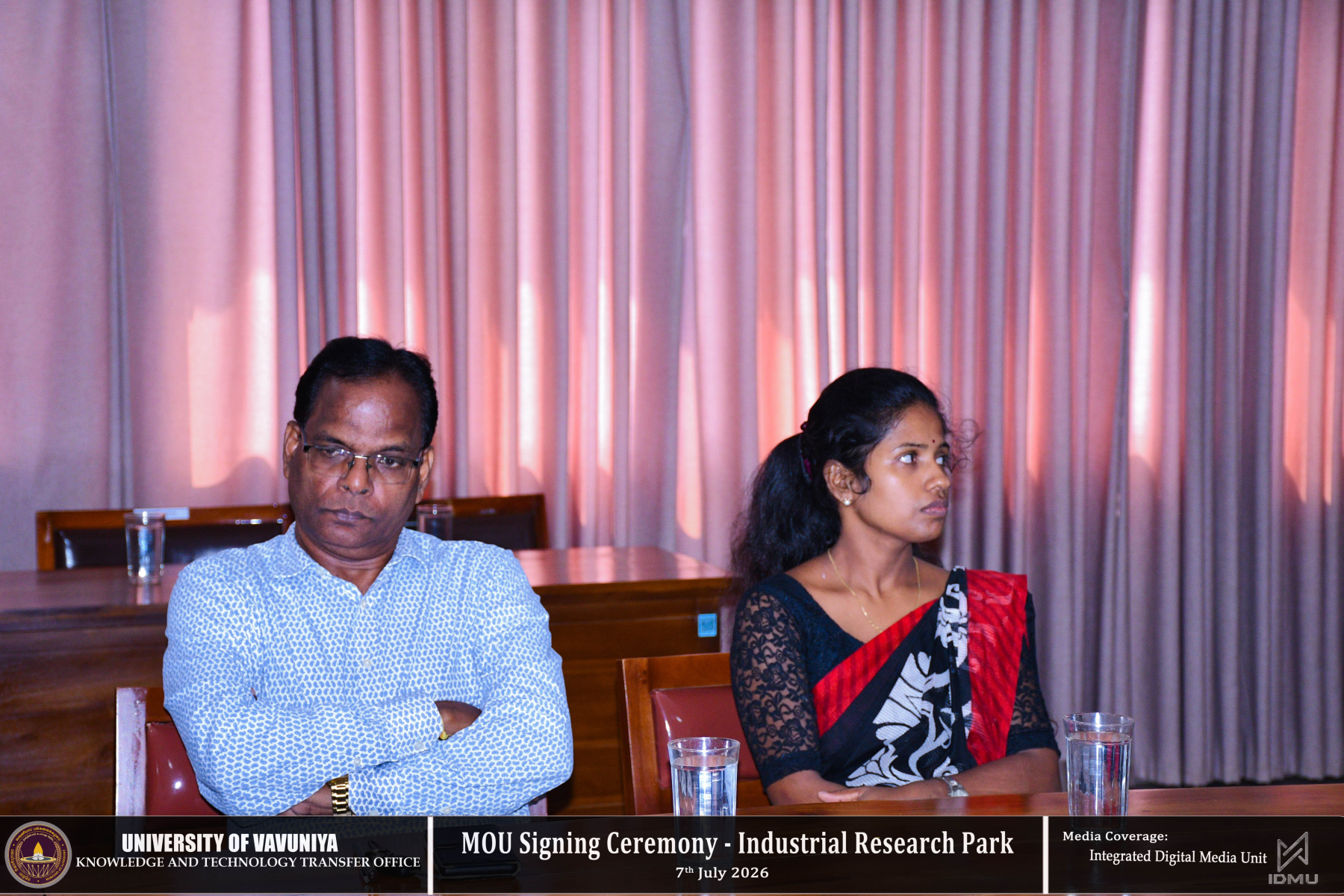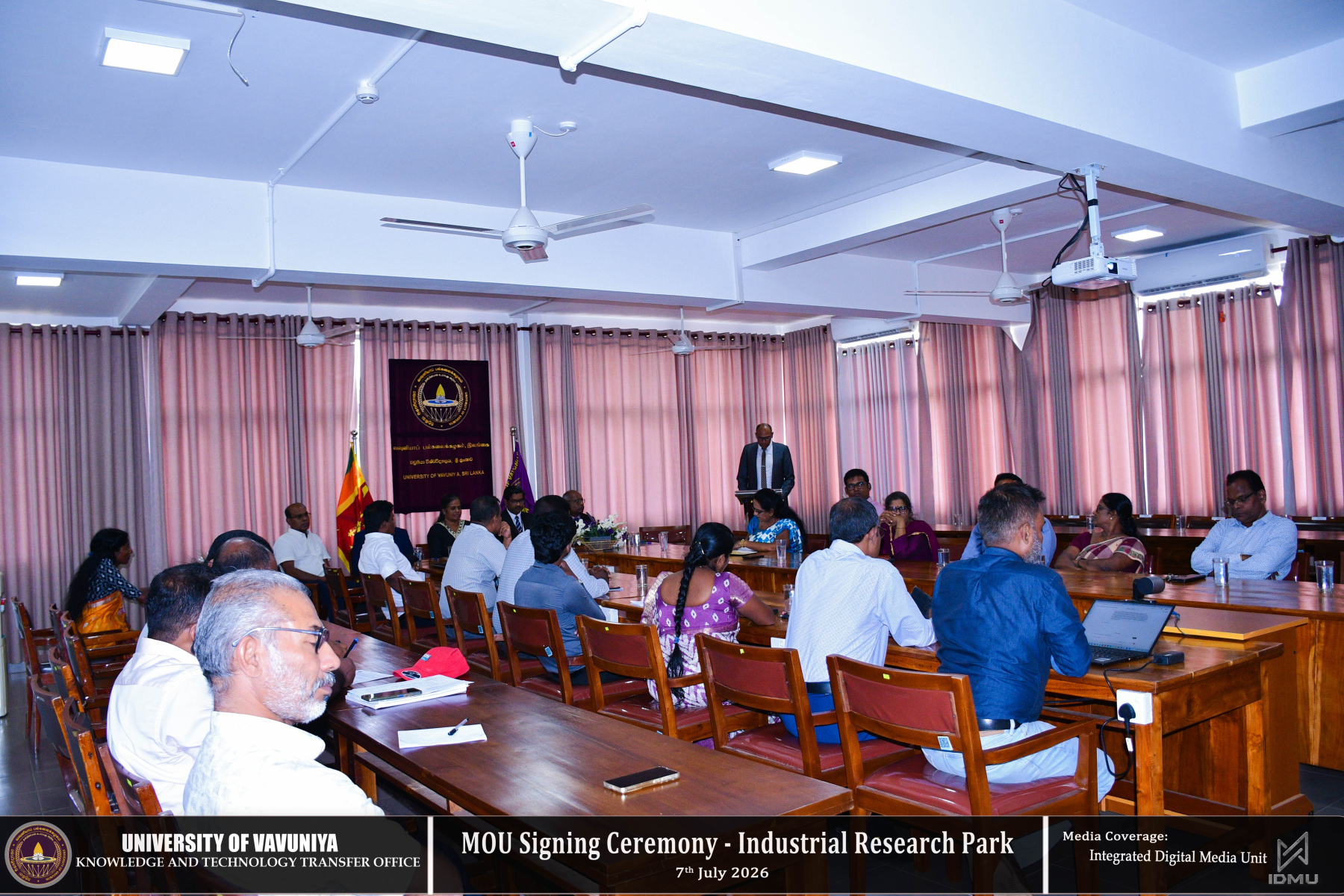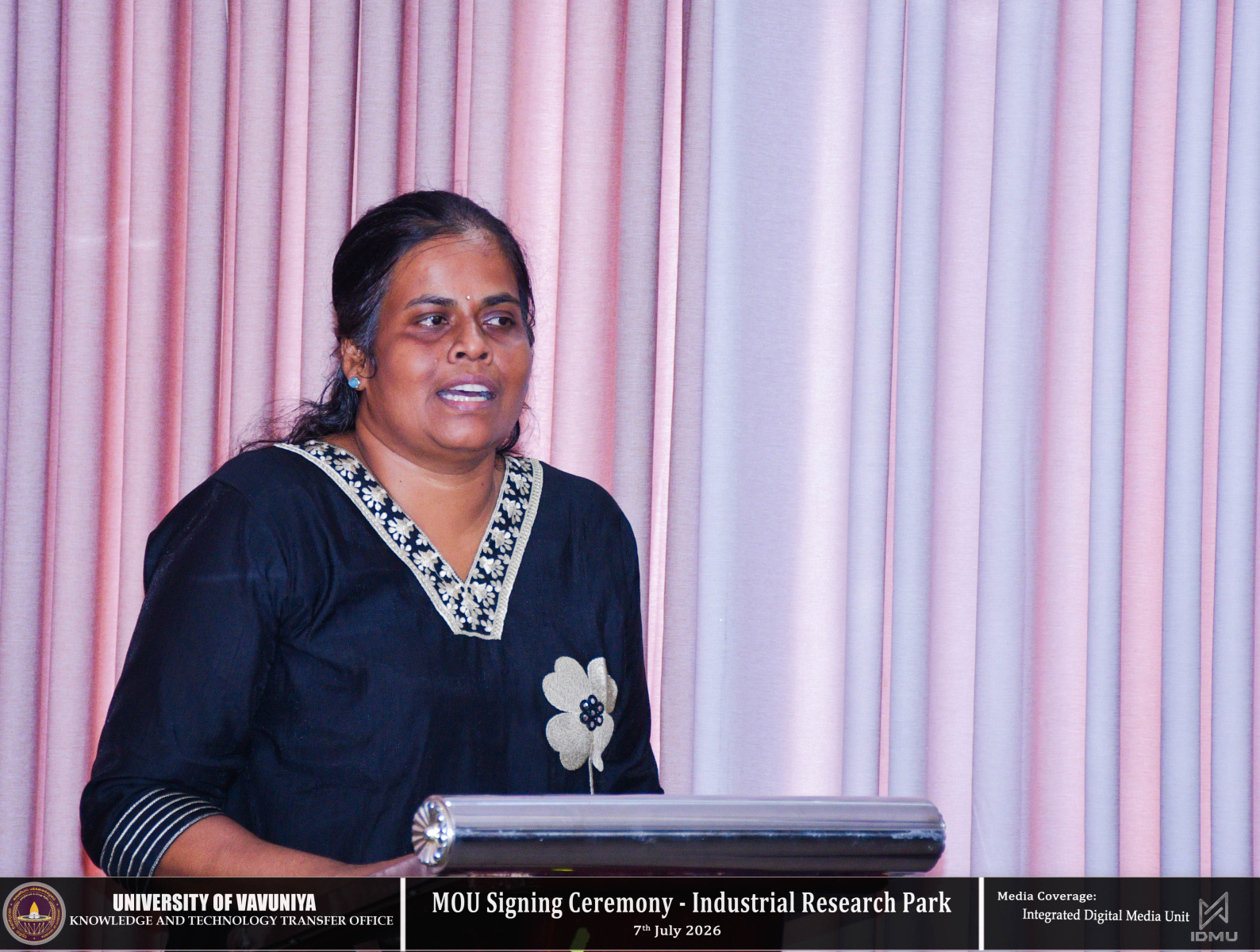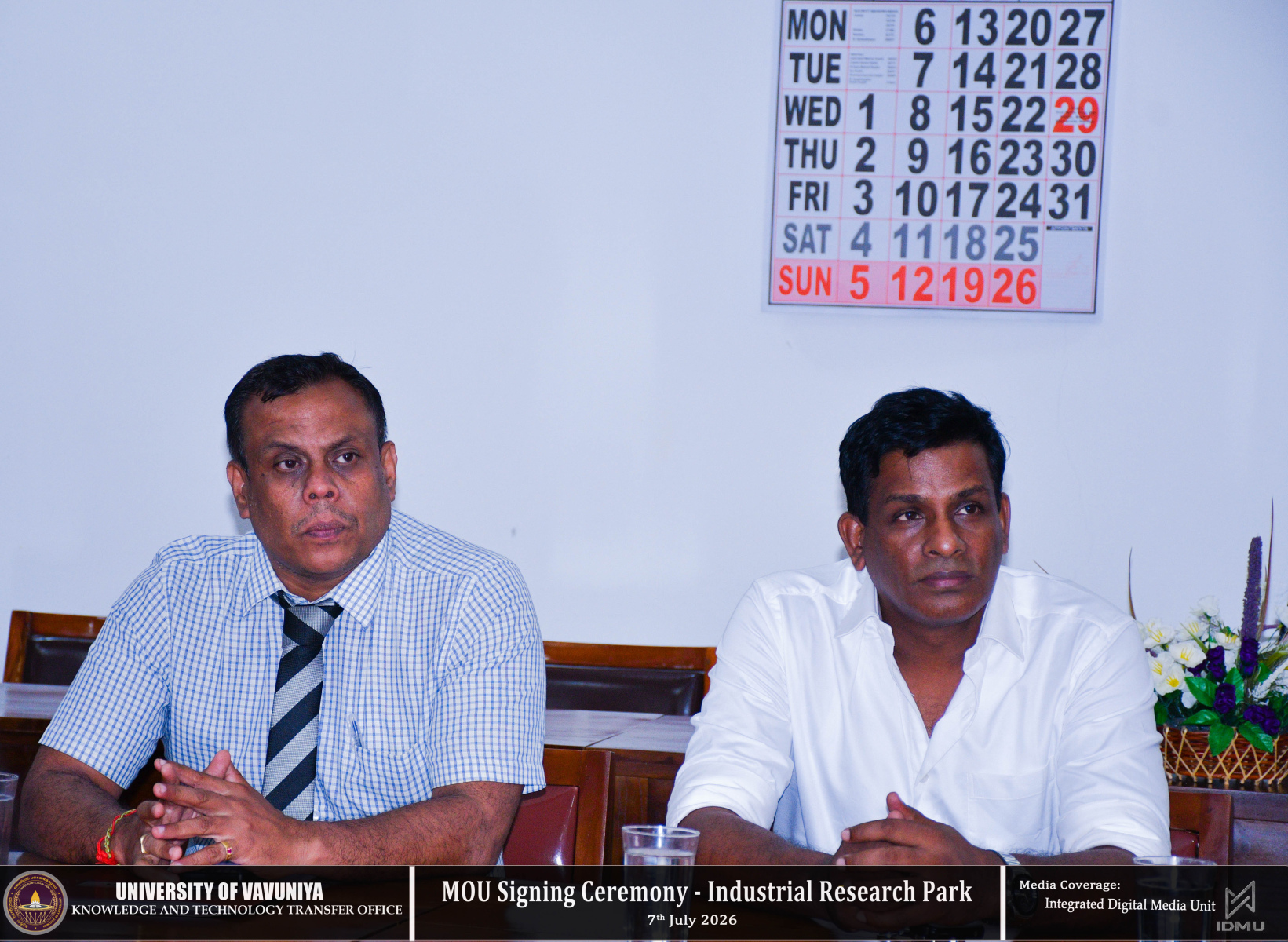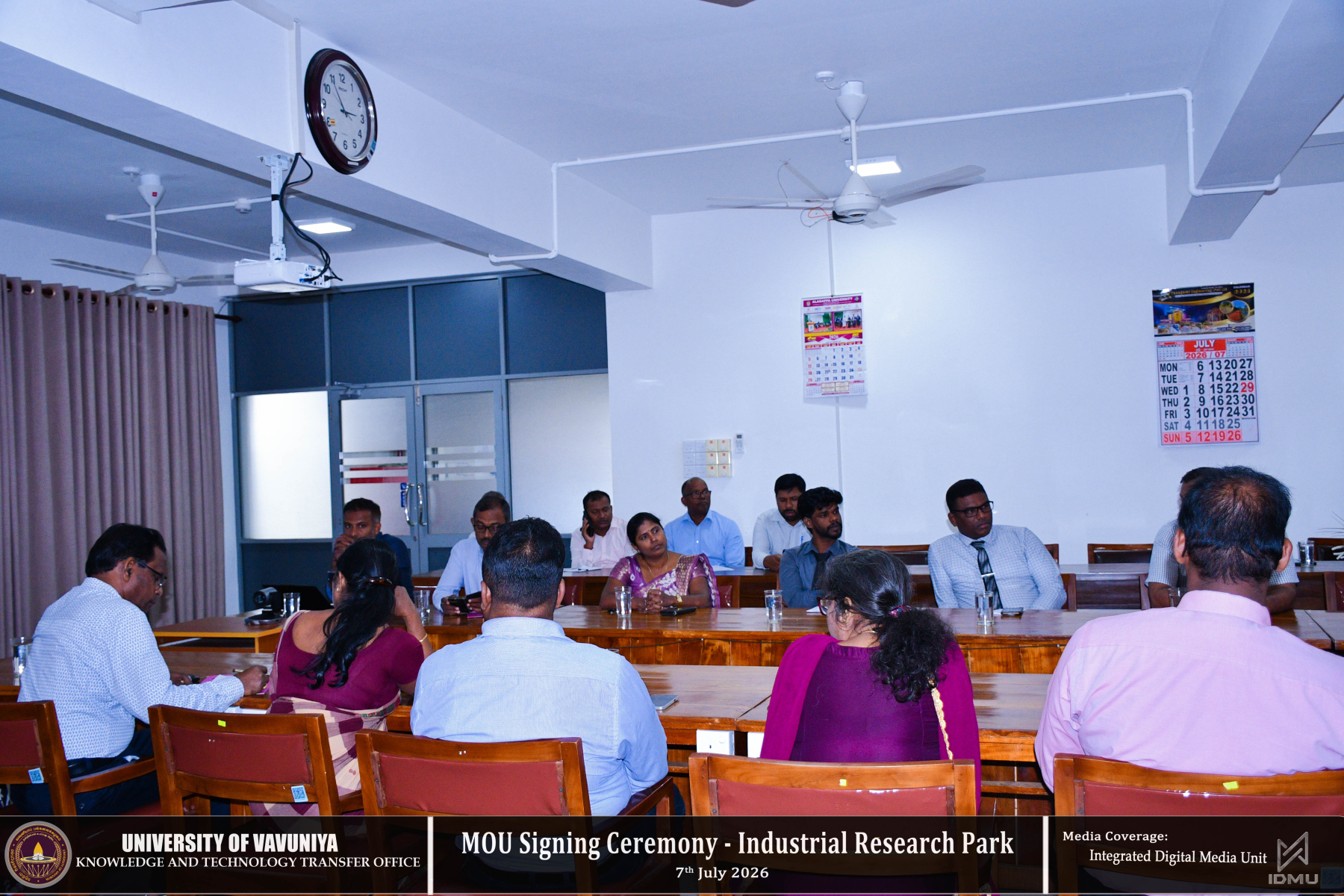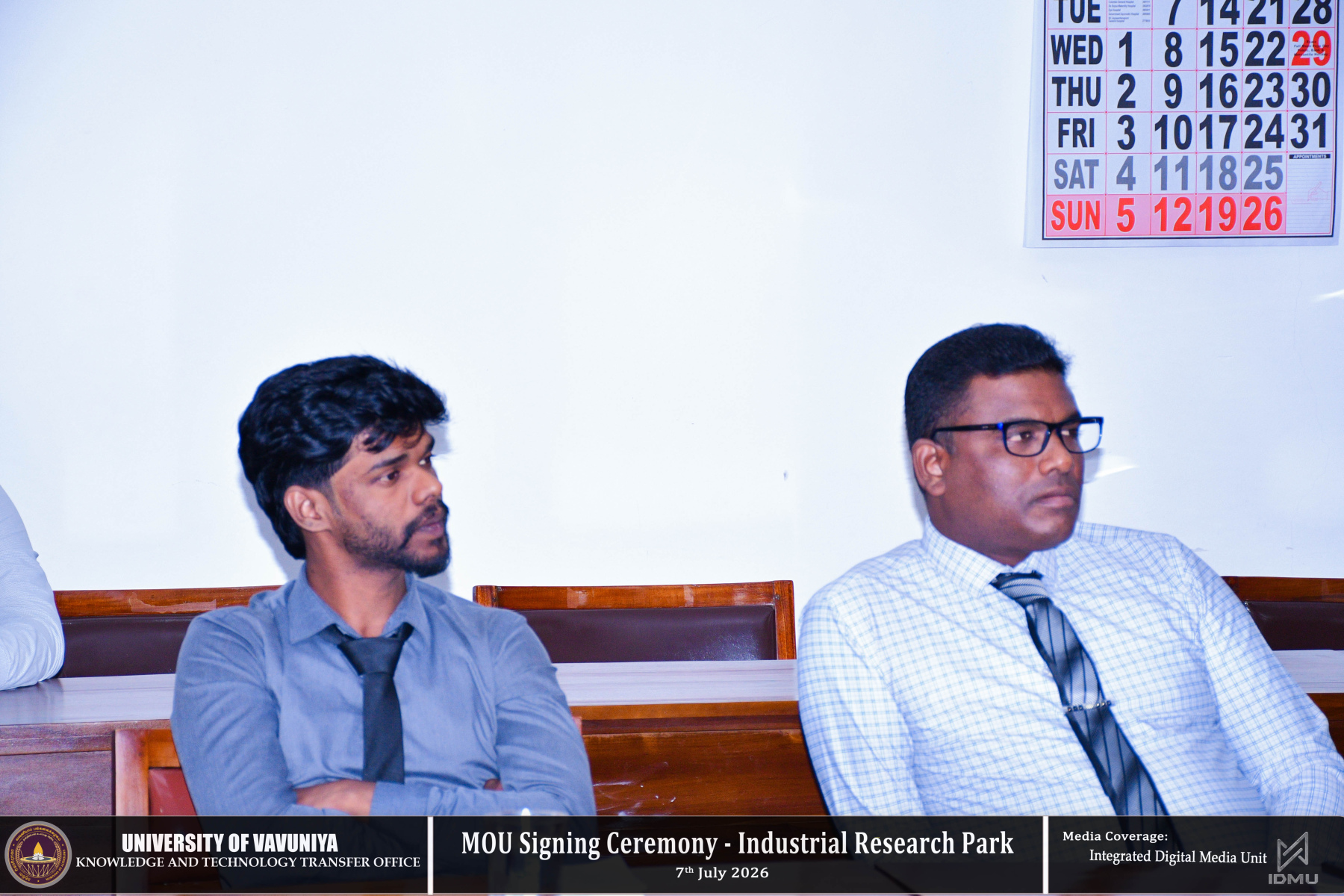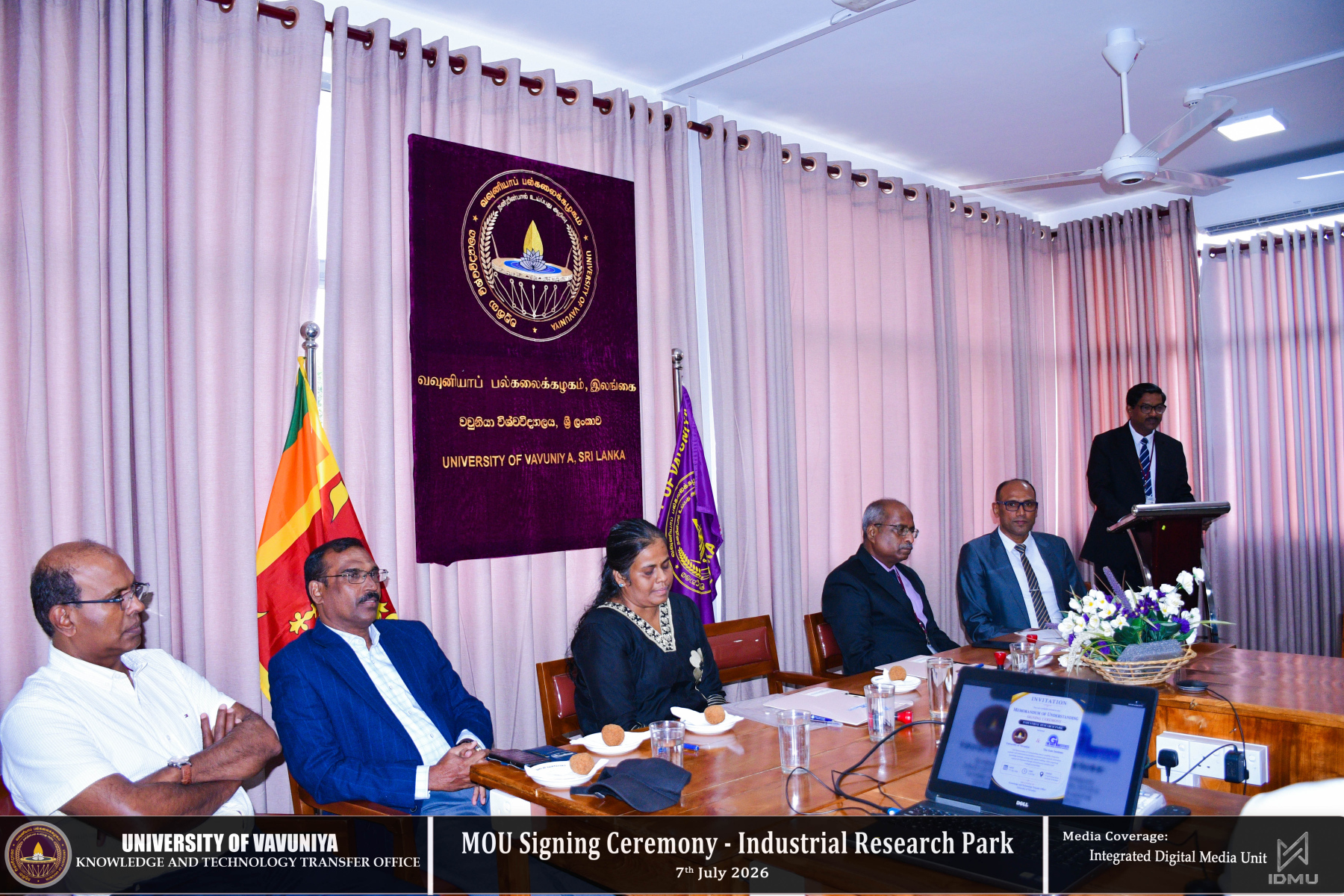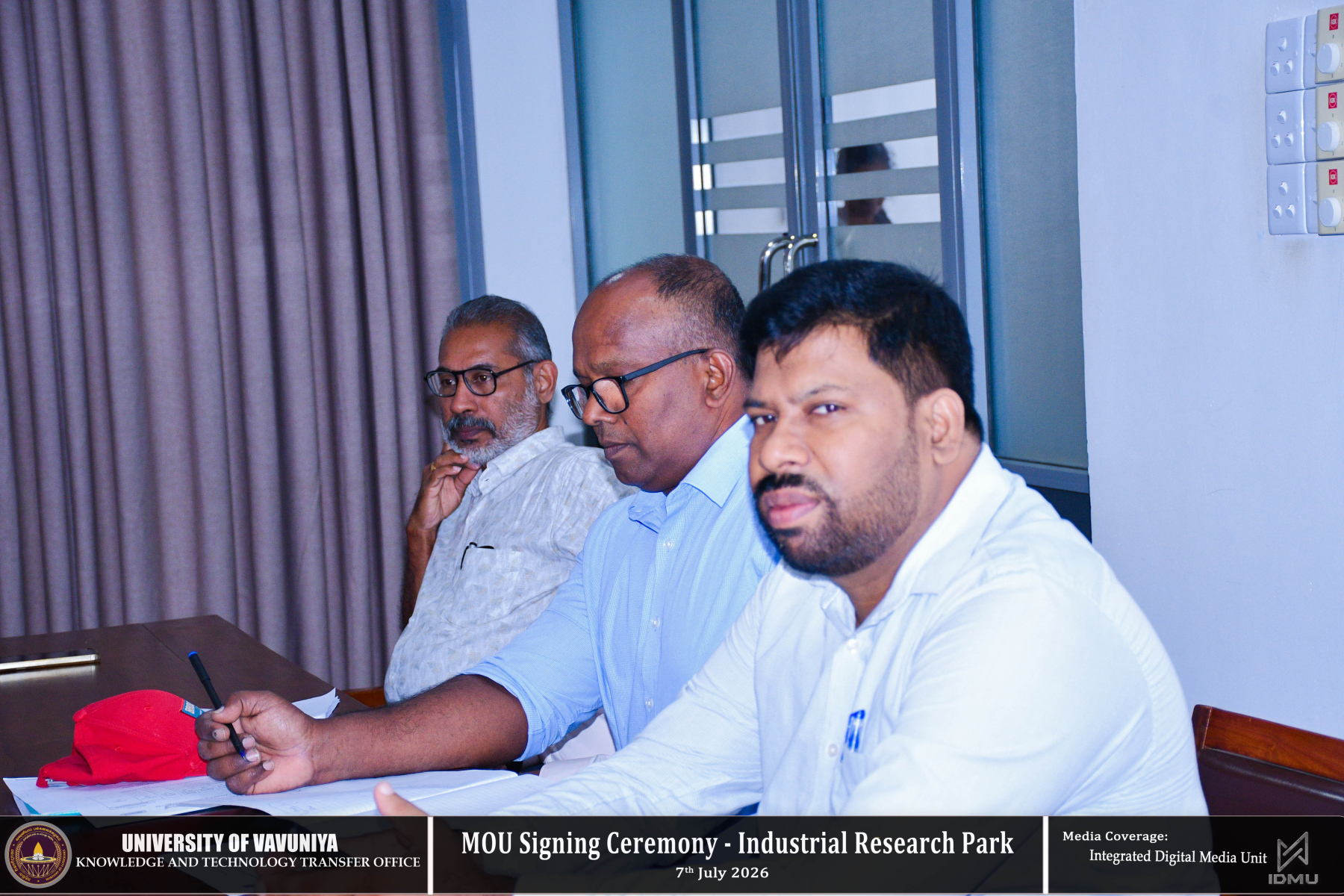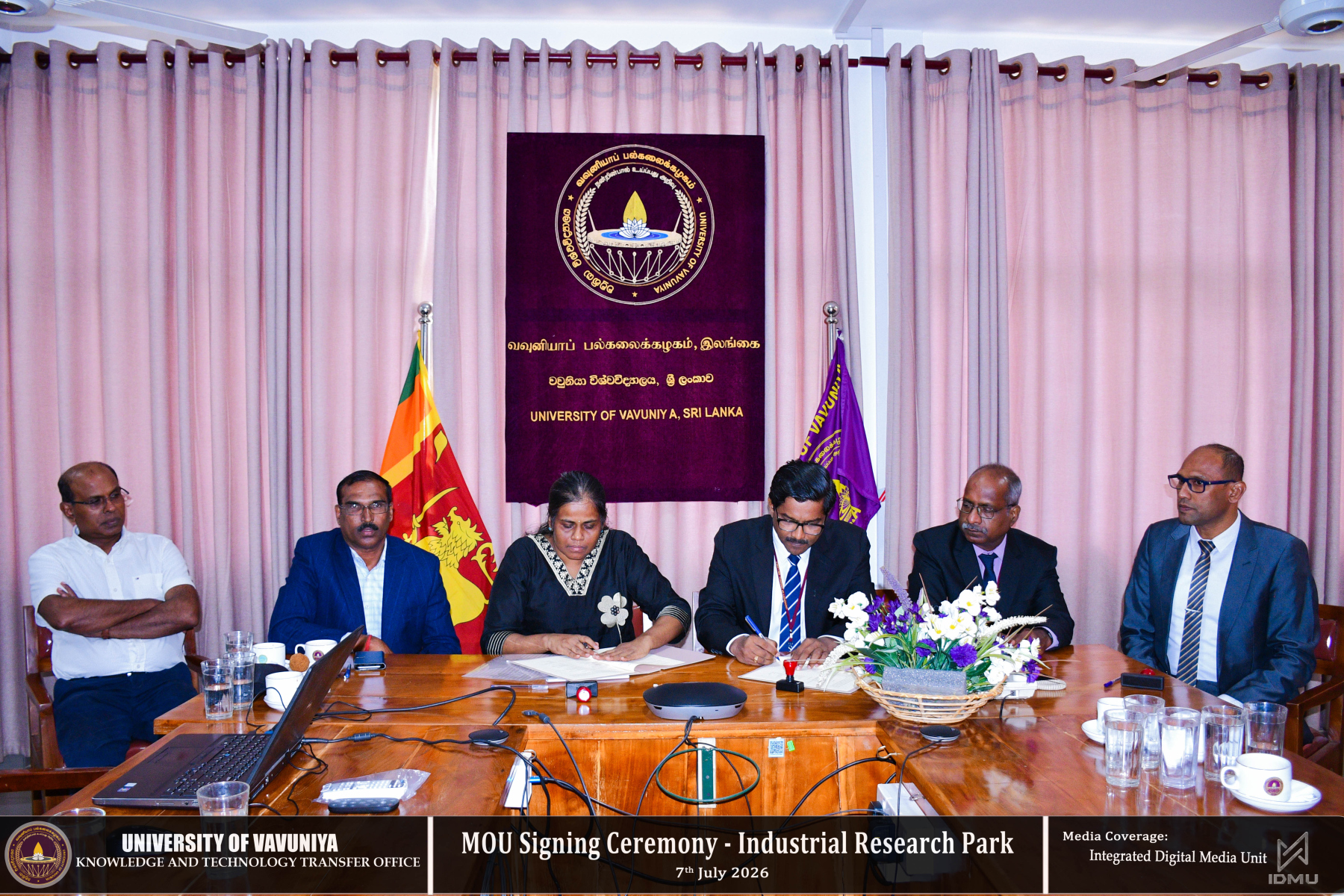



The Memorandum of Understanding (MoU) Signing Ceremony was successfully held on 07 July 2026 from 2.30 p.m. to 4.30 p.m. at the Board Room, IT Centre, University of Vavuniya. The ceremony brought together representatives from the University of Vavuniya and the GATE Institute to formalize a collaborative partnership aimed at promoting industrial research, innovation, technology transfer, entrepreneurship, and regional economic development. The event was attended by the Vice-Chancellor, Deans of Faculties, Heads of Departments, Directors of Centers and Units, academic staff, senior lecturers, researchers, administrative officers, and representatives from the GATE Institute. Their presence reflected the University’s commitment to strengthening collaboration between academia, industry, and research institutions.
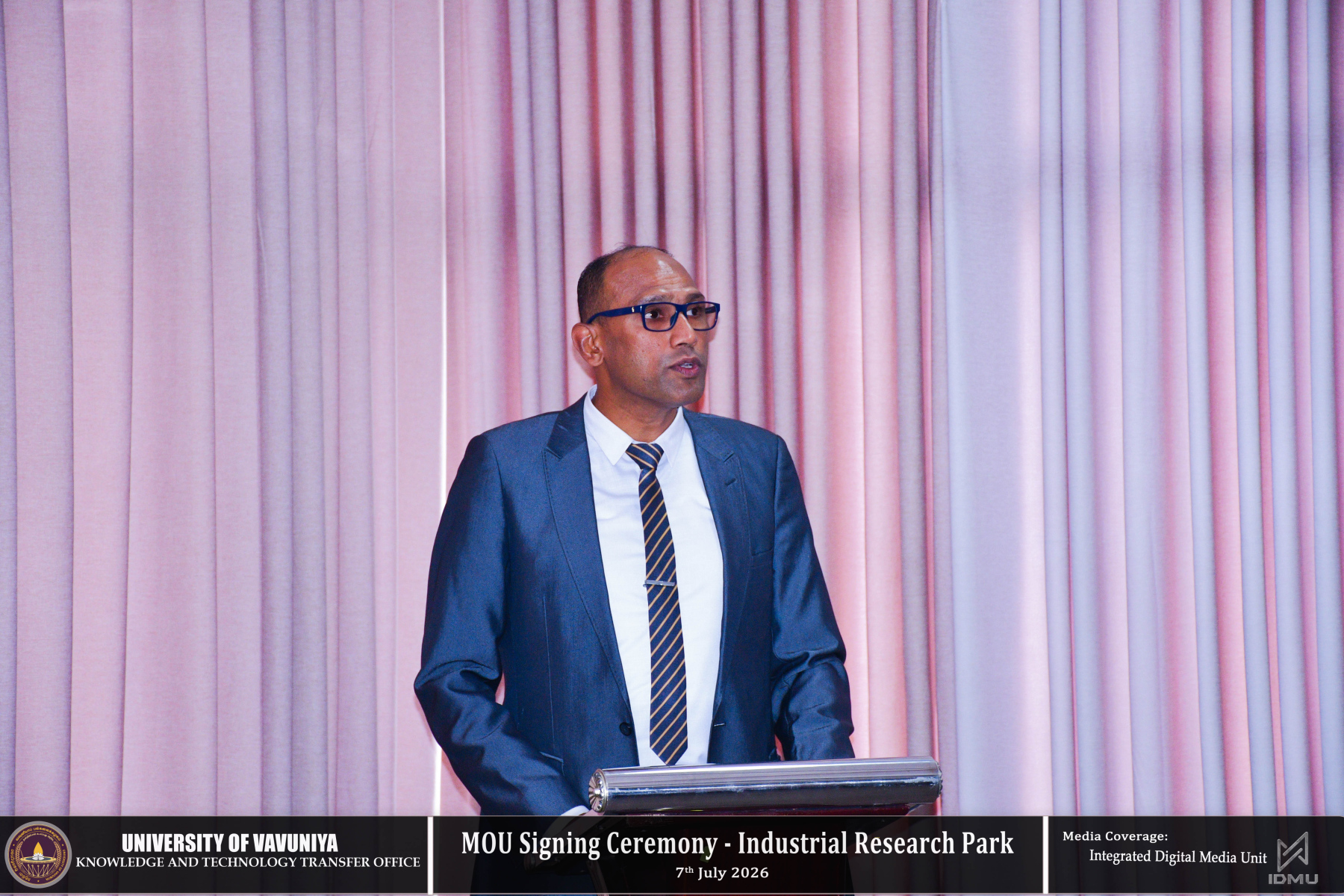
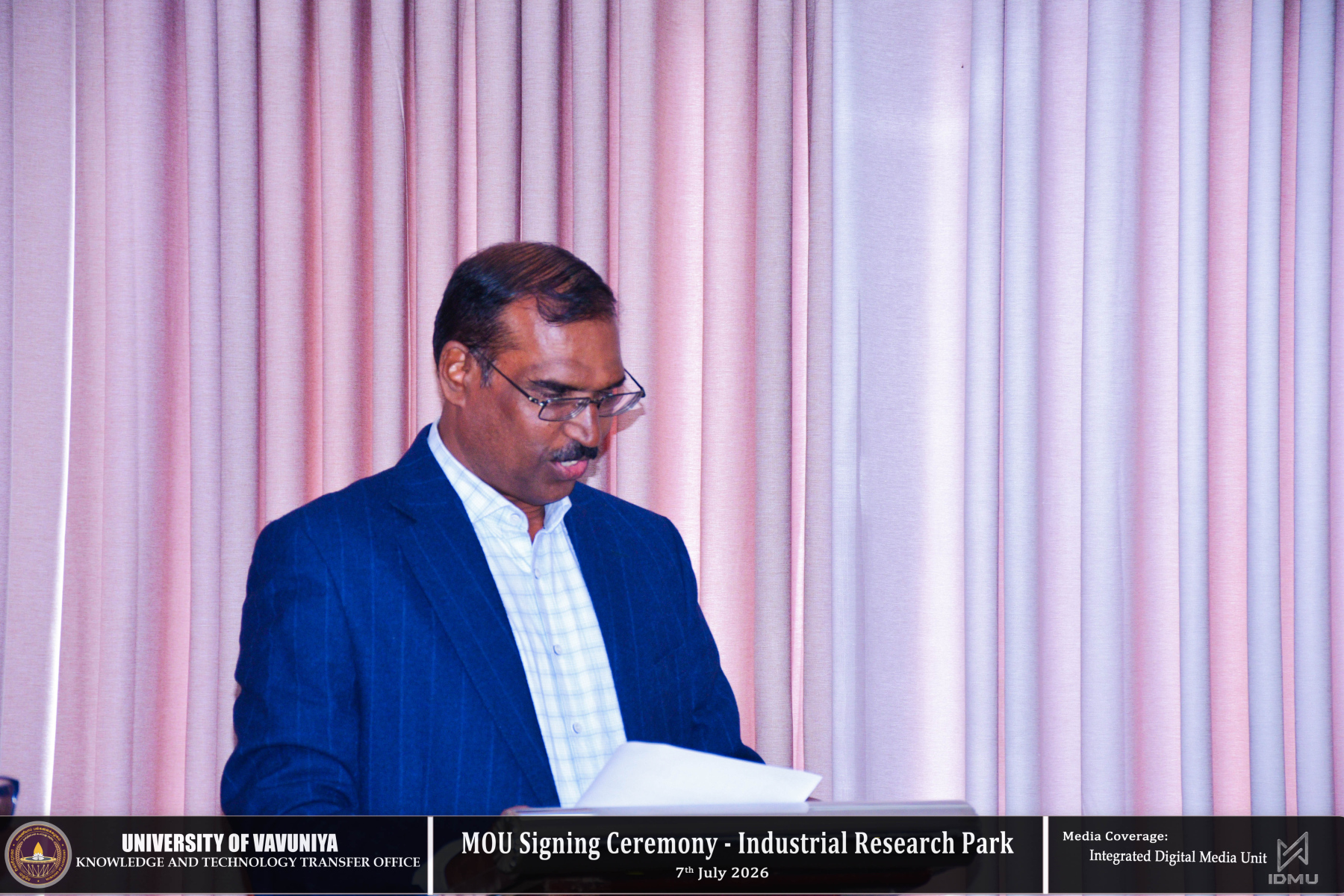
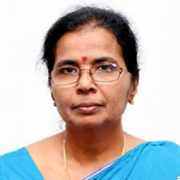
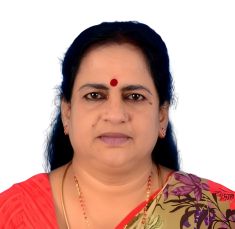
The program commenced at 2.30 p.m. with the Welcome Address delivered by Dr. A. Rukshan, Director of the Knowledge and Technology Transfer Office, University of Vavuniya. He welcomed the distinguished guests and highlighted the significance of establishing strategic partnerships to enhance industrial research, innovation, and knowledge transfer. Ms. Mathangie Selvarajah, Director of the GATE Institute, addressed the gathering and emphasized the importance of collaborative initiatives in fostering research commercialization, entrepreneurship, and sustainable industrial development. She also reaffirmed the GATE Institute’s commitment to working closely with the University to develop the Industrial Research Park.
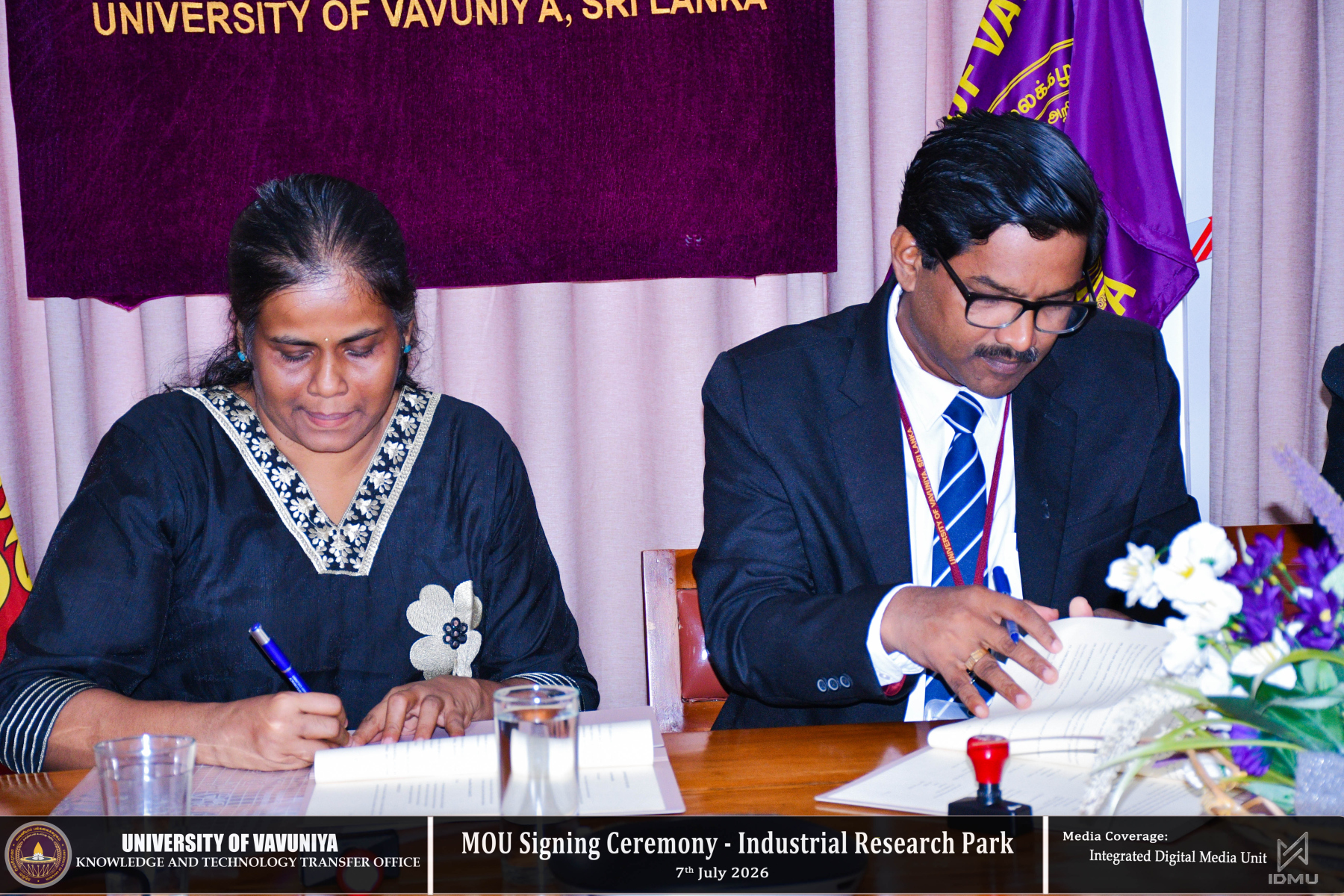
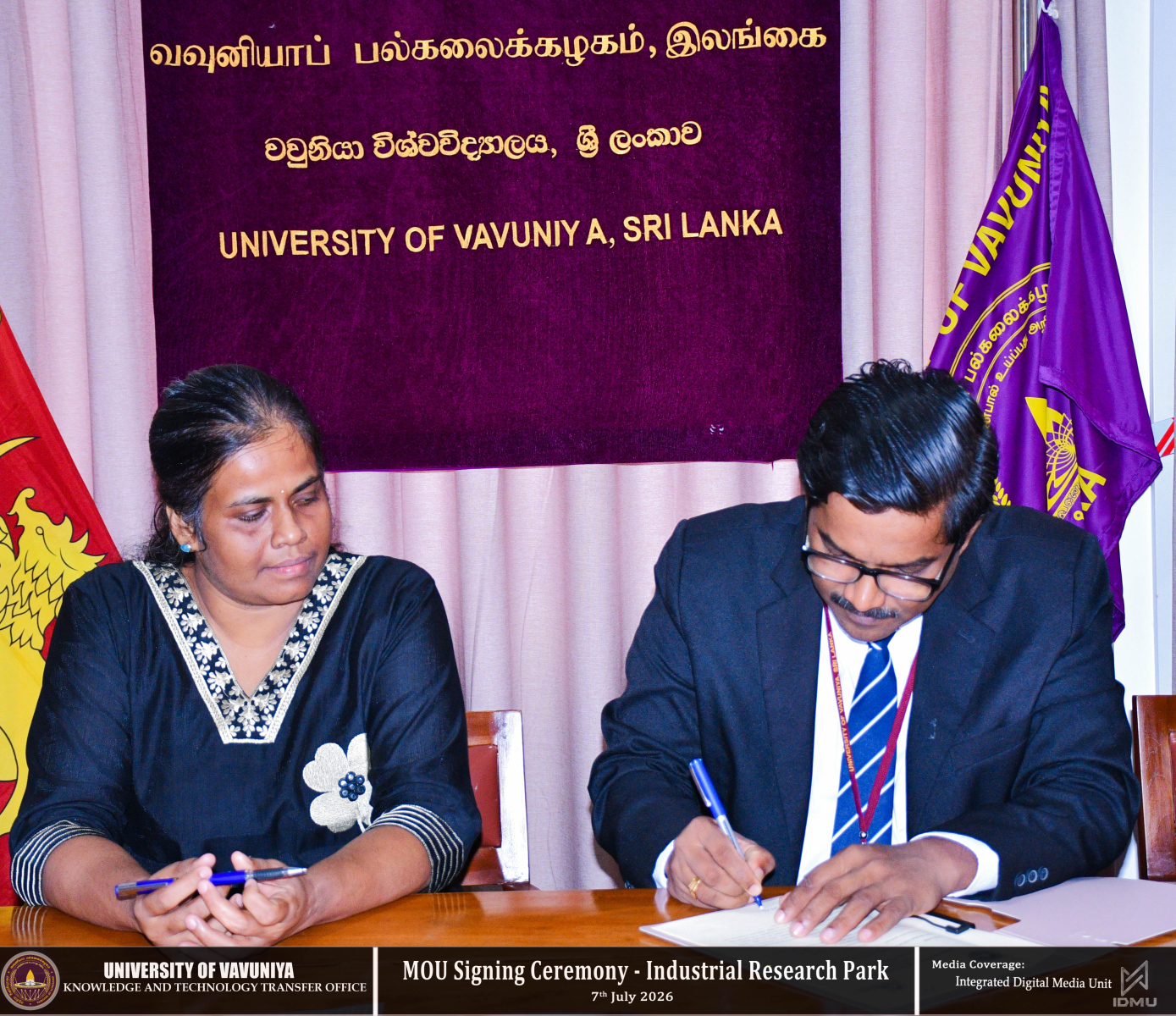
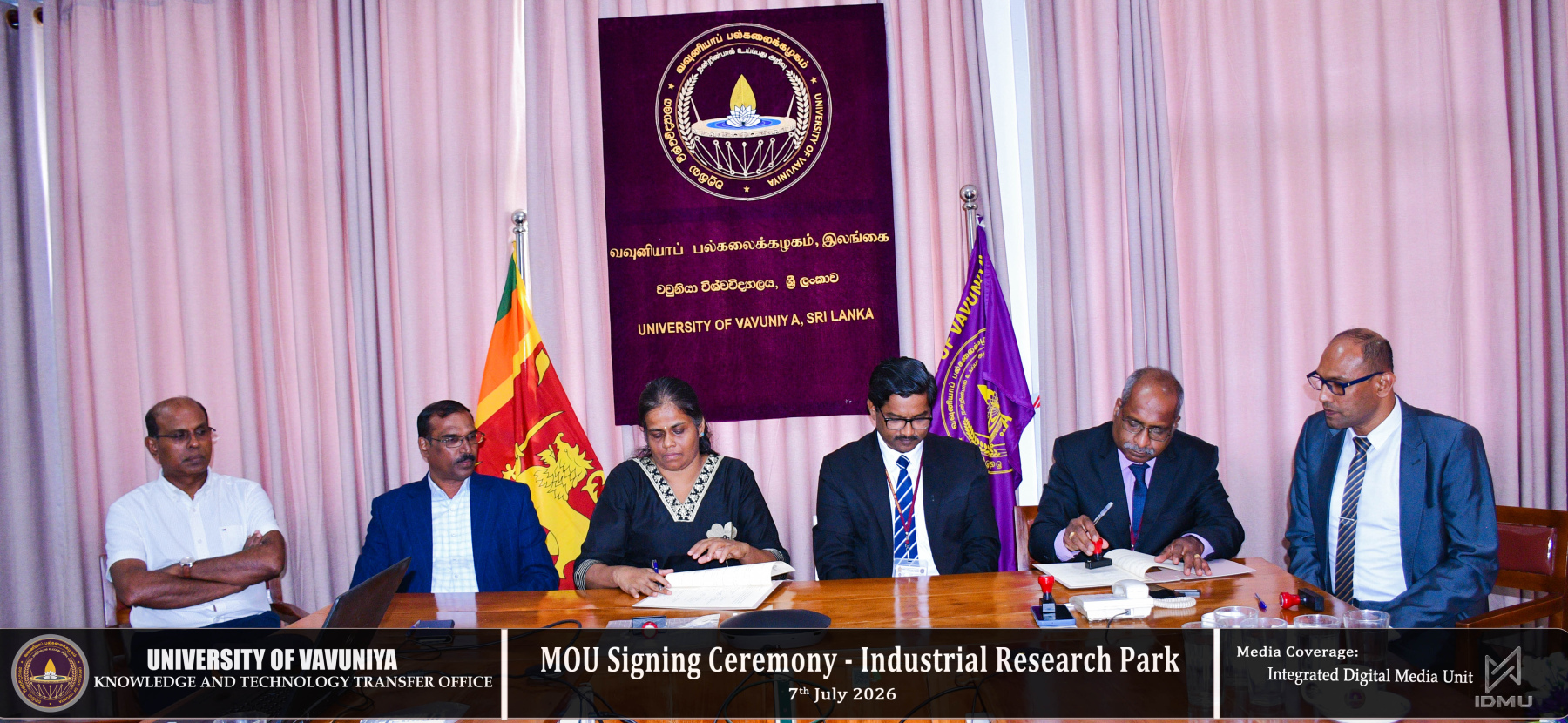
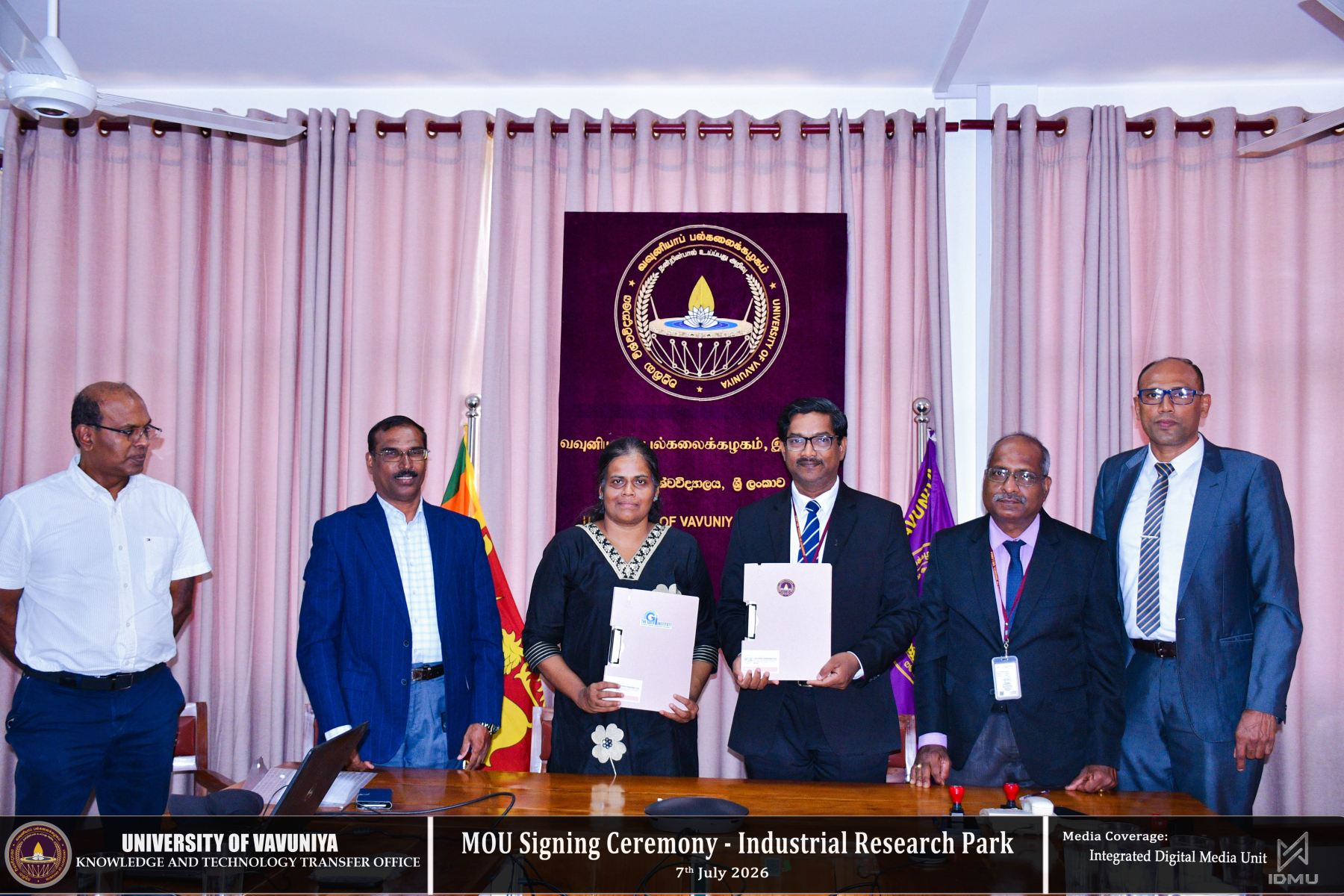
The Vice-Chancellor, Senior Professor A. Atputharajah, delivered his address highlighting the University’s vision of becoming a leading institution in innovation and industry engagement. He emphasized that the Industrial Research Park would serve as a platform for strengthening university–industry collaboration, facilitating technology transfer, and creating opportunities for academics, researchers, students, and entrepreneurs. Professor V. Kanagasingam, Project Director of the NURTURE Project at the GATE Institute, delivered a comprehensive presentation on the Industrial Research Park. He explained the objectives, implementation strategy, expected outcomes, and the opportunities available for collaborative research and innovation The highlight of the program was the Memorandum of Understanding (MoU) Signing Ceremony, held at 3.10 p.m., during which the University of Vavuniya and the GATE Institute officially signed the MoU.
The agreement signifies a shared commitment to promoting industrial research, innovation, entrepreneurship, research commercialization, capacity building, and regional economic development through collaborative initiatives. The program concluded at 3.20 p.m. with the Vote of Thanks delivered by Mr. R. Ravichandran, Coordinator of the Faculty of Technological Studies, Knowledge and Technology Transfer Office, University of Vavuniya. He expressed his sincere appreciation to the Vice-Chancellor, representatives of the GATE Institute, invited guests, academic staff, researchers, and all participants for their valuable contributions towards making the event a success.
During the session, academic staff, senior lecturers, and researchers from the University actively presented and discussed their ongoing and potential research projects, highlighting innovative ideas with commercialization potential. The interactive discussion explored opportunities for industry collaboration, technology transfer, funding support, and future joint research initiatives under the Industrial Research Park framework. The ceremony concluded successfully with a renewed commitment from both institutions to work collaboratively in establishing the Industrial Research Park as a center for industrial innovation, technology transfer, entrepreneurship development, and research commercialization. The event also created an important platform for academic staff and researchers to showcase their research capabilities and explore future partnerships with industry, thereby strengthening the University’s contribution to national and regional socio-economic development.