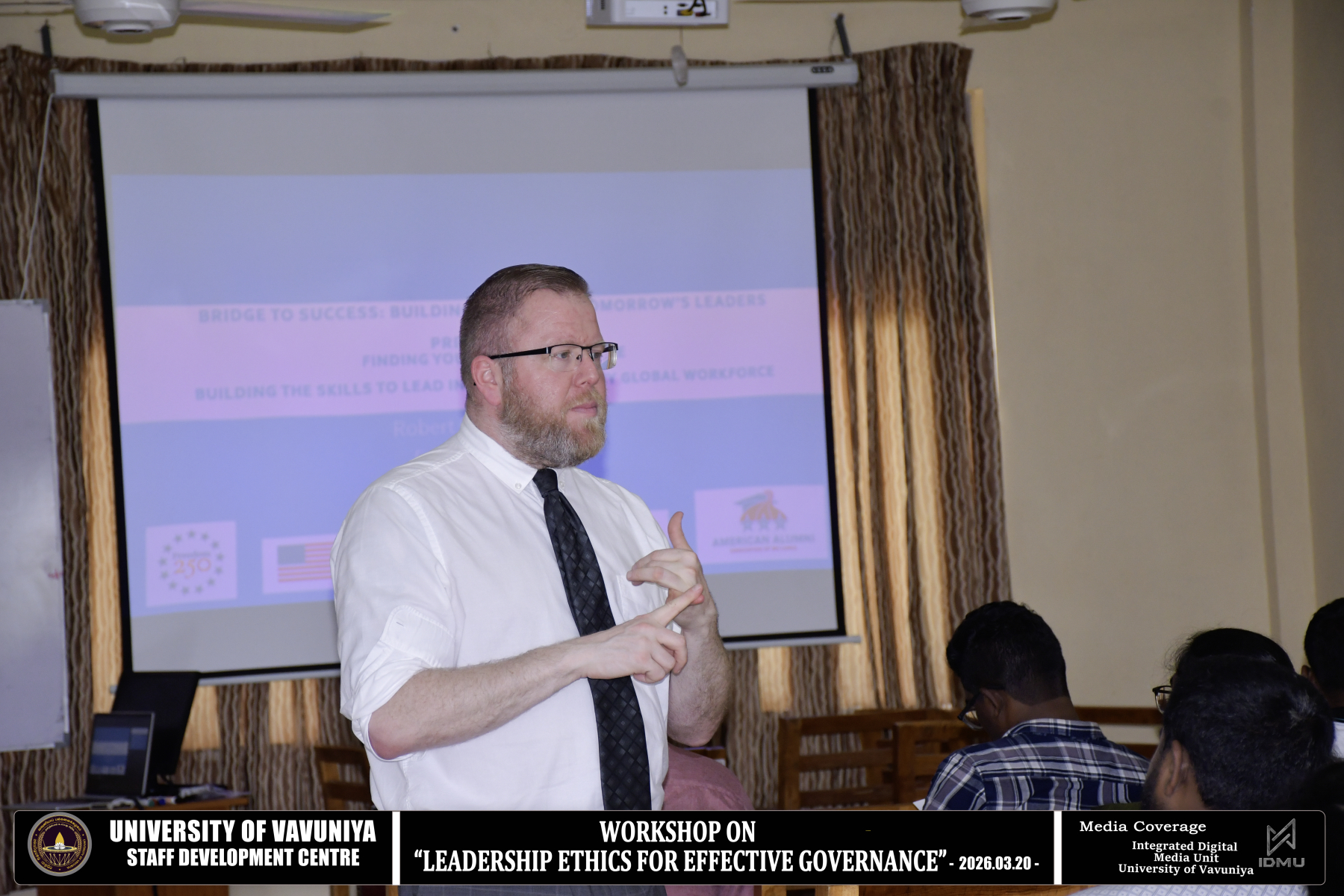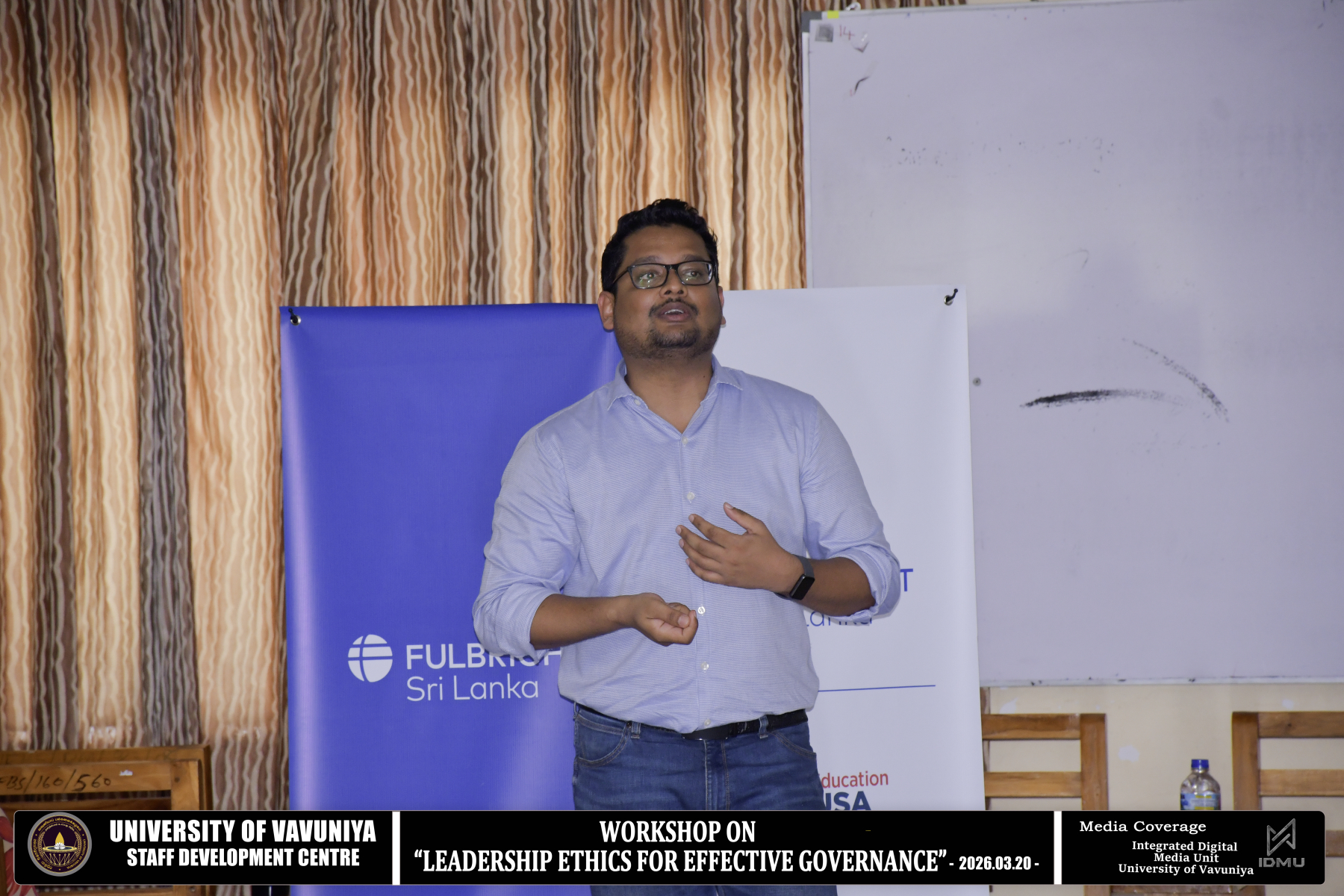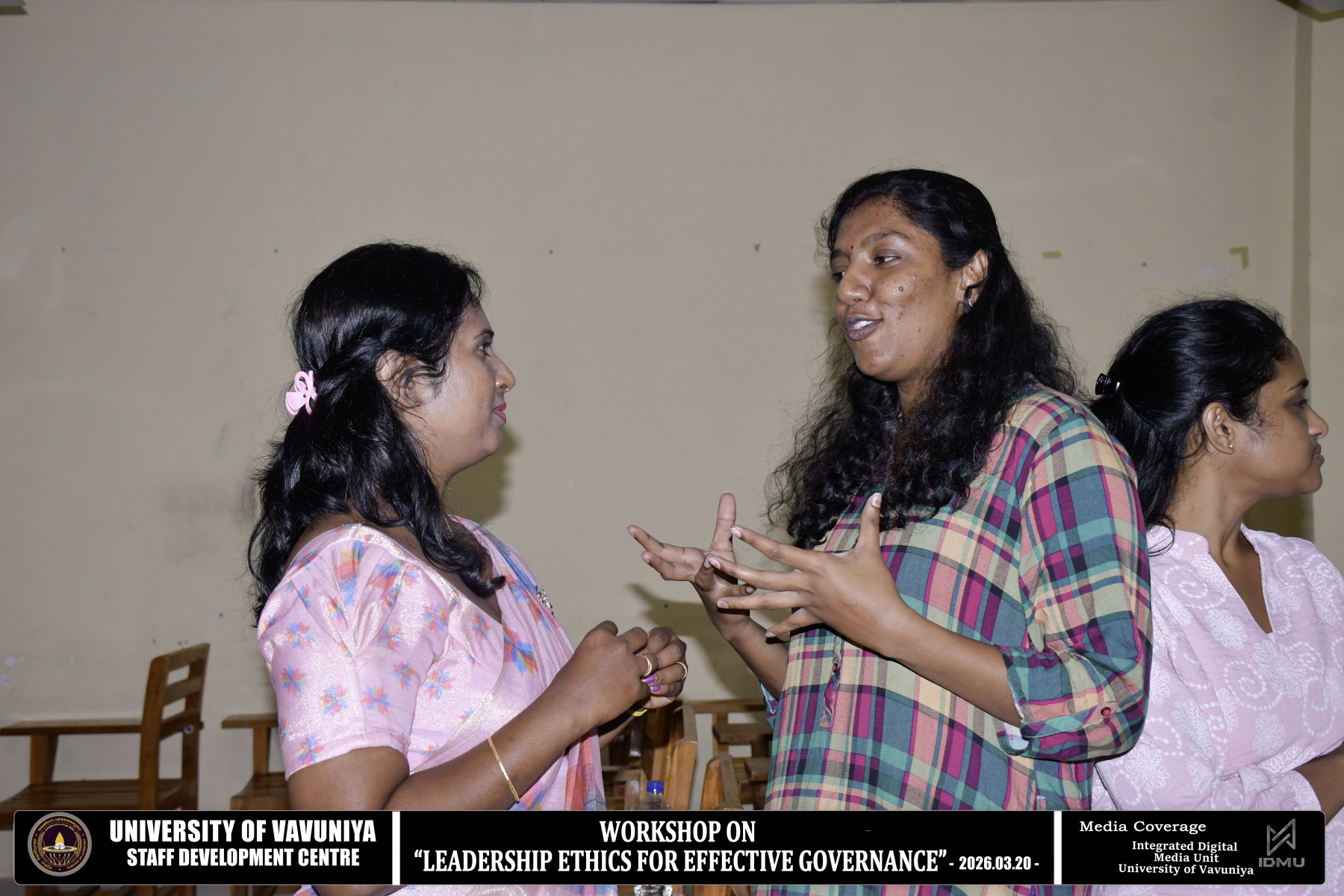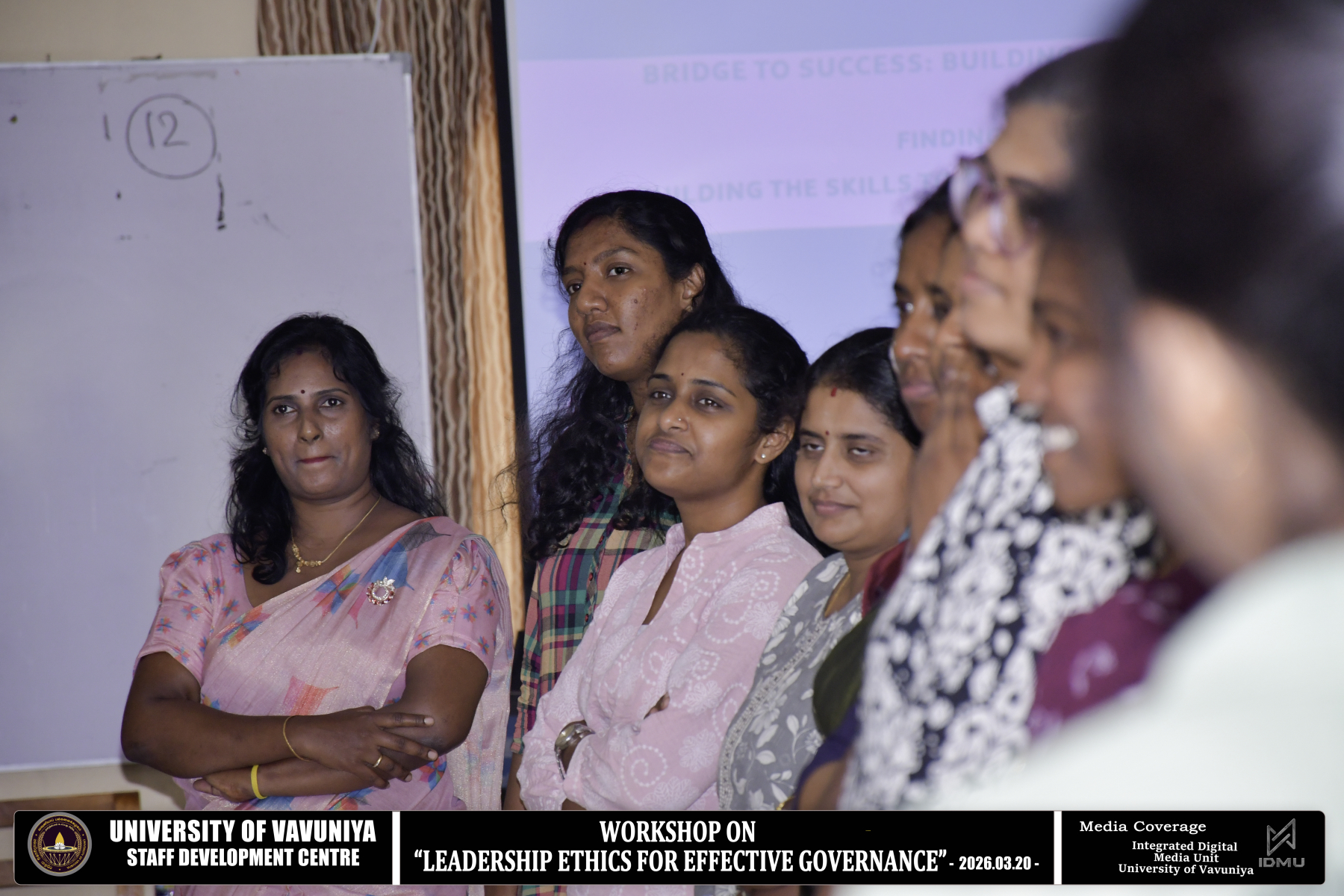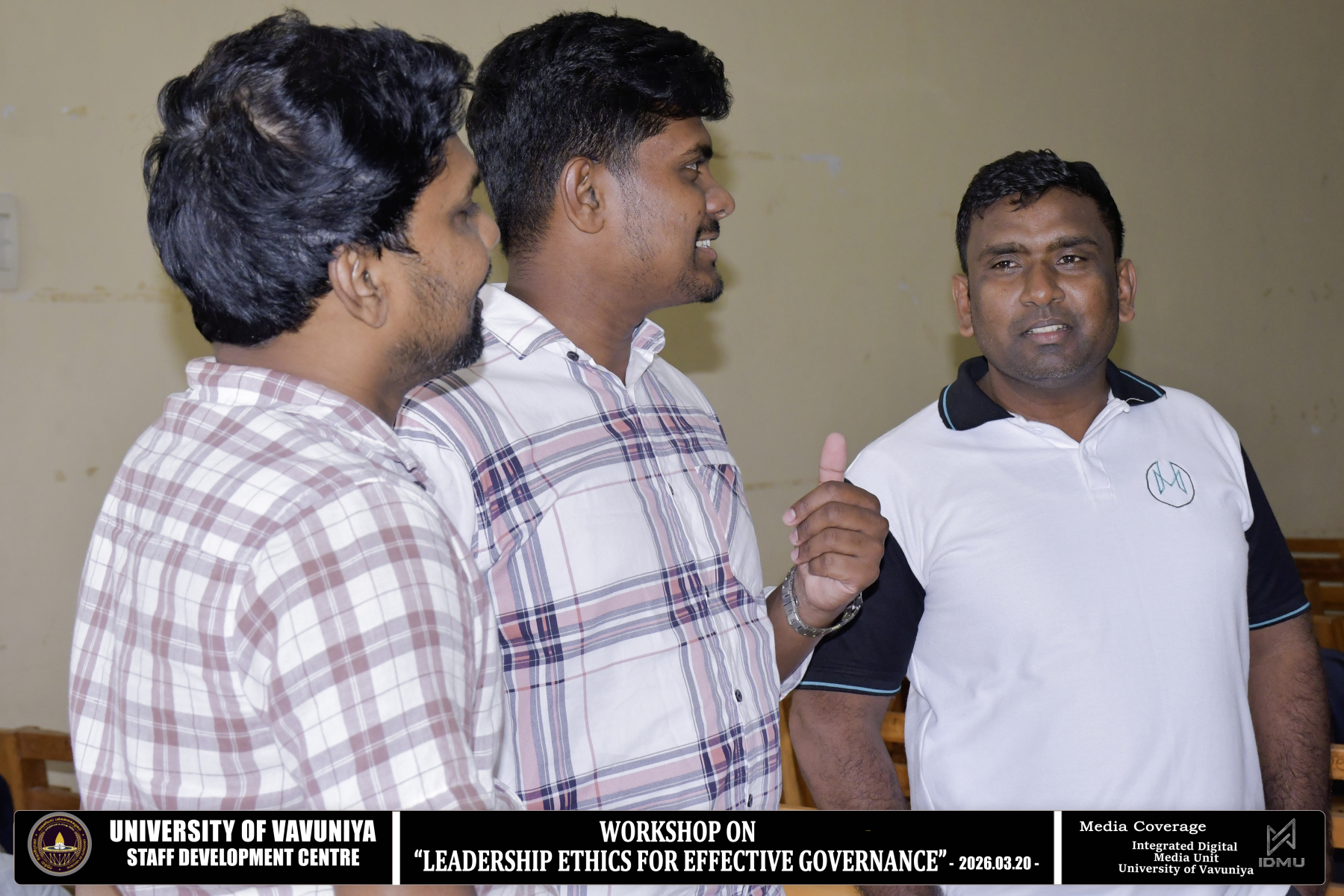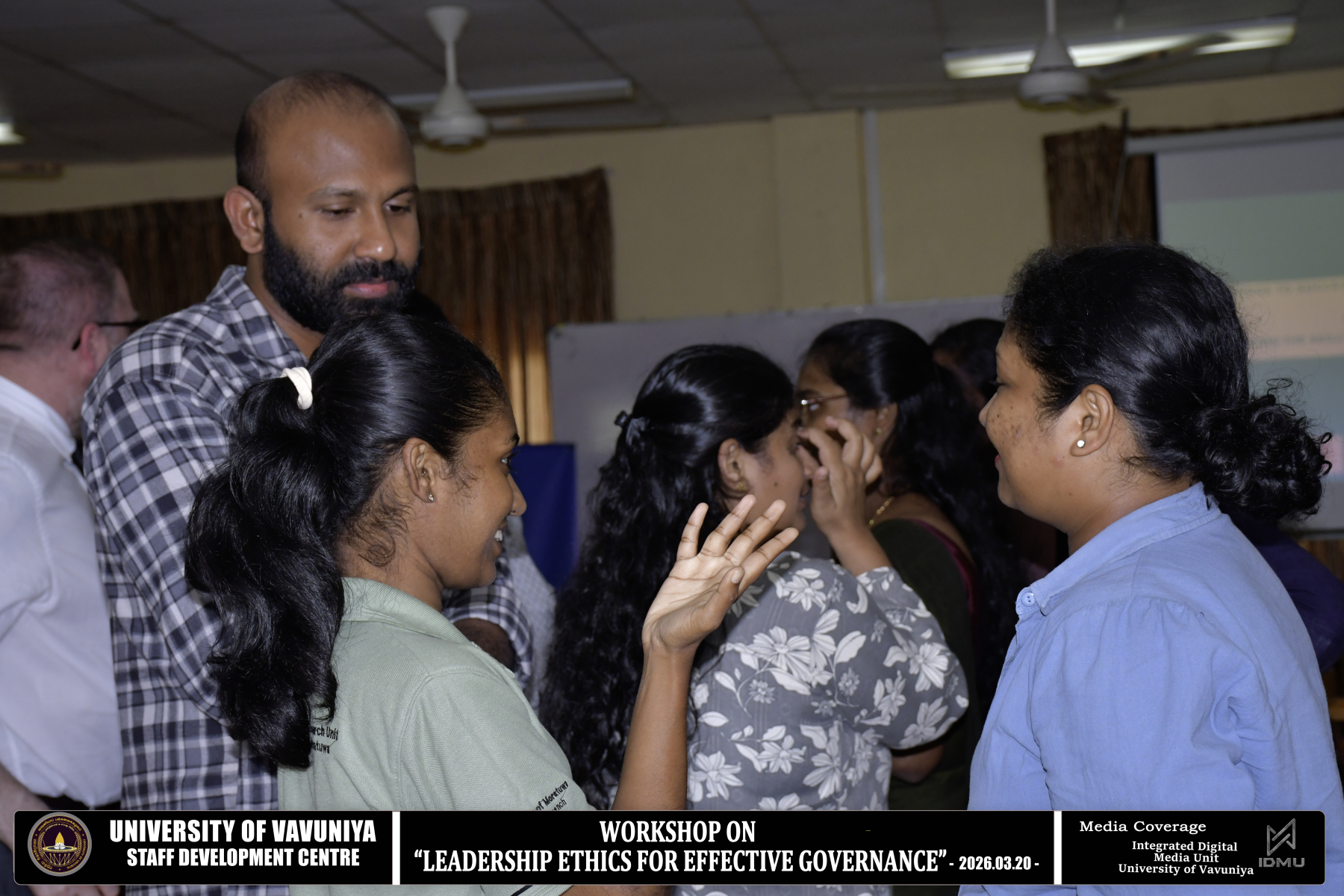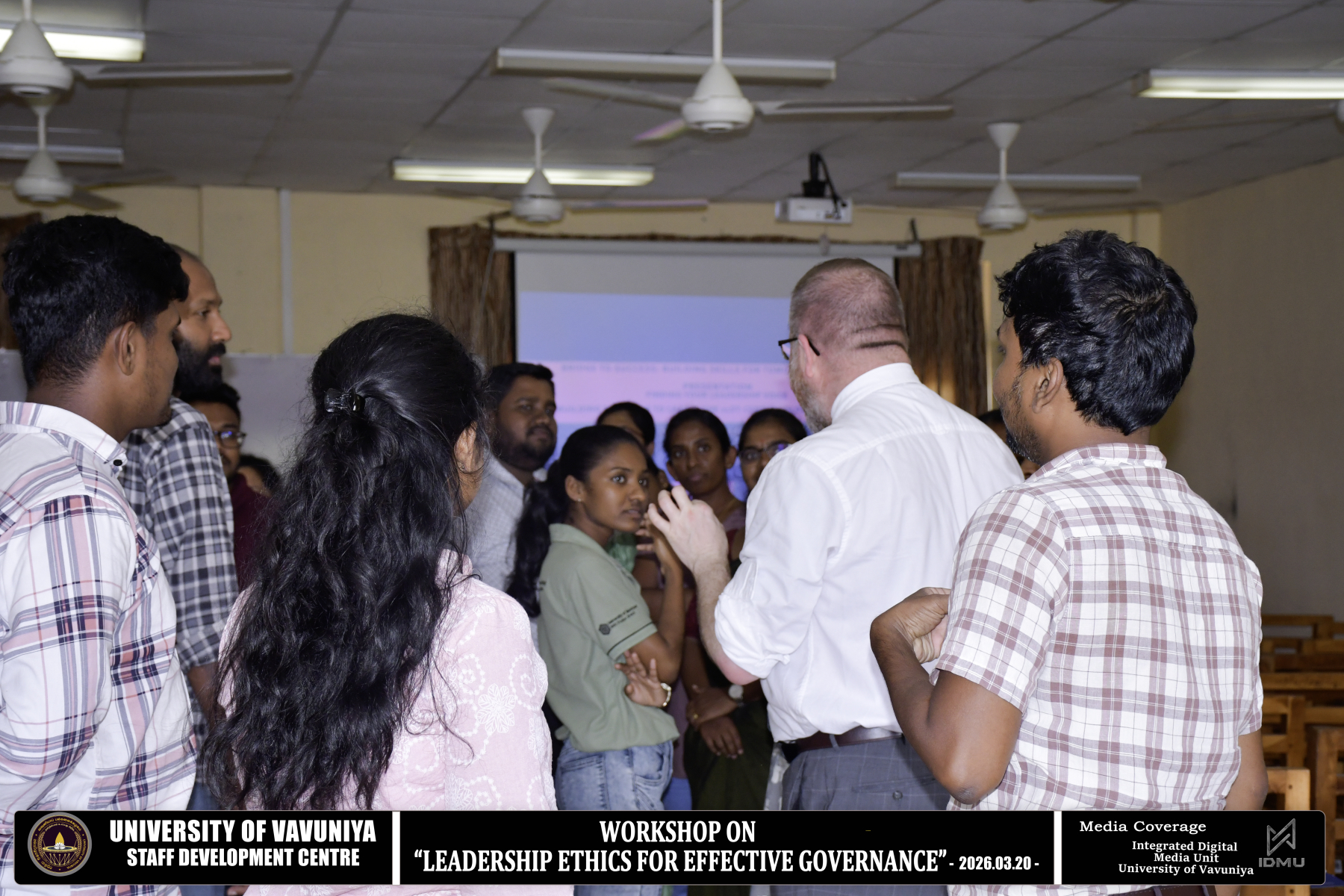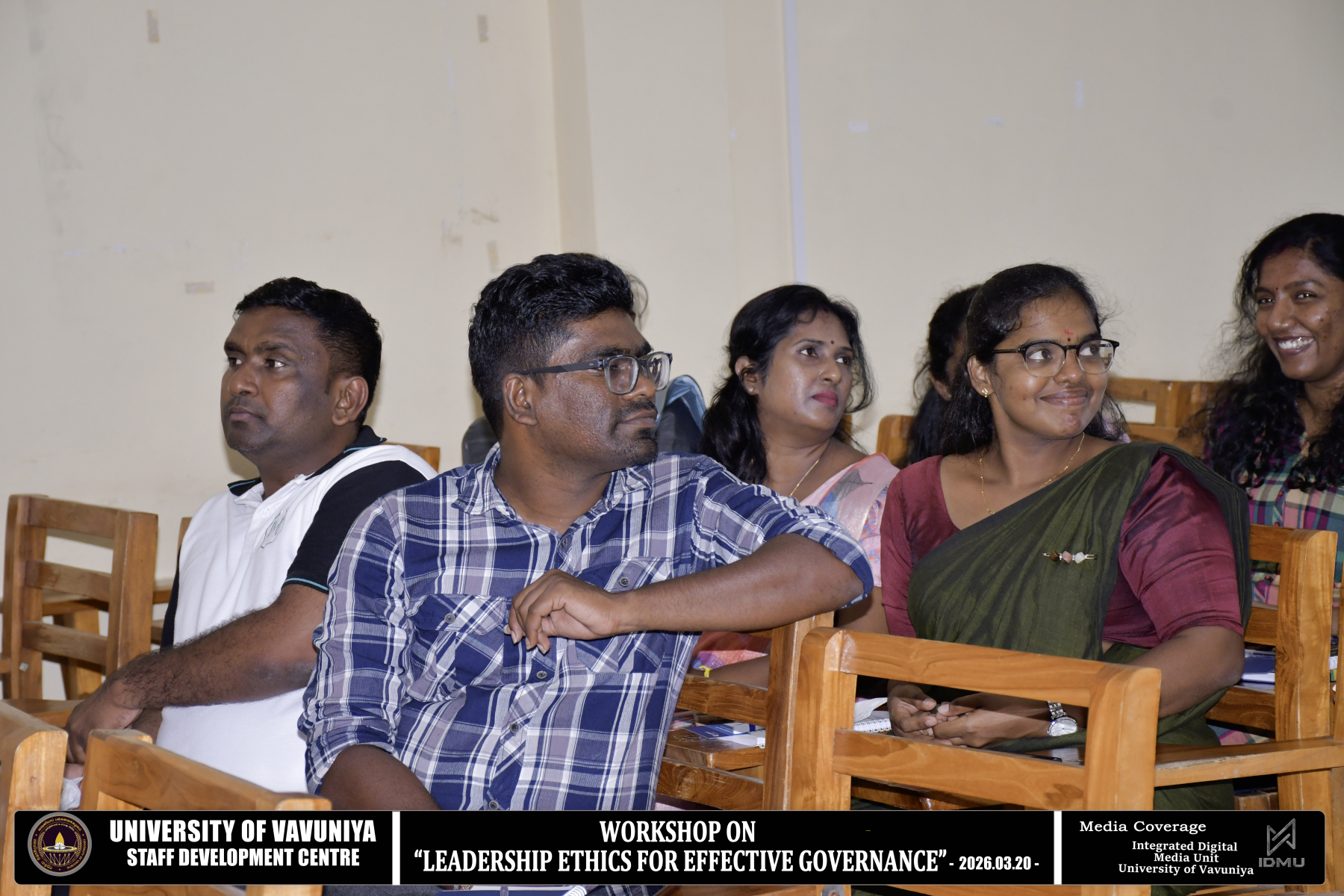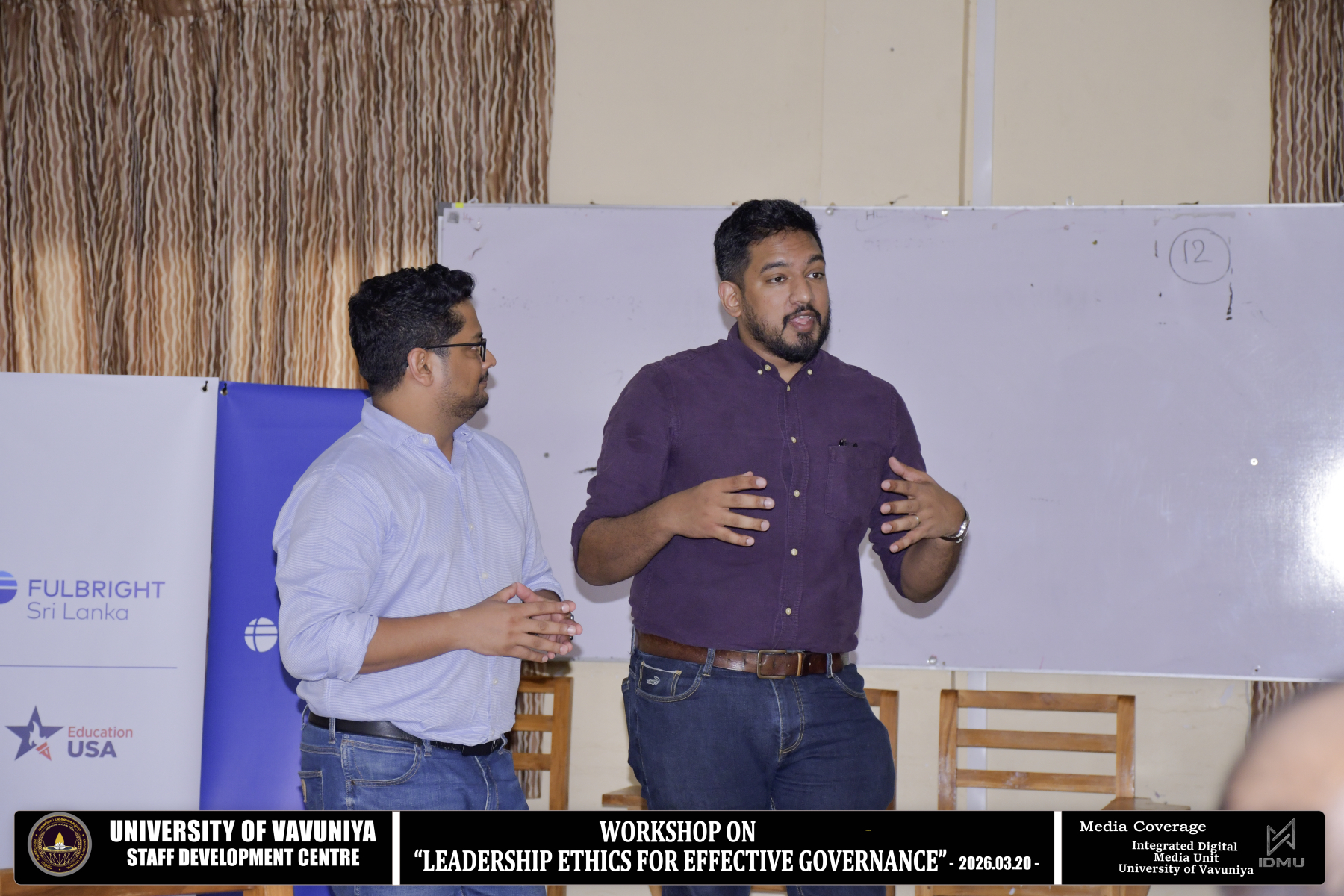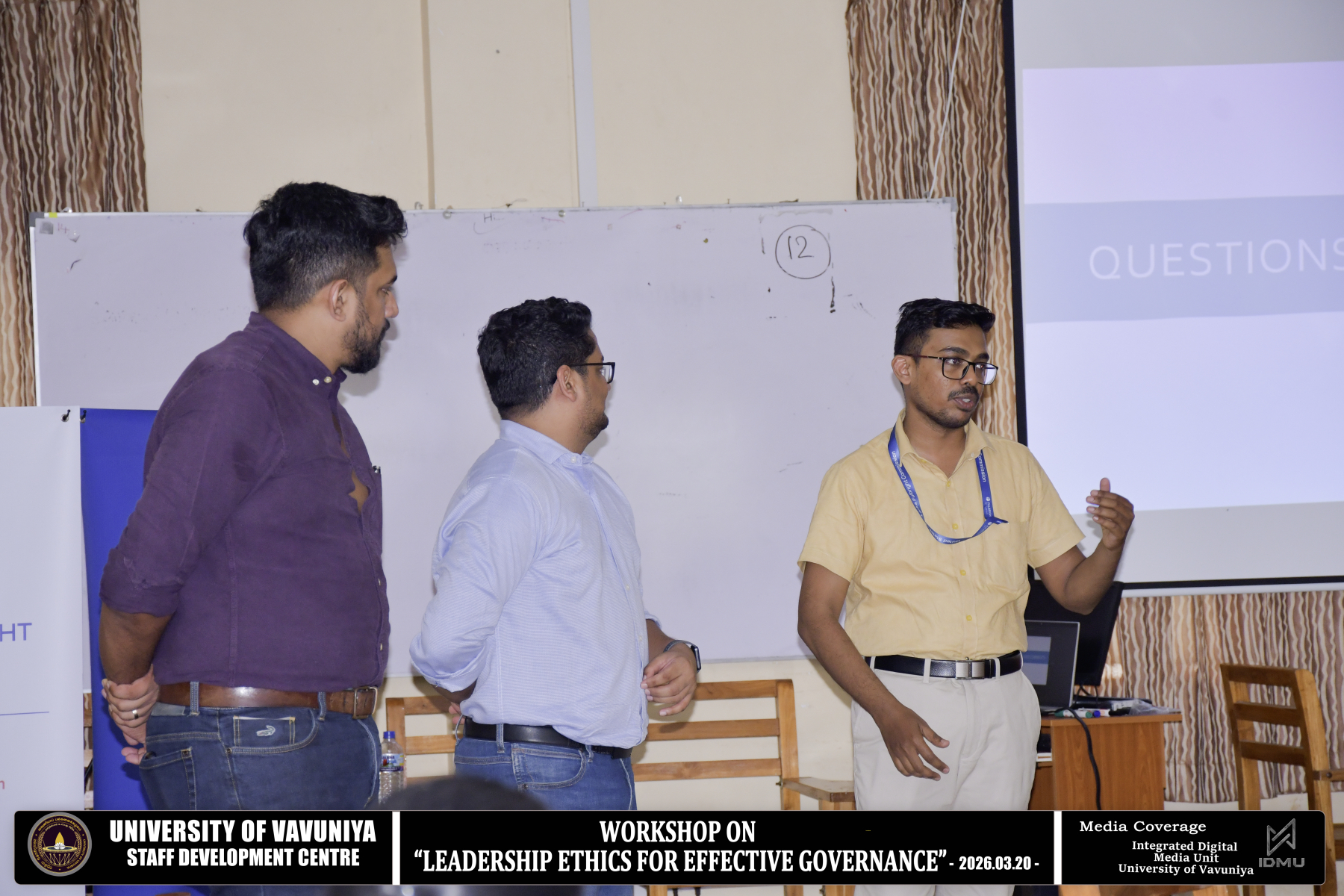

The Staff Development Centre and the Centre for International Affairs of the University of Vavuniya recently hosted a landmark event. Together with the United States–Sri Lanka Fulbright Commission, they organized a vital Fulbright Specialist Program session.
The seminar titled “Leadership and Ethics for Effective Governance” took place on 20 March 2026. It ran from 1:30 p.m. to 3:00 p.m. specifically for academic staff. This program operated in partnership with the American Alumni Association of Sri Lanka (AAASL).
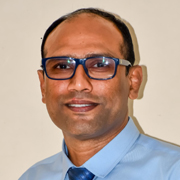
Introducing Dr. Robert DeFinis
The Fulbright Specialist Program session featured Dr. Robert DeFinis as the keynote speaker. He is an acclaimed author, educator, and corporate consultant. He brings more than 20 years of deep experience in organizational leadership and human behavior.
During his presentation, he helped participants learn how to develop a strong leadership voice. He focused heavily on improving emotional intelligence, strategic thinking, and personal adaptability. The organizers highlighted these as important skills for both universities and modern workplaces.
Core Leadership Competencies Covered
Participants gained immense practical knowledge from this global training session. Dr. DeFinis introduced several leadership practices used by top global employers. He also shared specific strategies from American universities to train future leaders.
The presentation covered four major management pillars:
- Emotional Intelligence: Understanding personal emotions to manage professional teams effectively.
- Strategic Vision: Aligning institutional goals with changing global educational trends.
- Ethical Decision-Making: Using transparency and fairness as accountability tools in governance.
- Resilience: Navigating institutional crises and administrative challenges smoothly.
Enhancing Communication and Decision-Making
Dr. DeFinis emphasized that emotional intelligence forms the true base of good leadership. He highlighted the daily importance of structured problem-solving and open communication. Academic leaders learned new tools to improve their workplace influence and executive decision-making.
Ultimately, this collaborative session marks a significant step forward for our university. By training faculty members in these global frameworks, the institution helps create a highly resilient academic ecosystem.