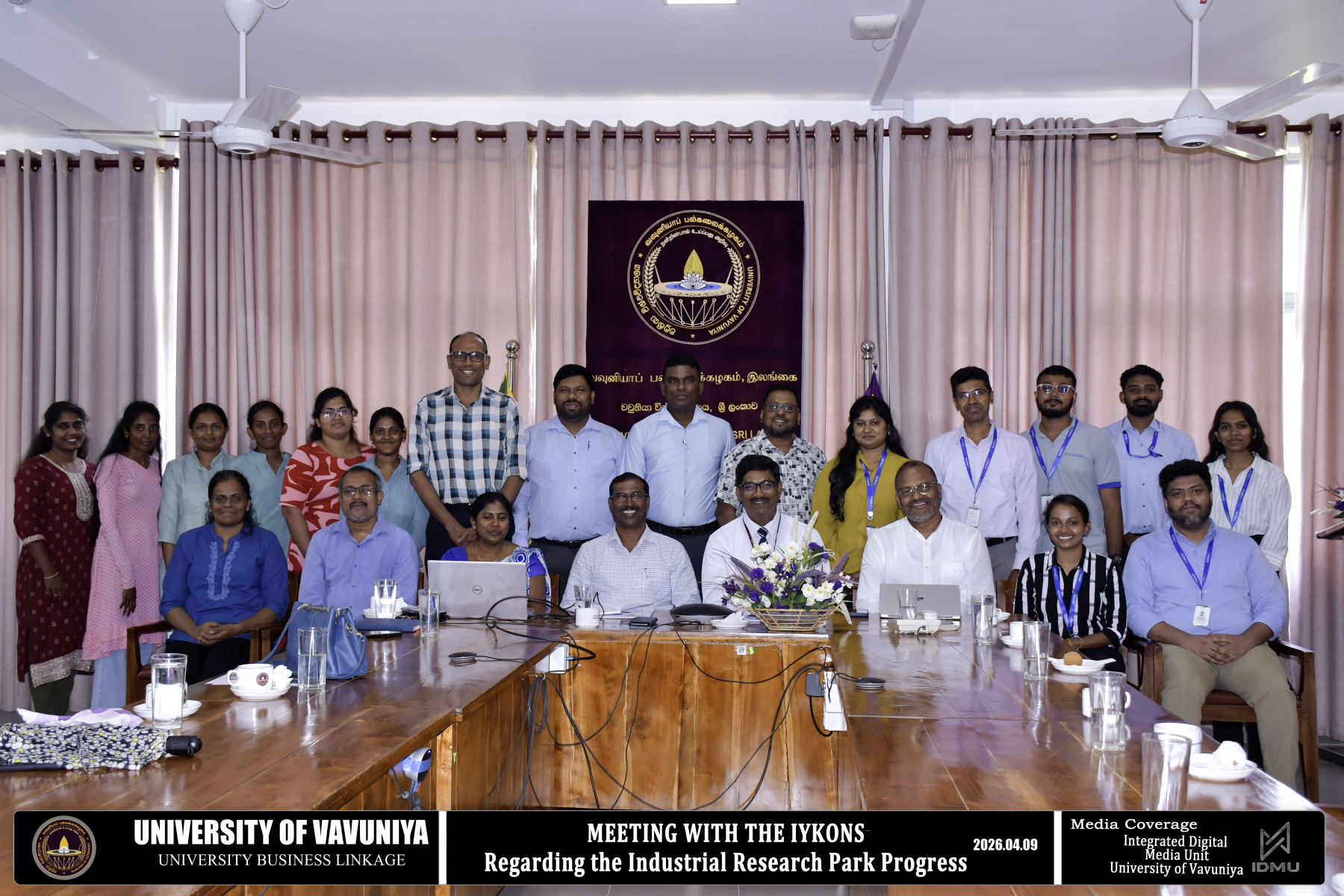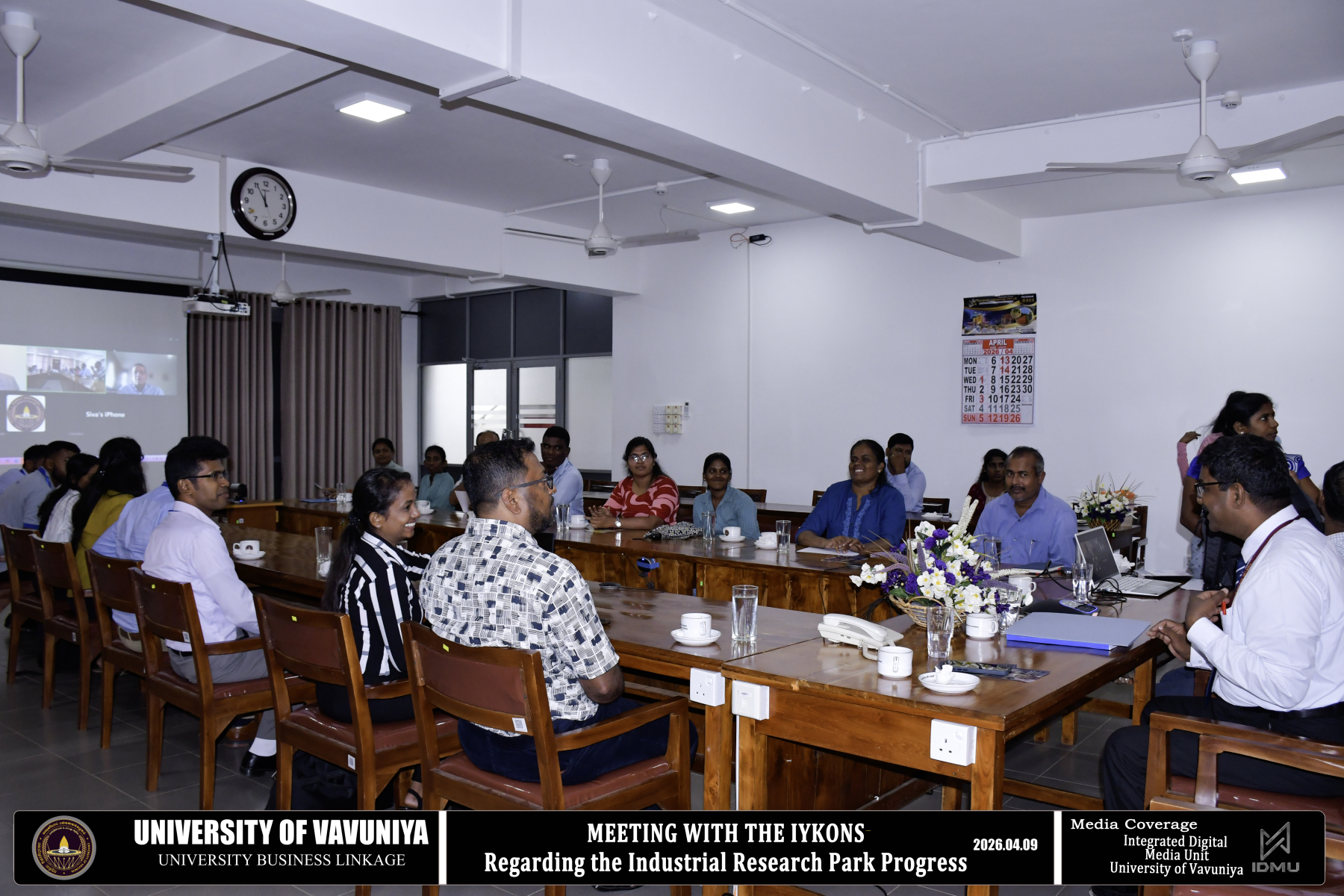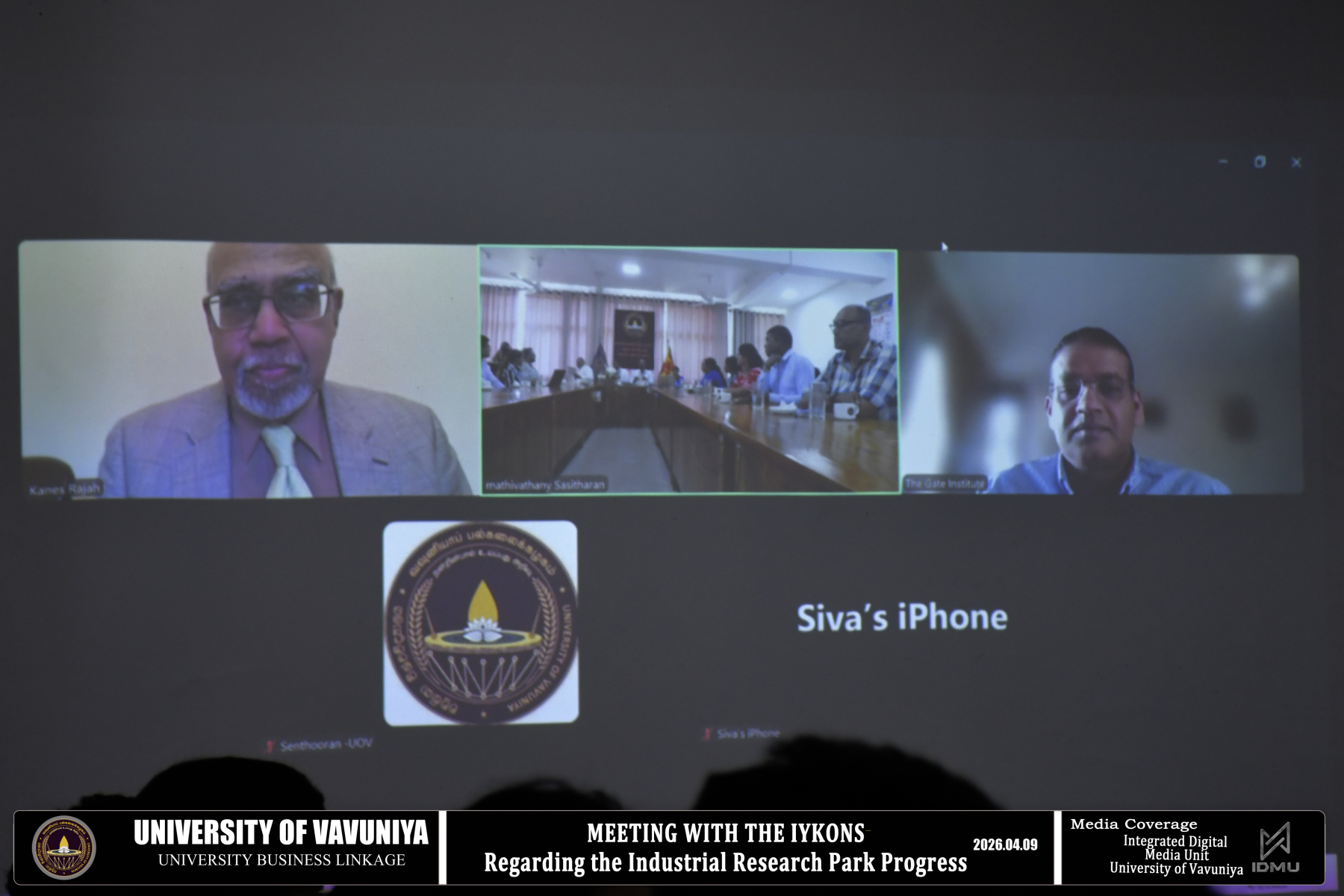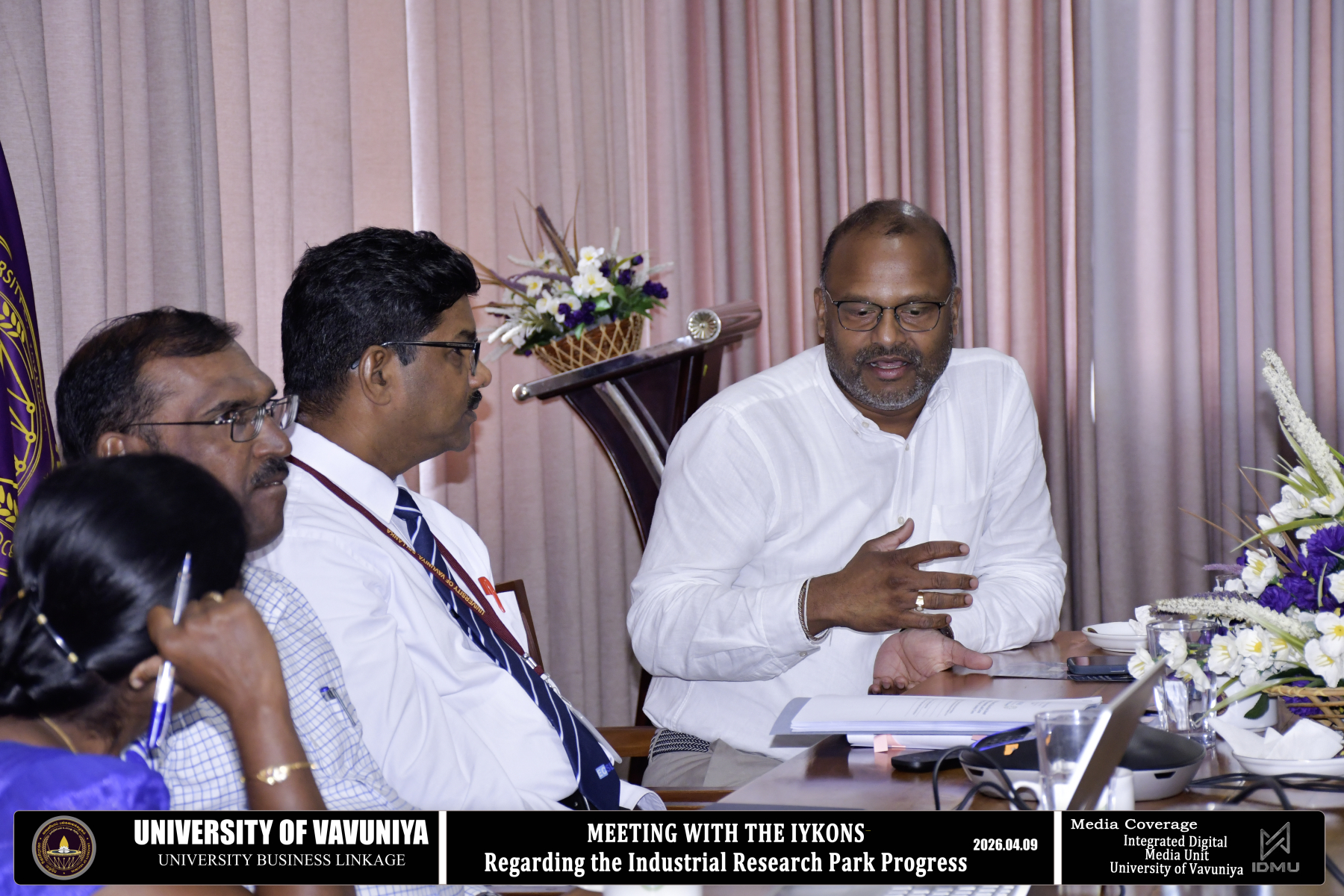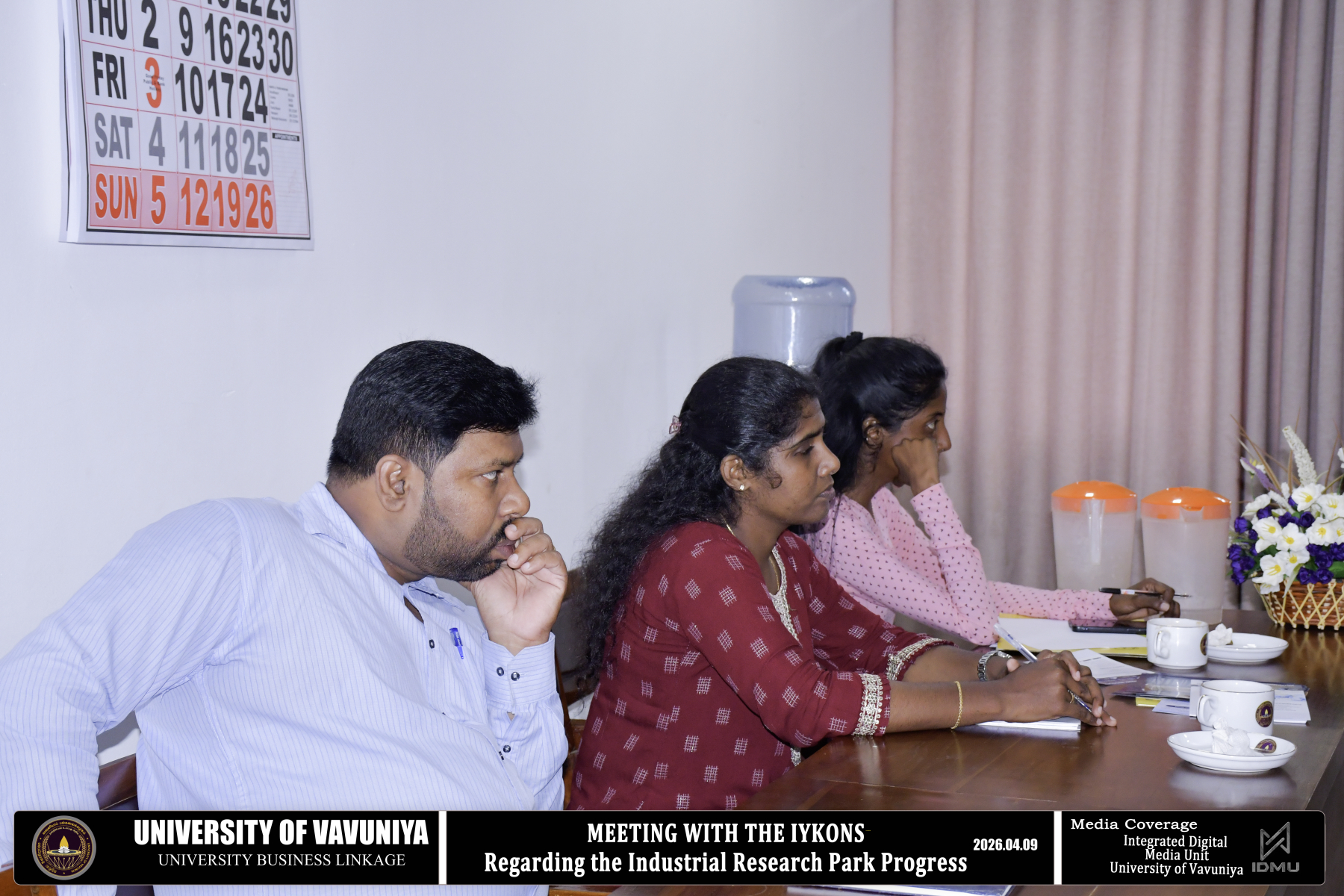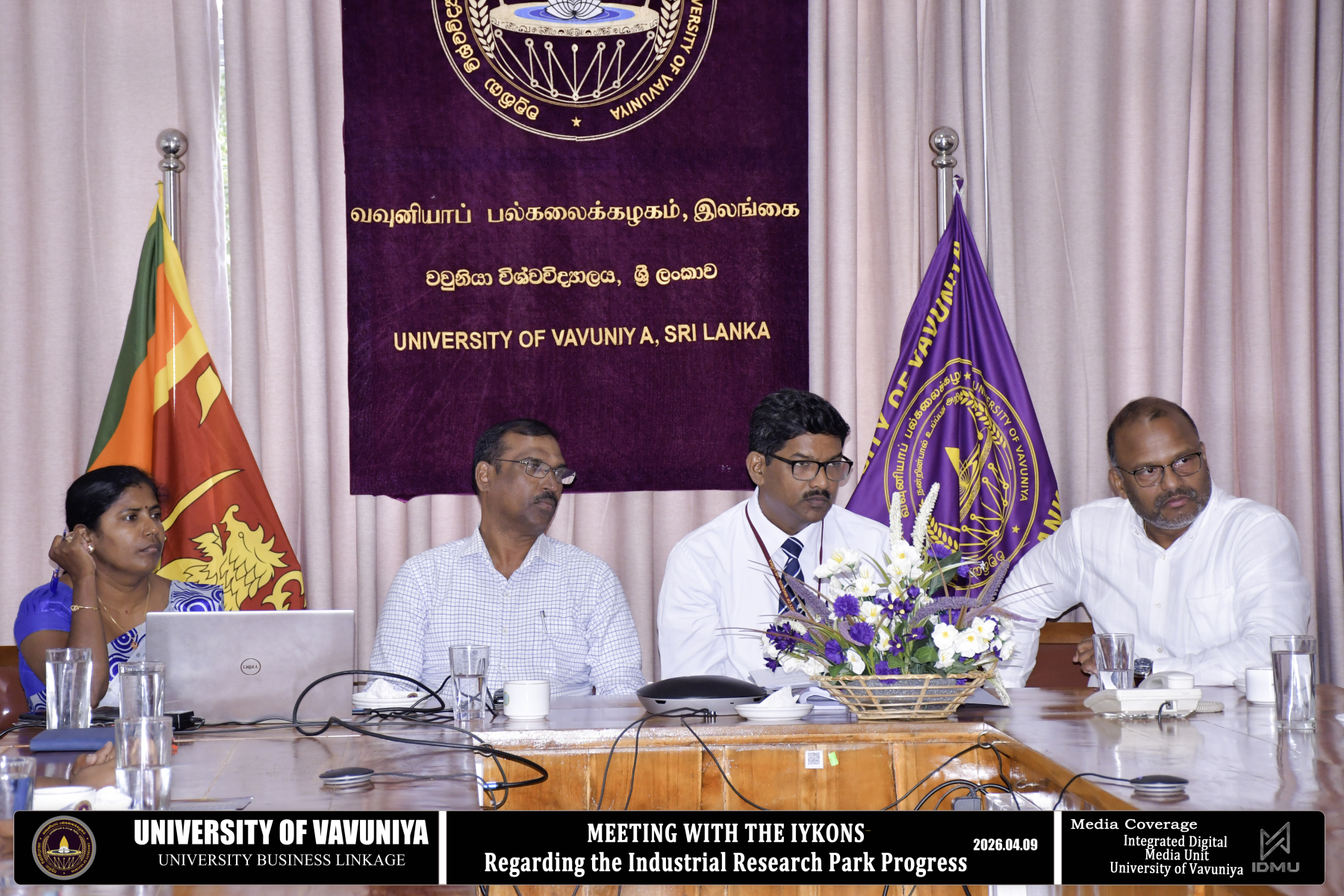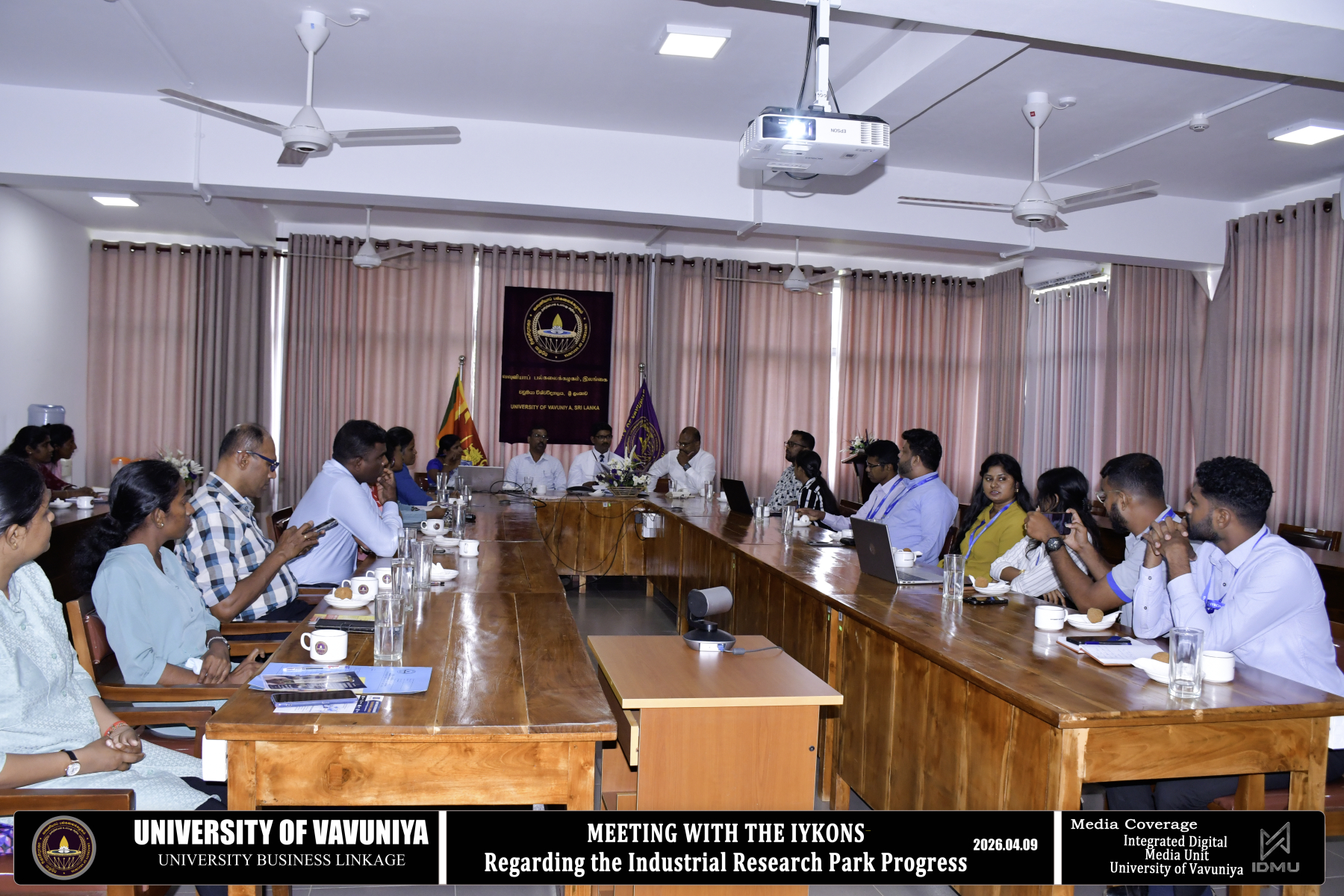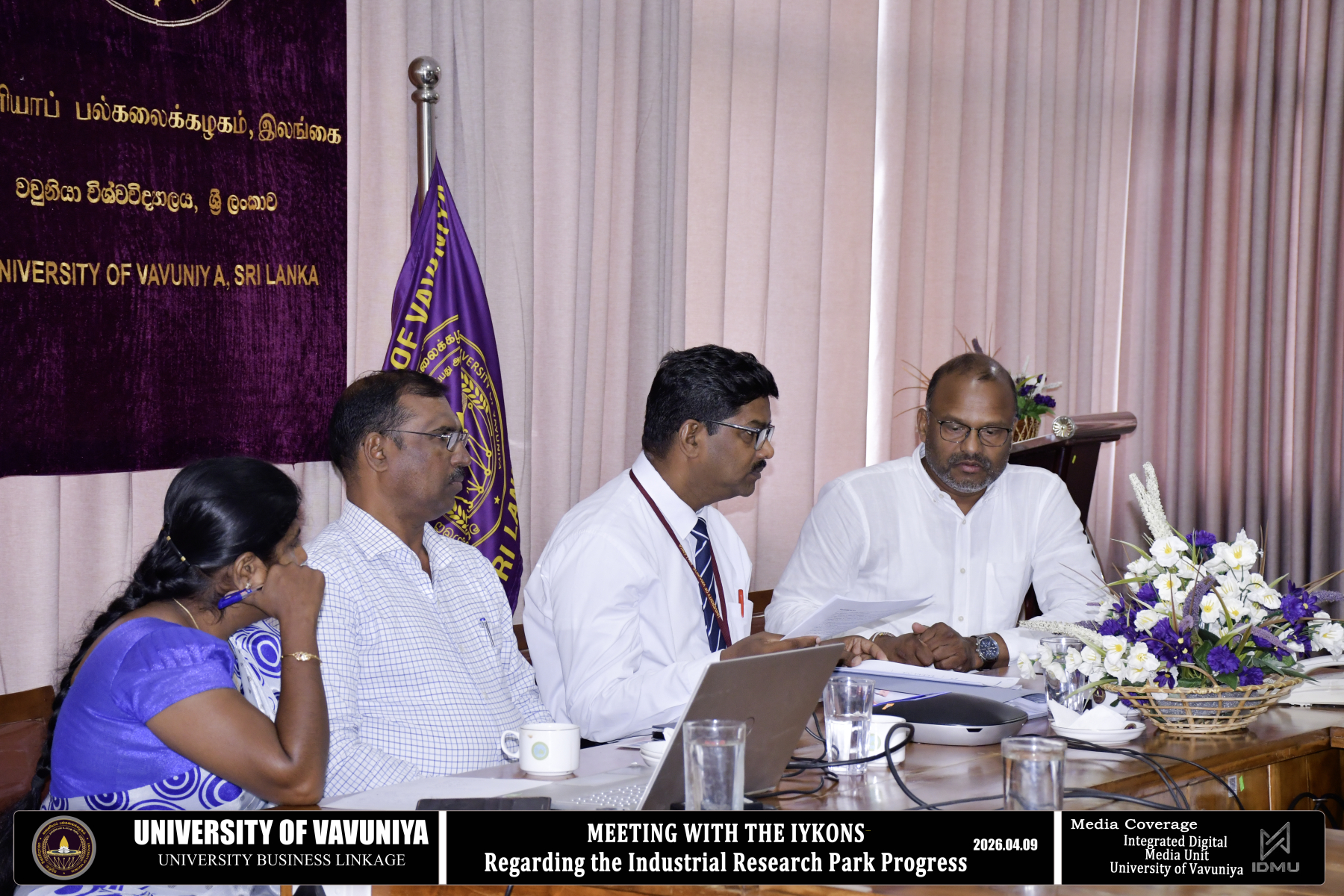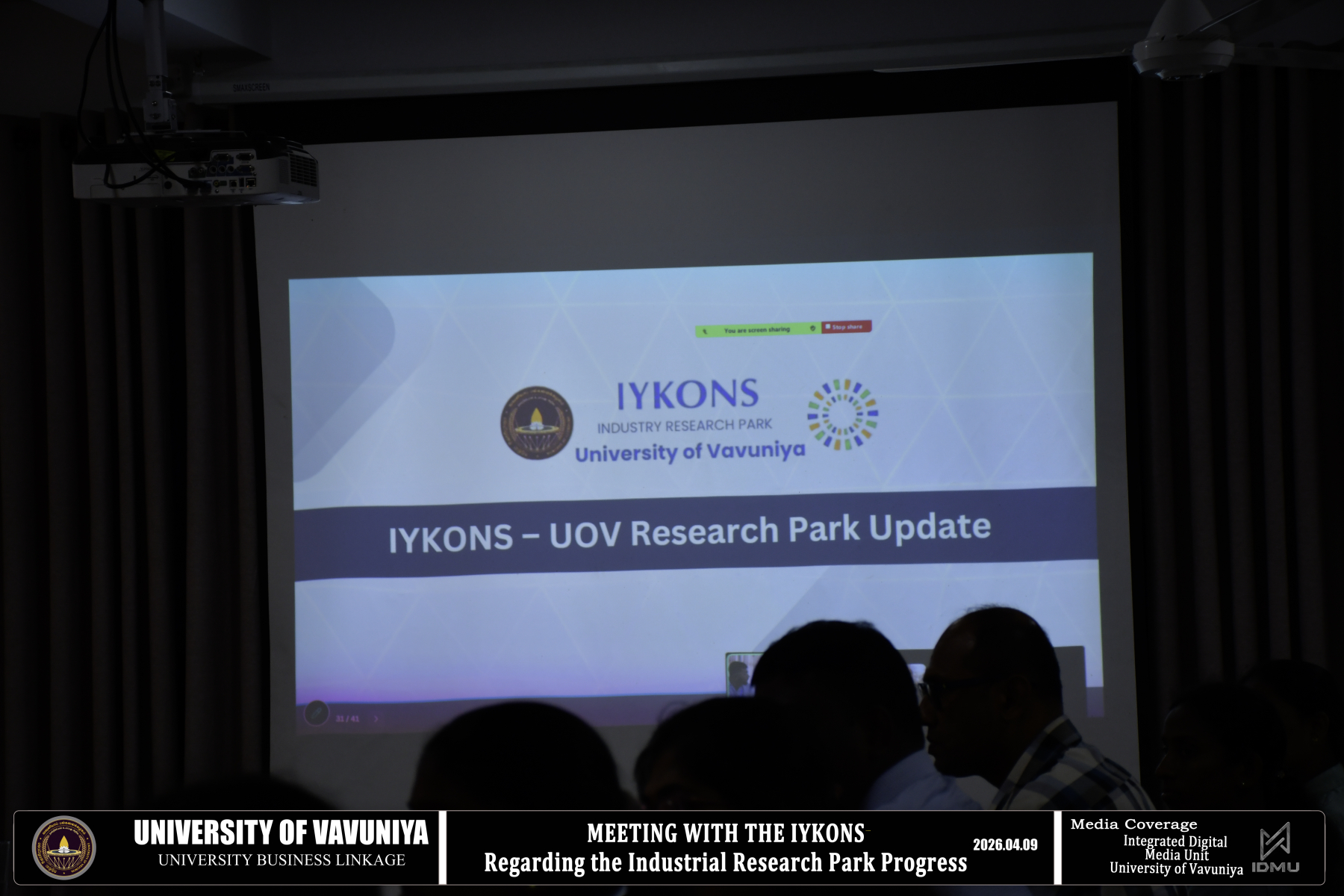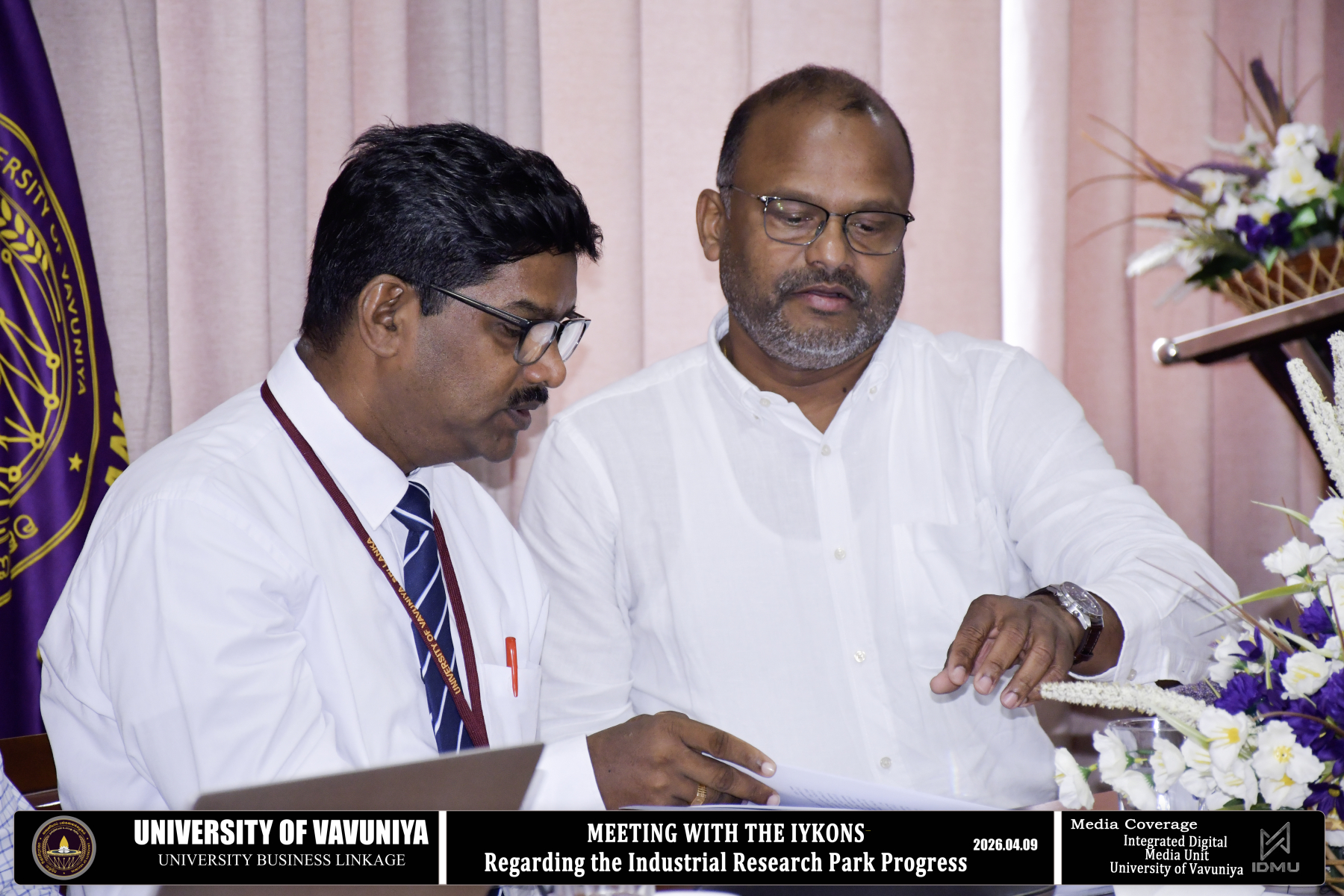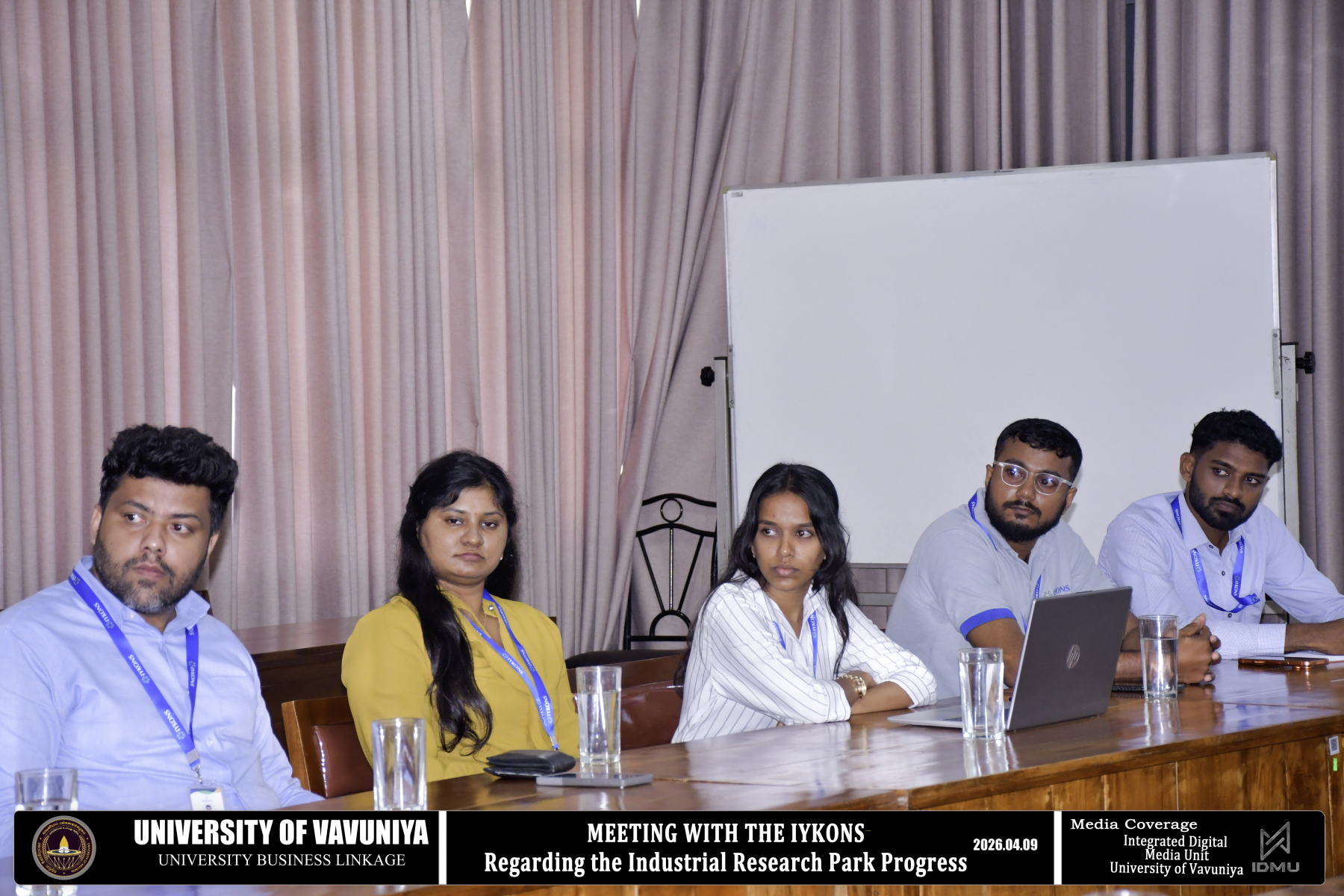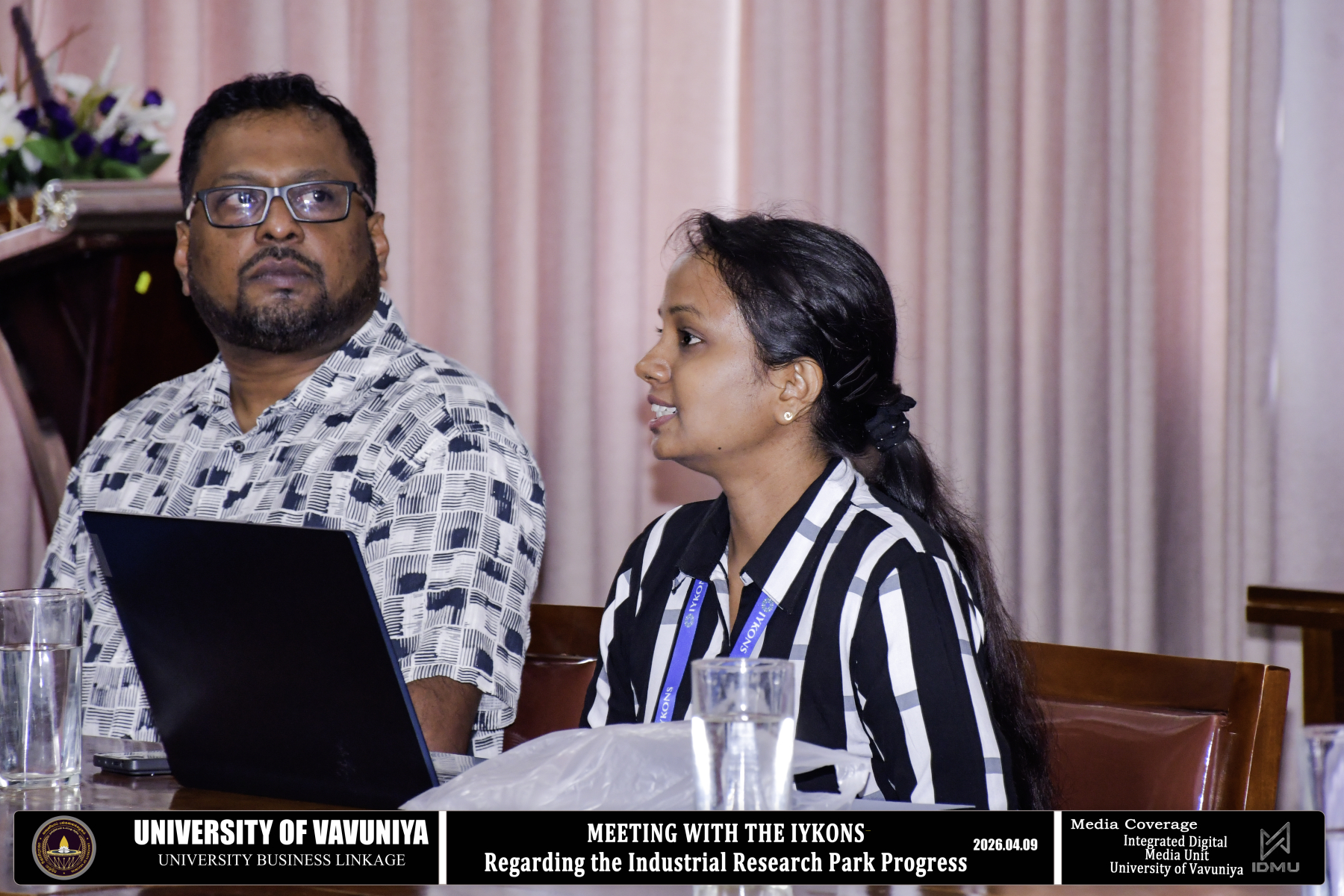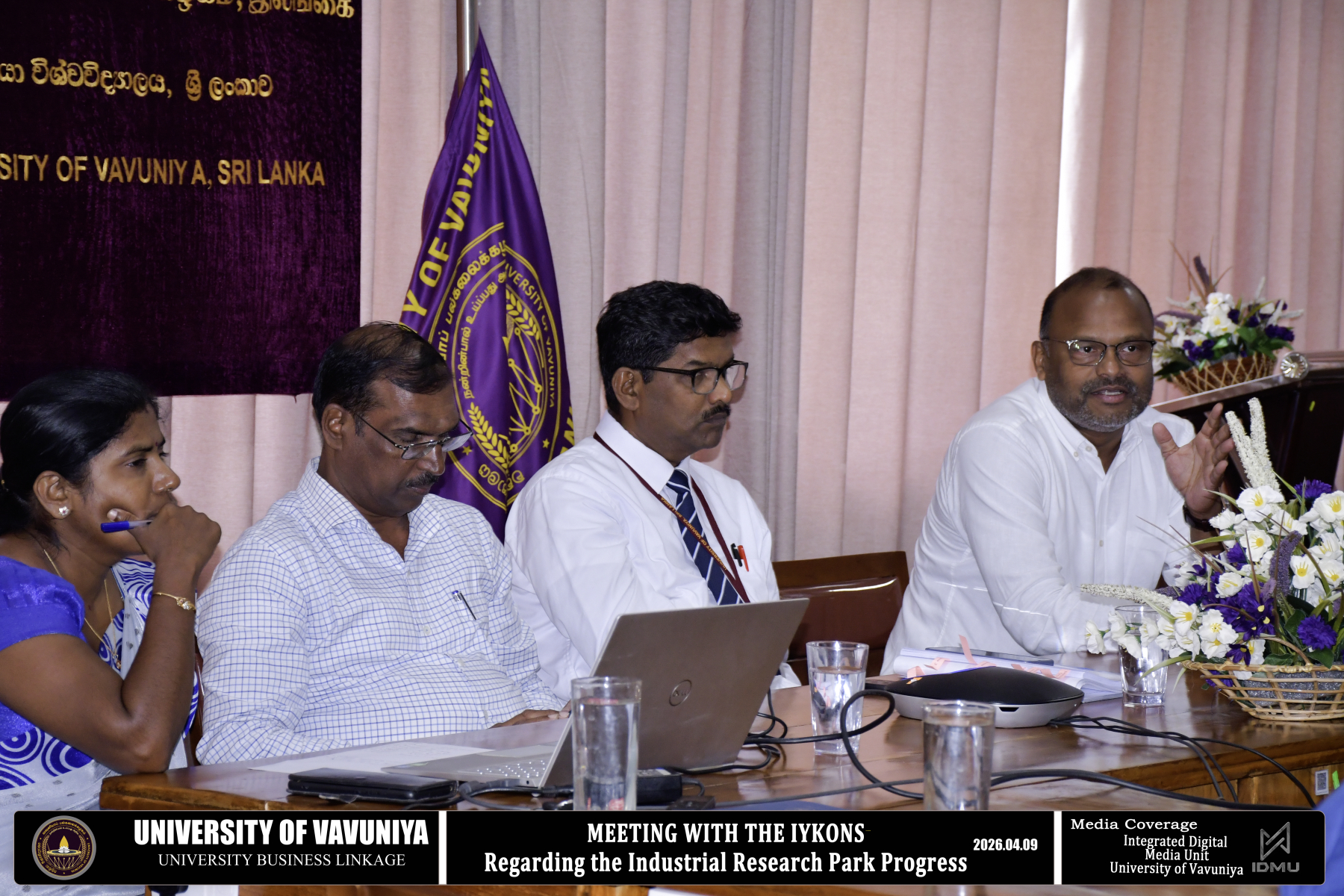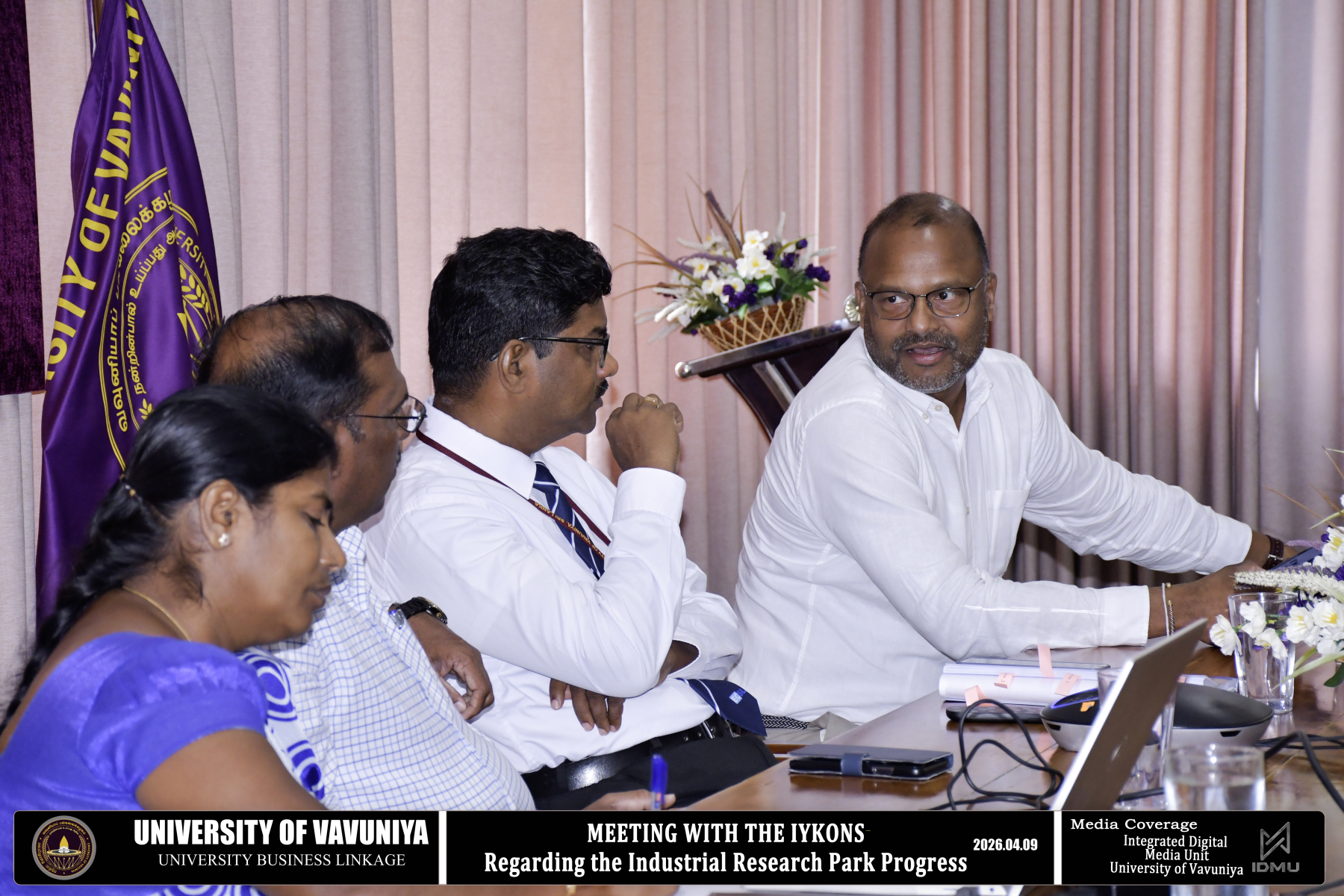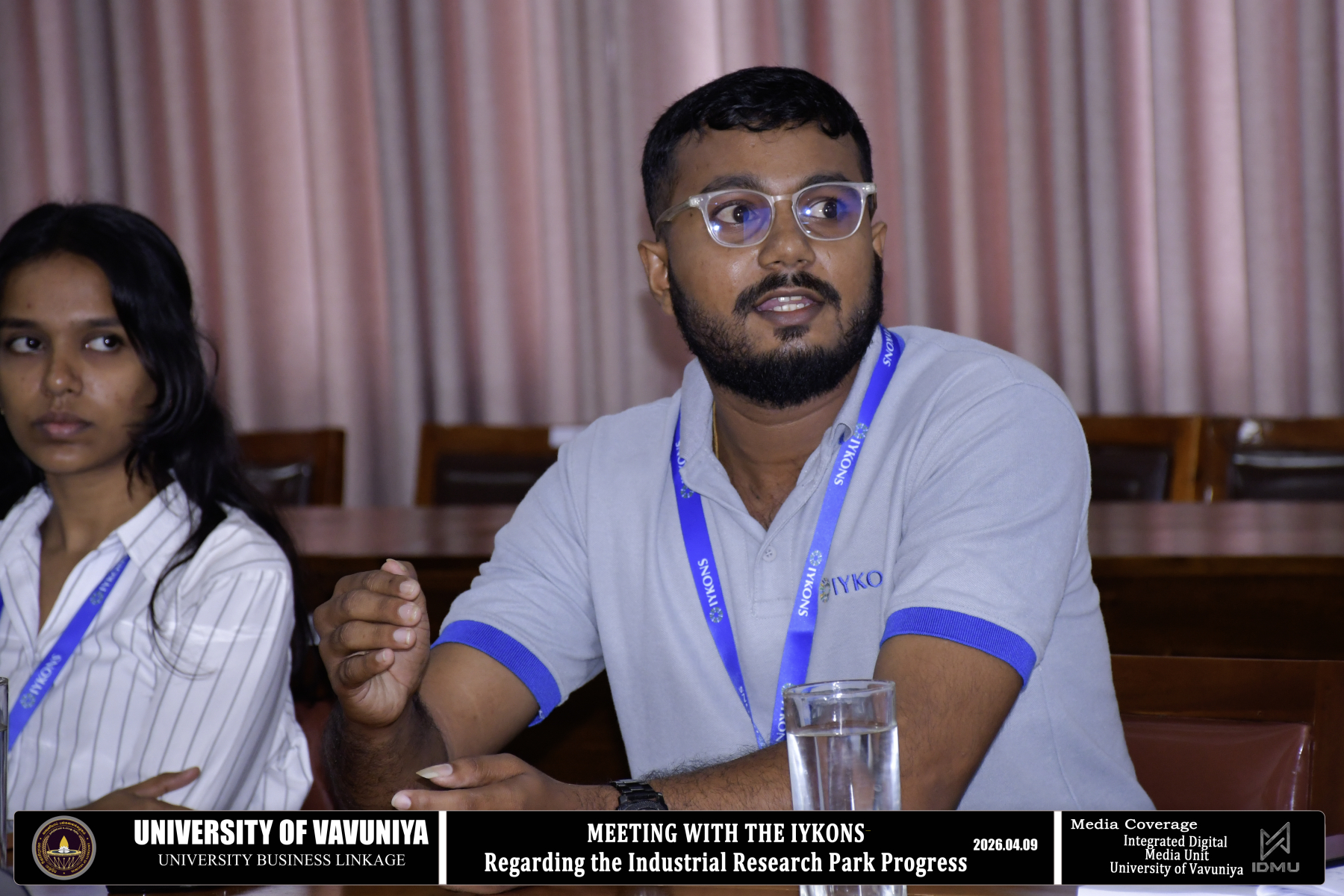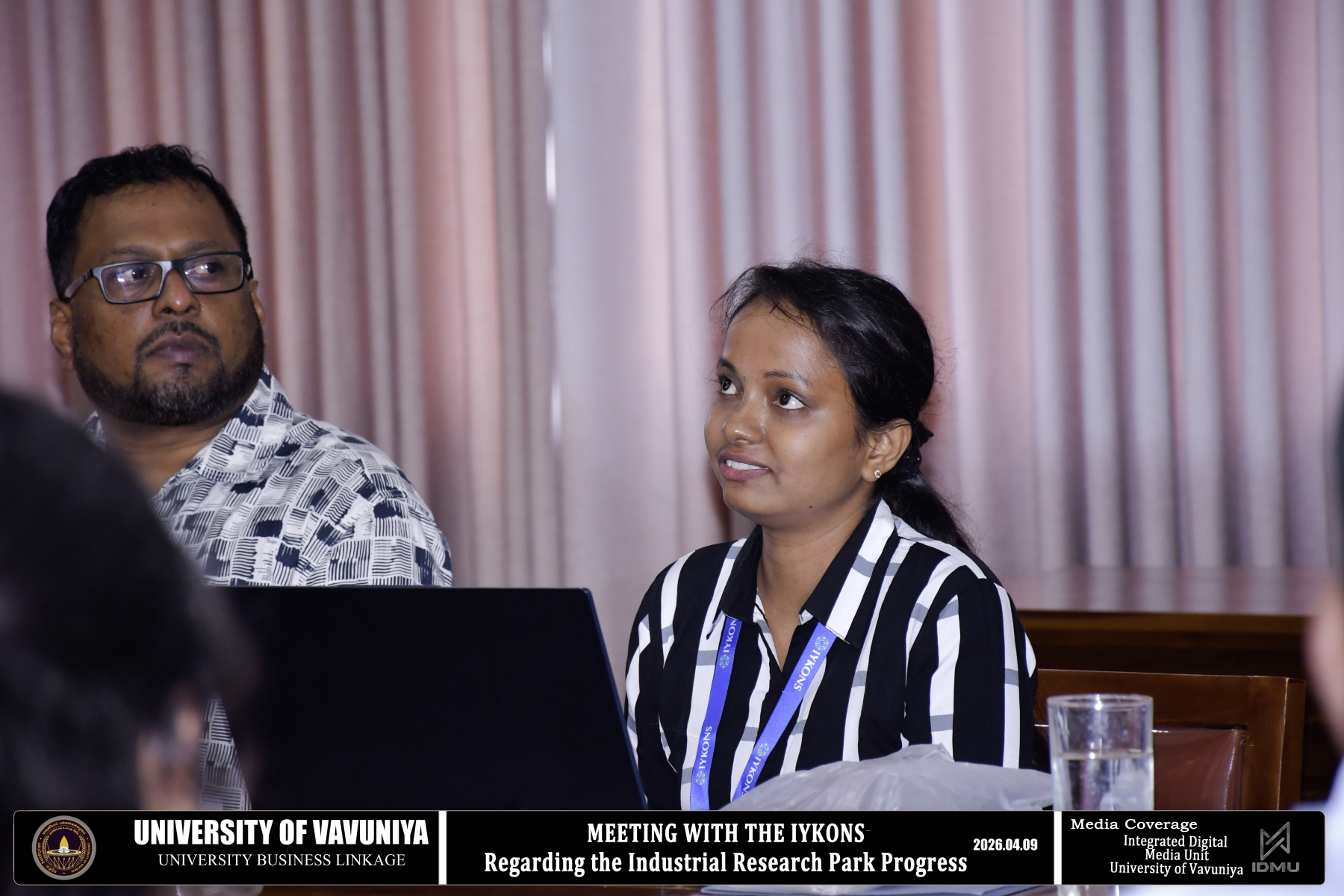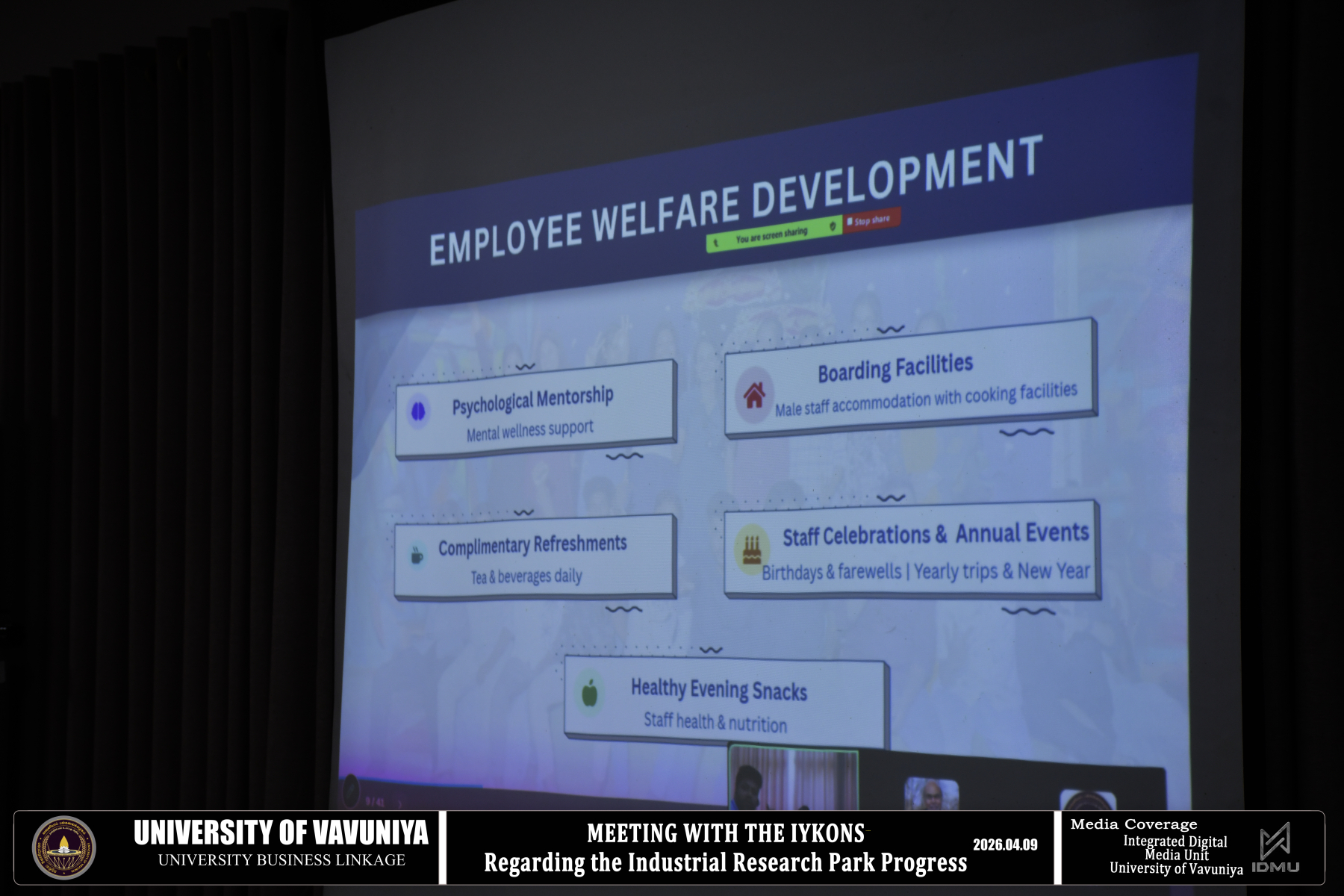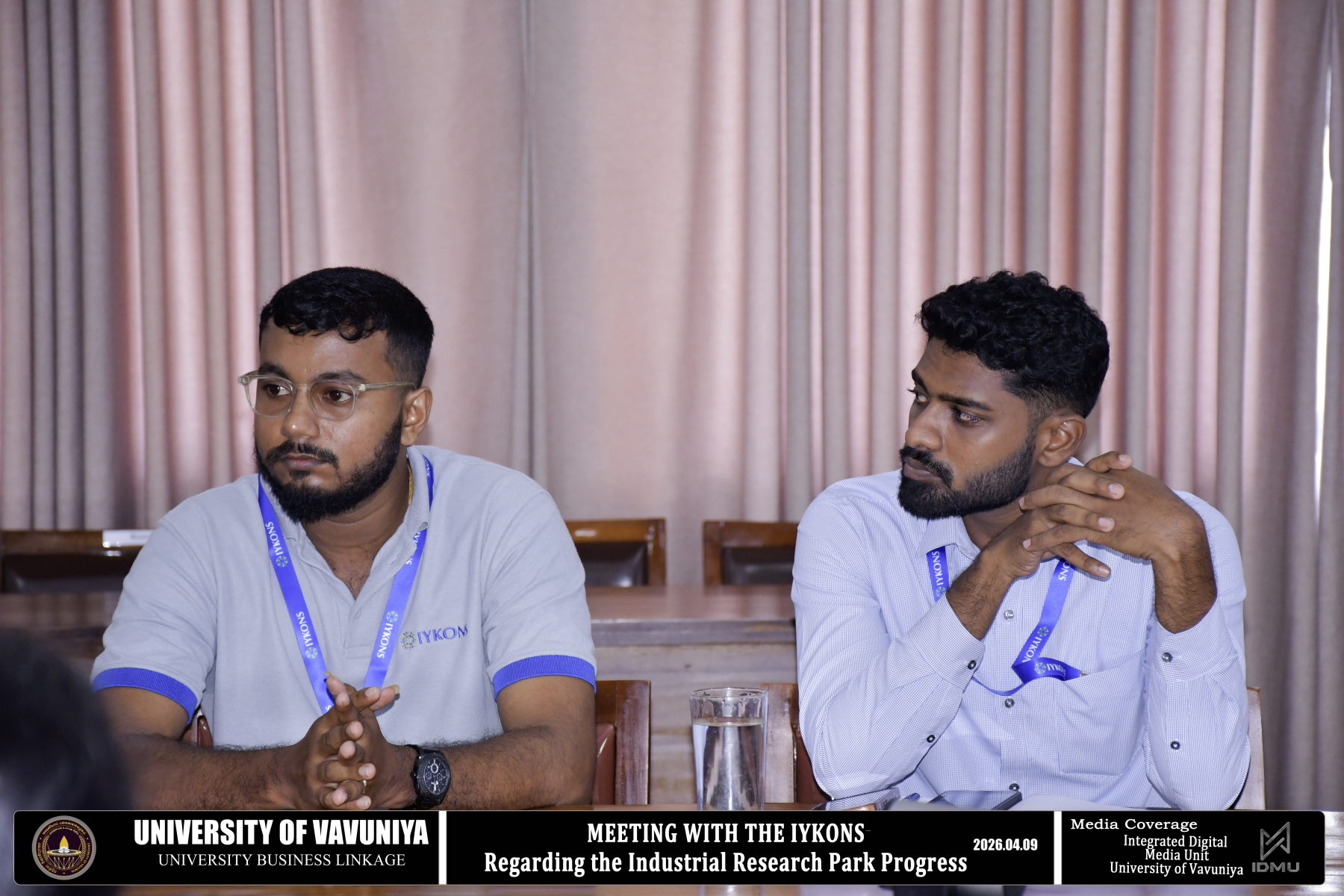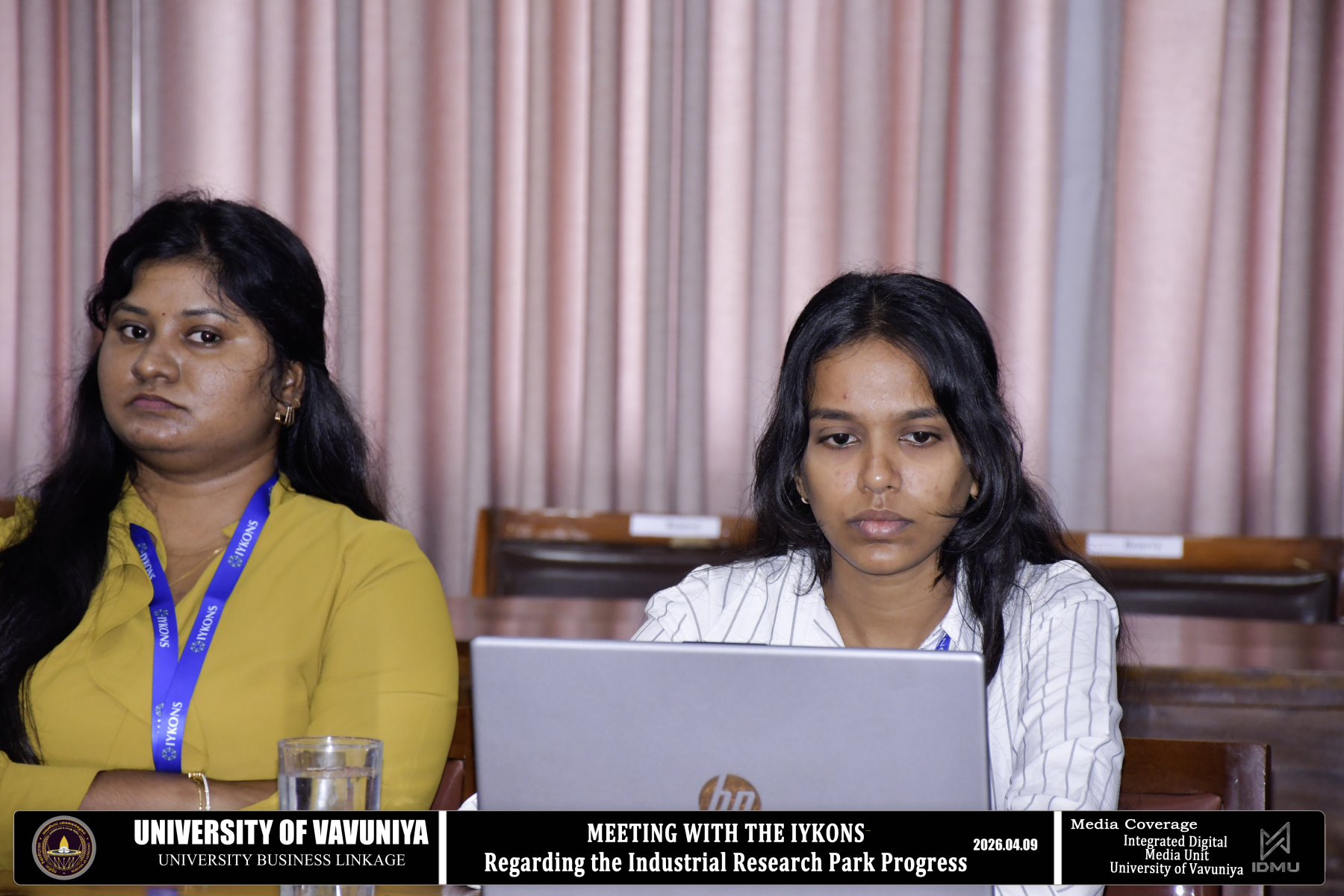




A meeting with representatives from IYKONS regarding the Industrial Research Park was held on 9th April 2026 at 11:30 AM in the Boardroom, IT Centre. The discussion will focus on exploring collaborative opportunities, strategic partnerships, and development prospects related to the establishment and enhancement of the Industrial Research Park. The University Harmony Centre initiatives are actively transforming Sri Lanka’s Northern and Eastern regions by promoting strong collaboration between academia, industry, and strategic partners to drive sustainable economic development. Through the coordinated efforts of the University Business Linkage (UBL), the program provides a unified platform for innovation, entrepreneurship, and regional growth. Guided by international experts and academic leaders, it strengthens university–industry partnerships to accelerate research commercialization, innovation development, and job creation.
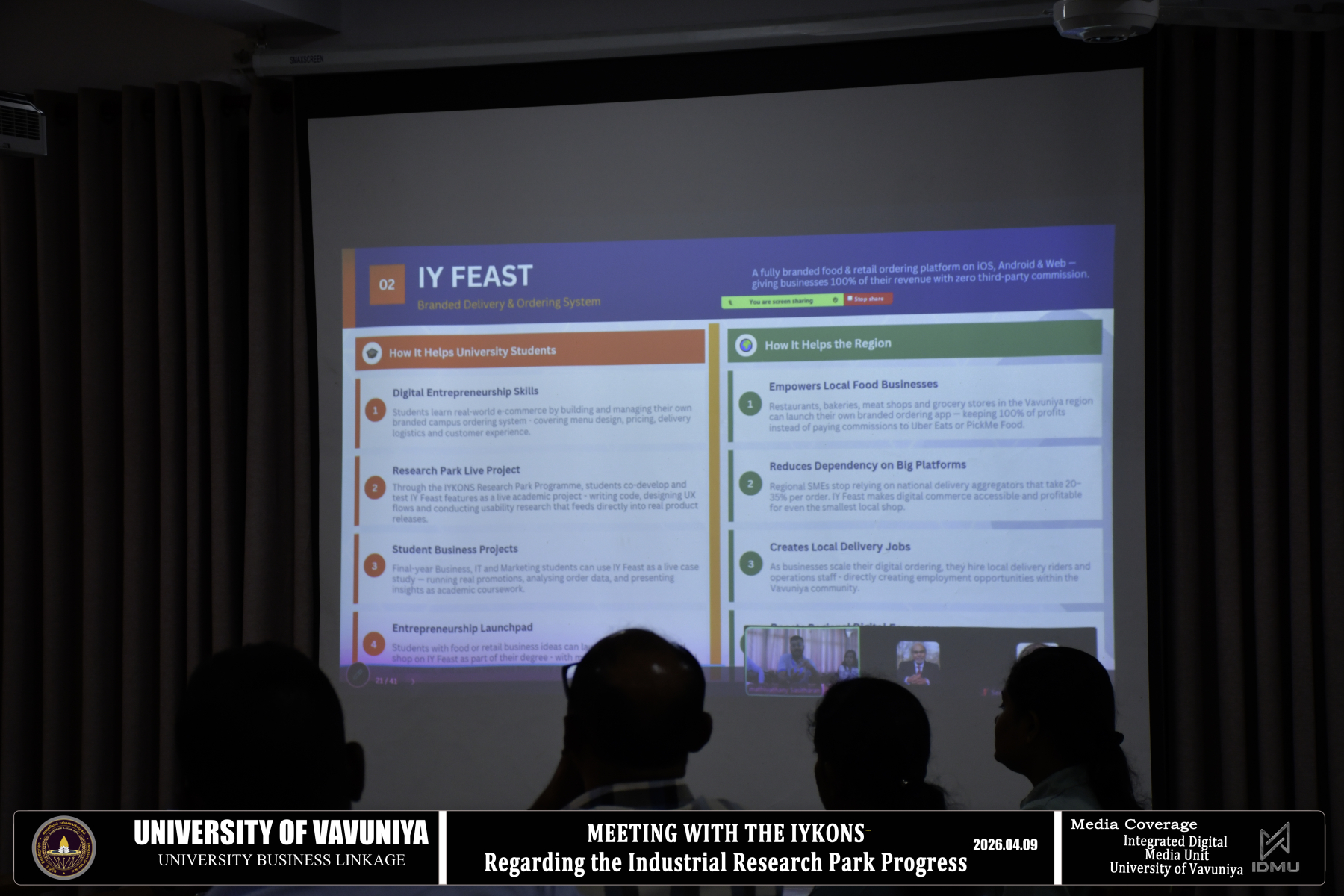
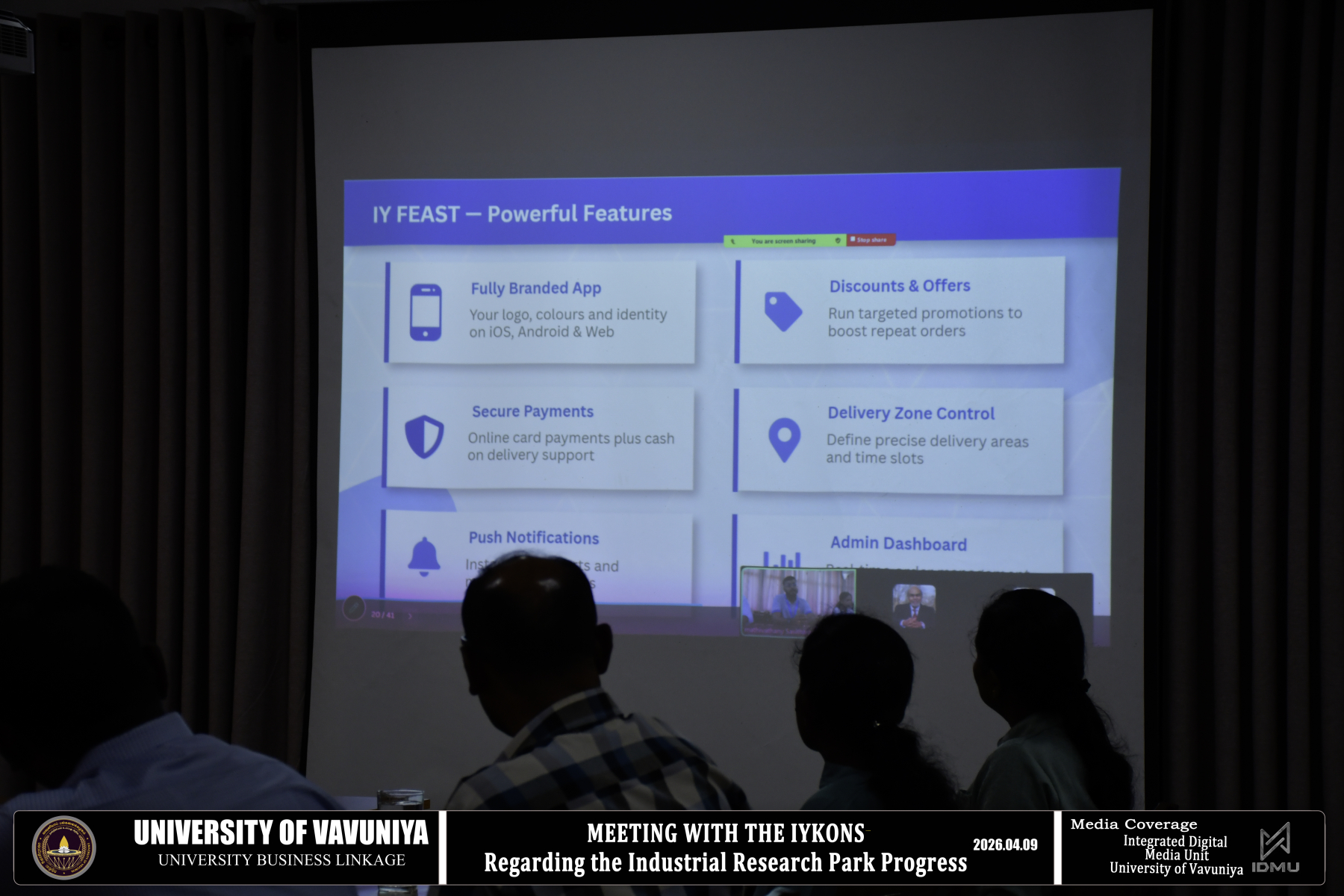
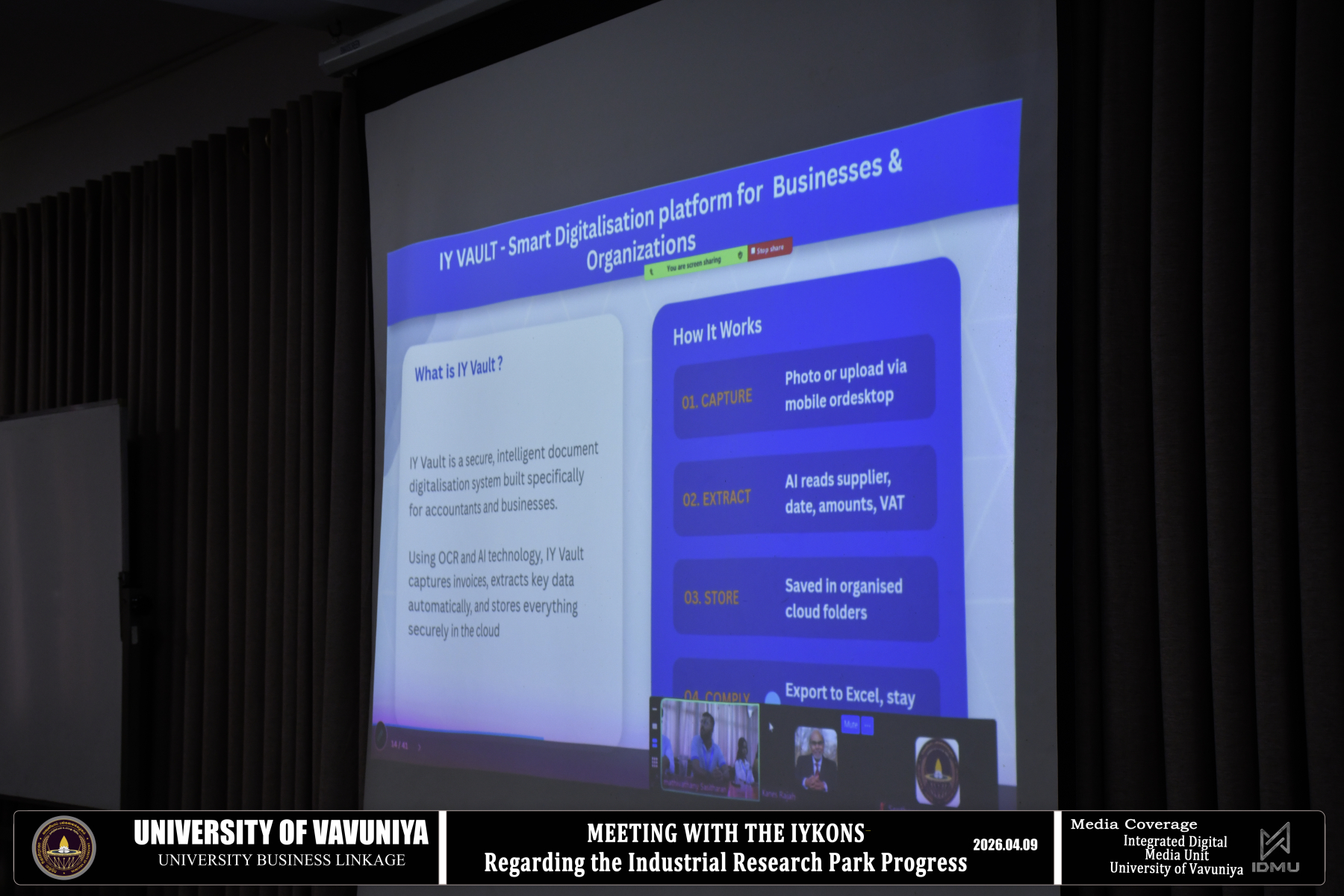
The initiative focuses on practical outcomes by linking research with industry needs, enabling students and graduates to gain valuable experience through internships, training, and employment in sectors such as IT, accounting, business process outsourcing (BPO), and management. It has grown from a small group of interns into a dynamic workforce contributing to multiple industries while building a sustainable innovation ecosystem that supports both regional development and global competitiveness. A strong emphasis is placed on digital innovation, including intelligent document processing systems, digital ordering platforms for SMEs, and advanced project management tools that enhance efficiency, reduce costs, and support digital transformation for local businesses.
In addition, the program promotes interdisciplinary research by initiating at least ten research projects annually that address real-world challenges and strengthen academic and industrial collaboration. Universities are increasingly positioned as engines of innovation and economic development, supported by continuous engagement, training, and knowledge-sharing that develop a future-ready workforce with both technical and entrepreneurial skills. Furthermore, a centralized digital ecosystem is being developed to connect research, industry, and innovation through databases, innovation hubs, and collaborative platforms, while carefully integrating artificial intelligence systems to improve accuracy and decision-making. Key research areas include smart agriculture and water management, climate and urban heat mapping, GIS-based environmental analysis, and sustainable resource optimization, all aimed at enhancing productivity, improving resource efficiency, and supporting environmentally sustainable development.