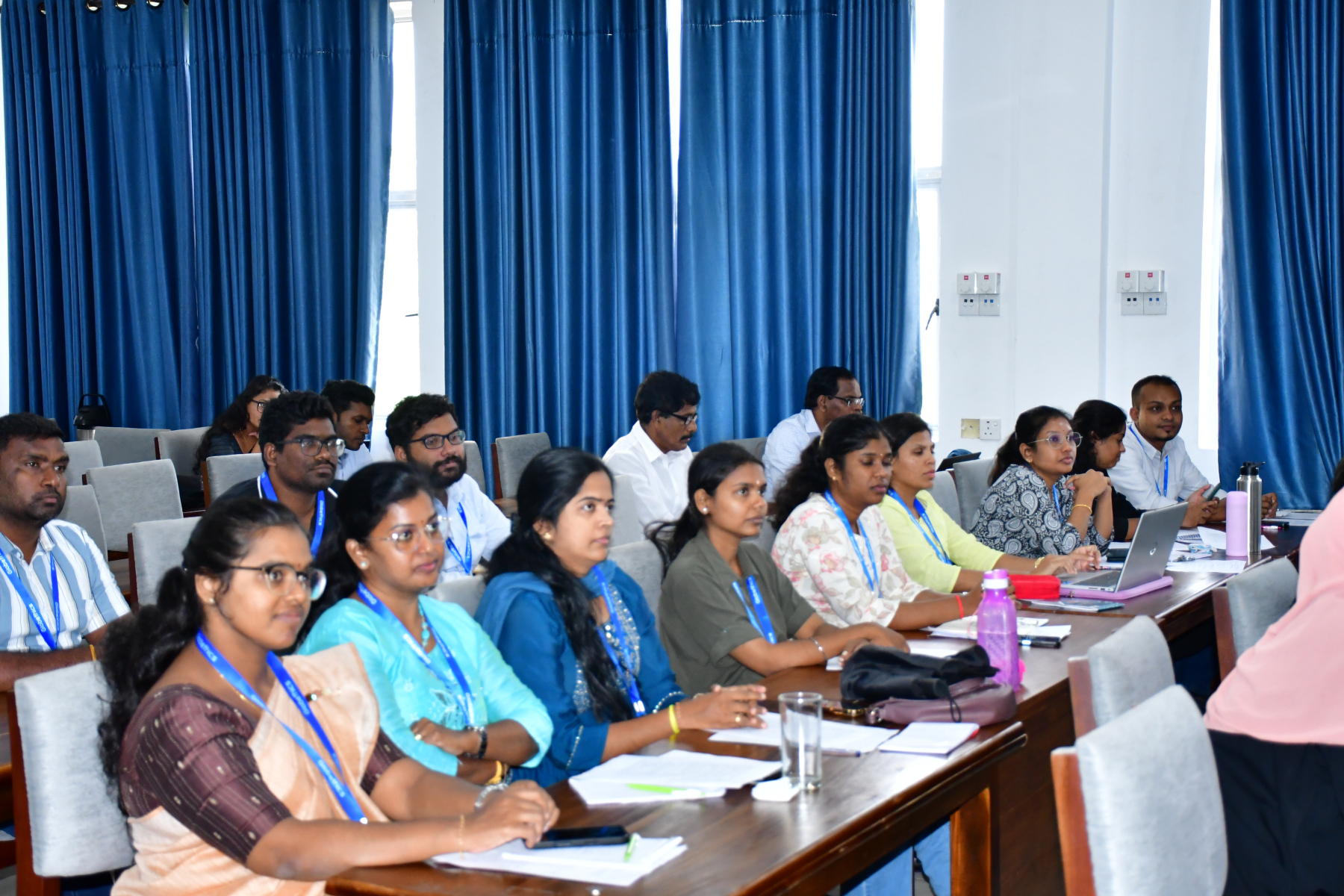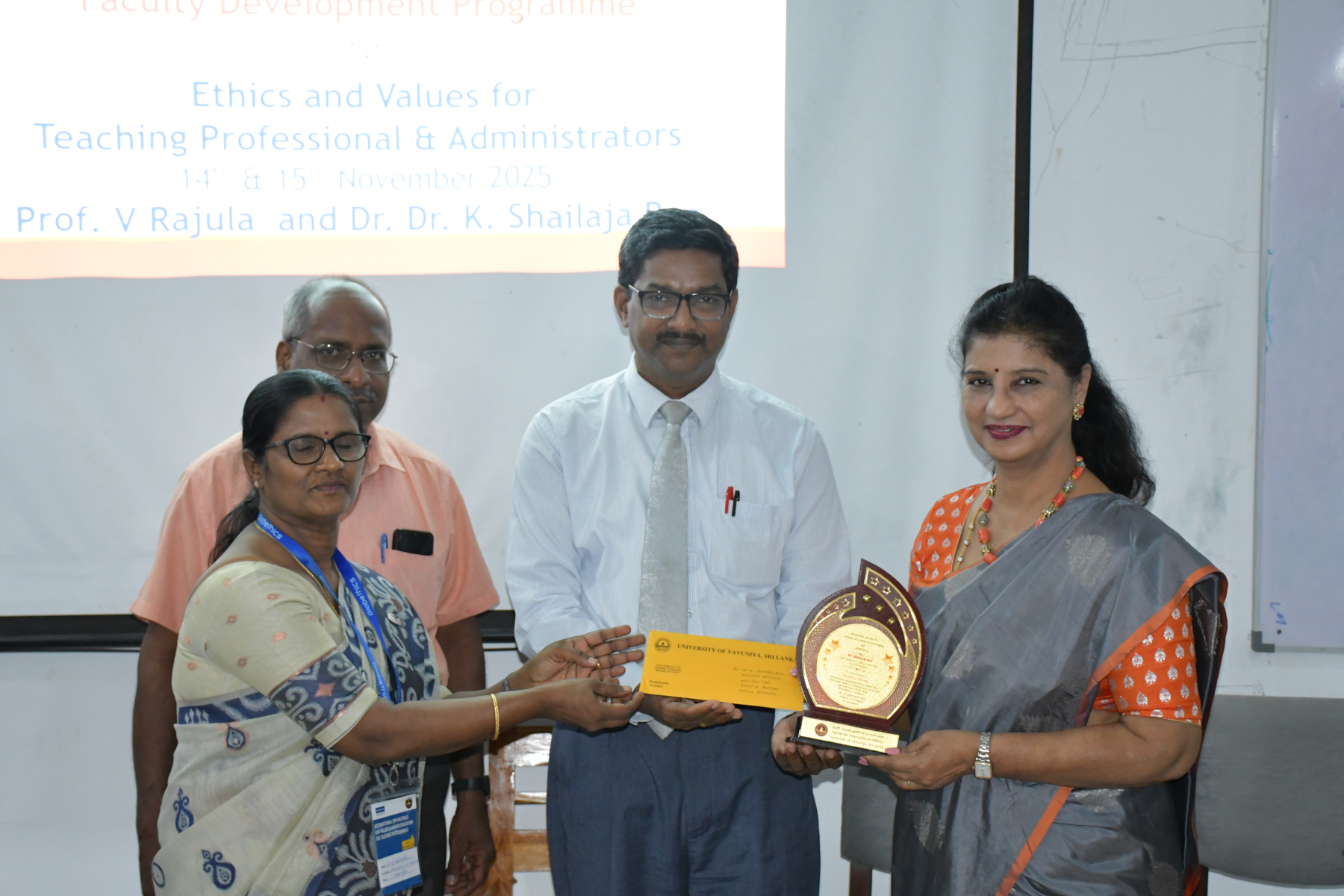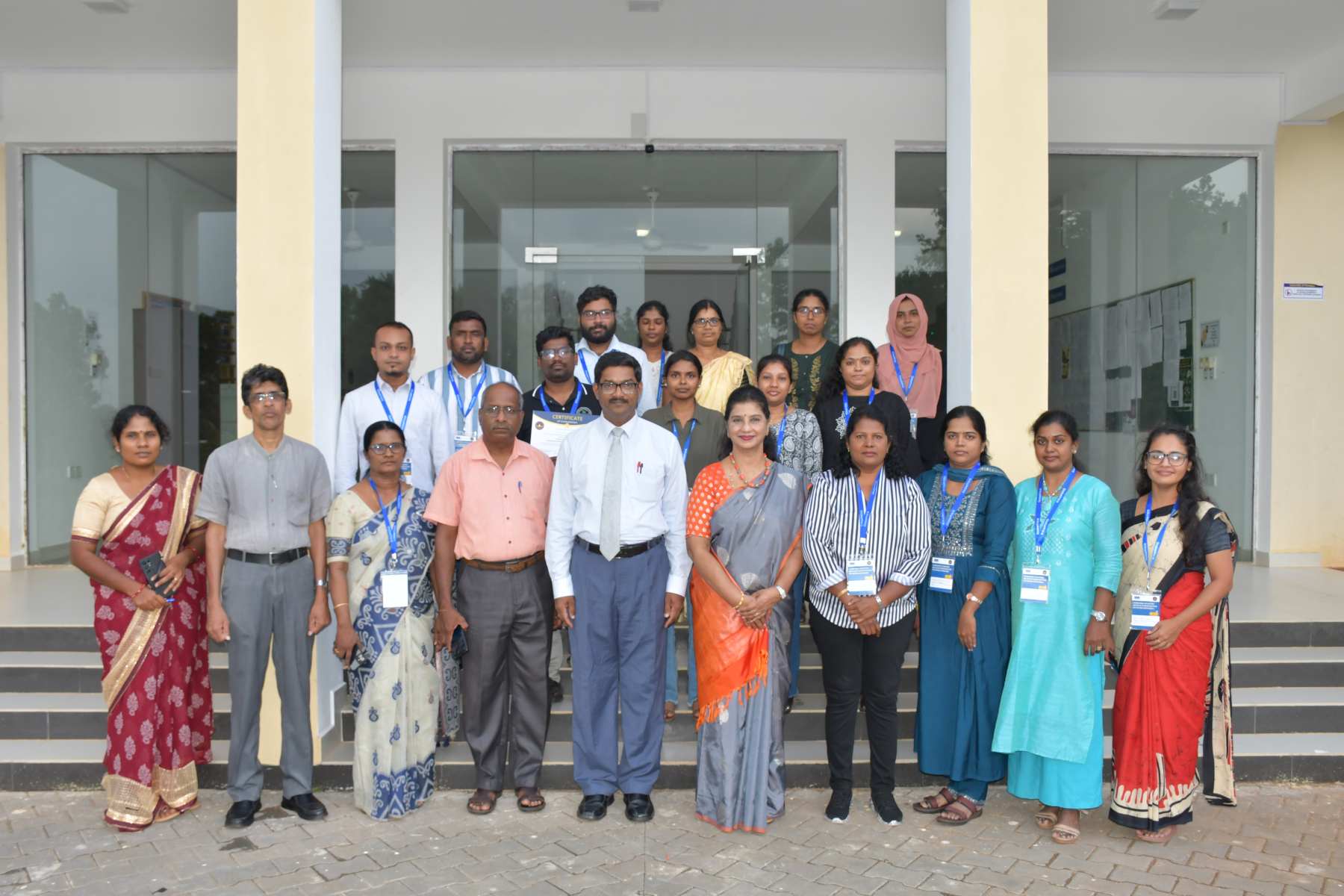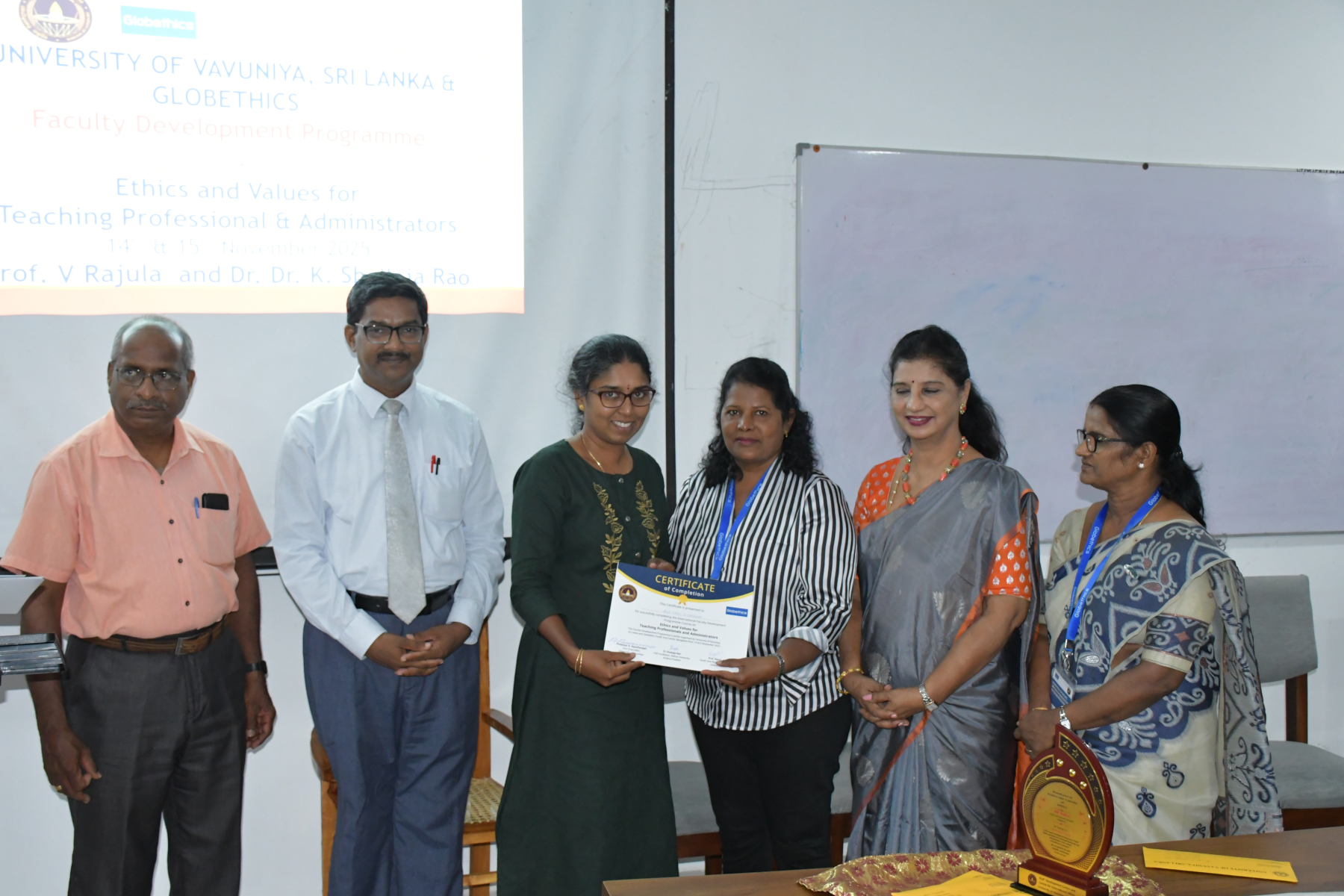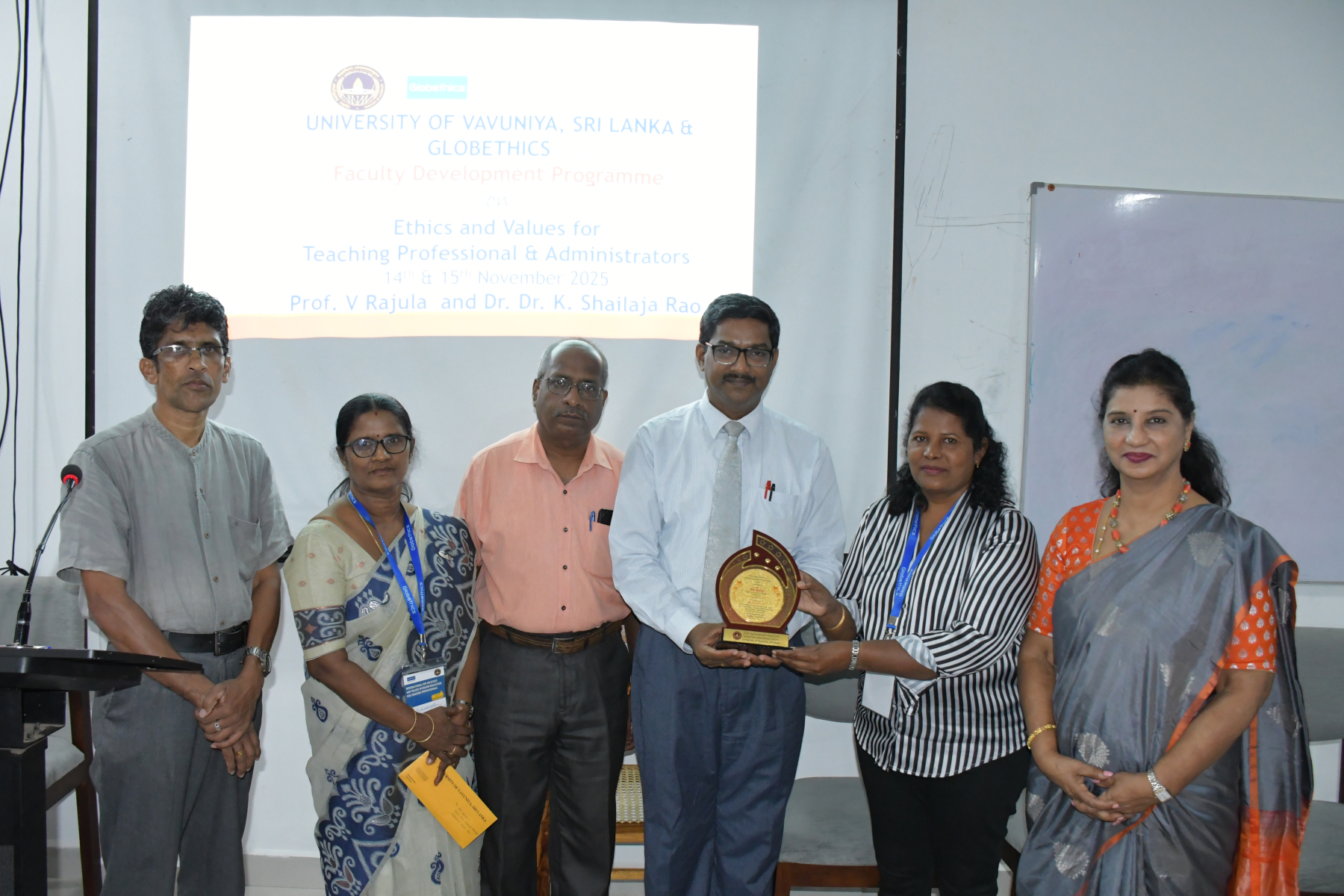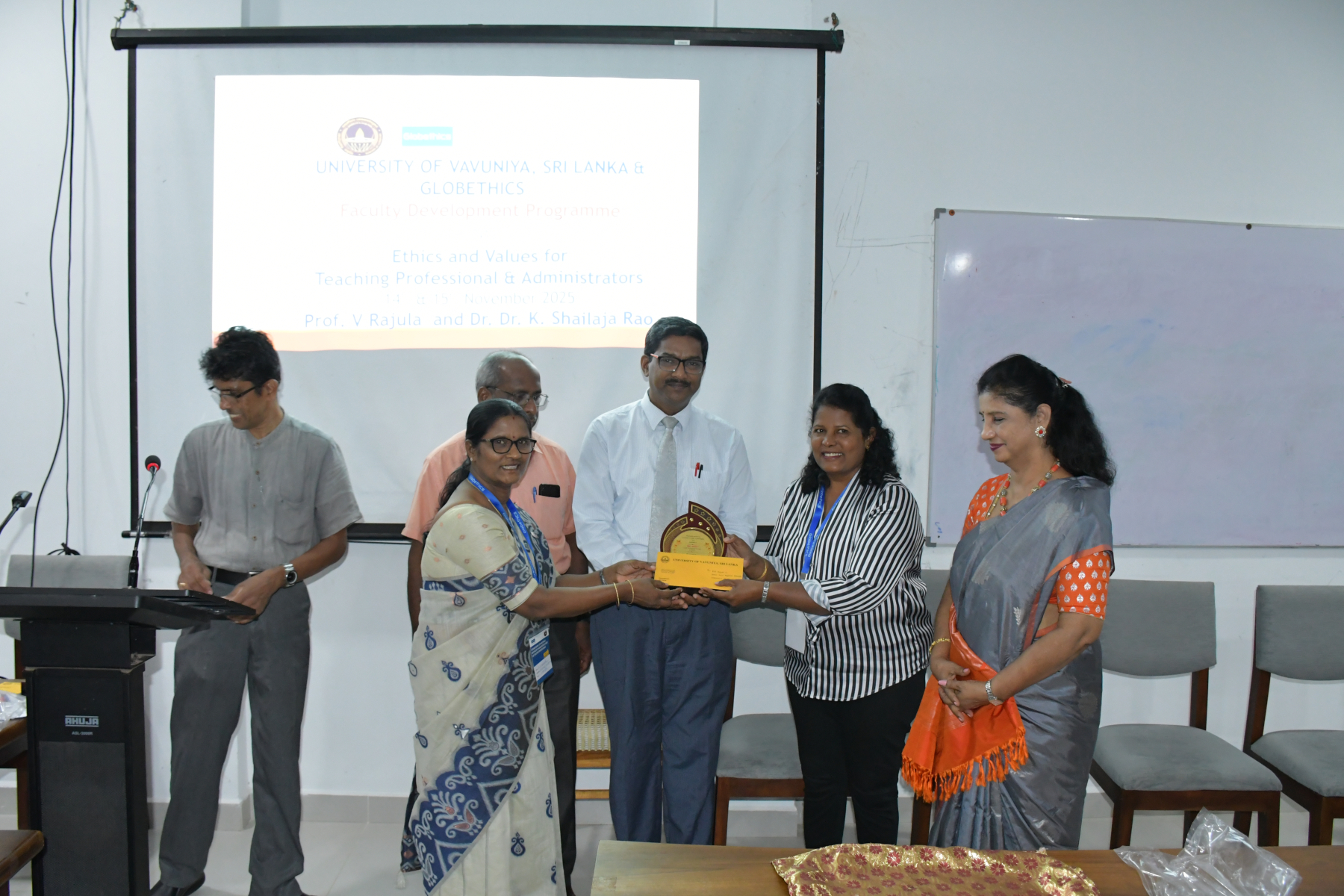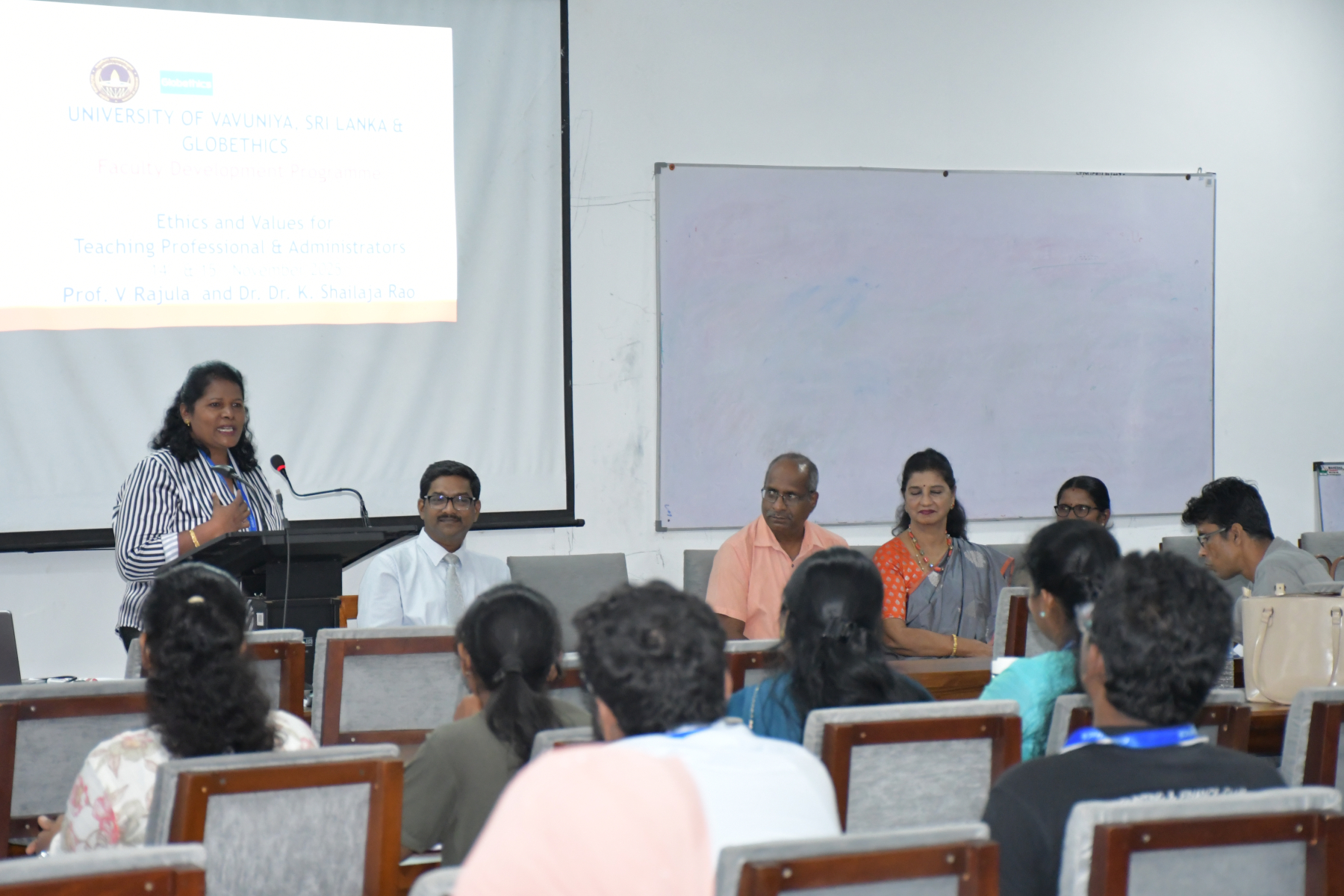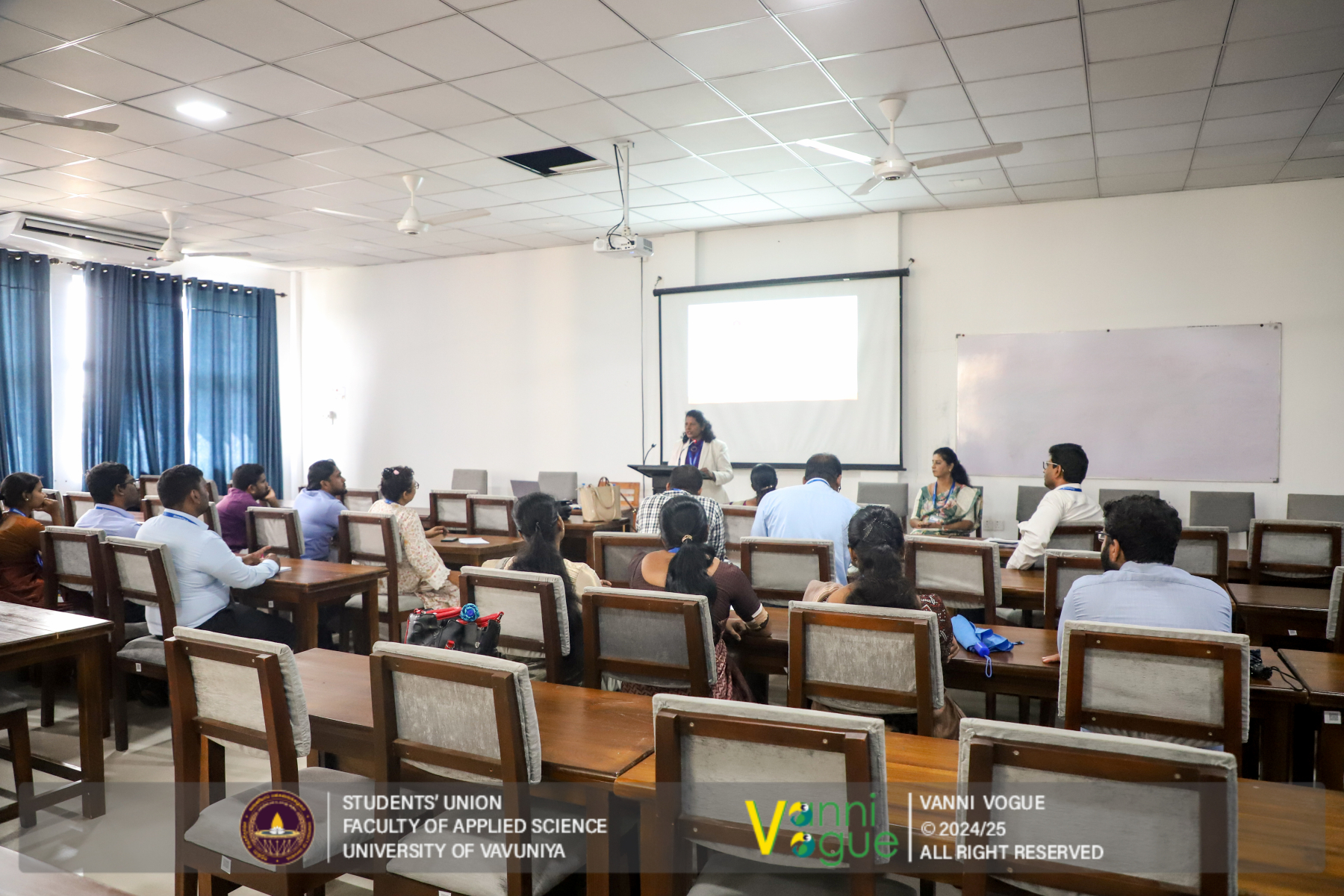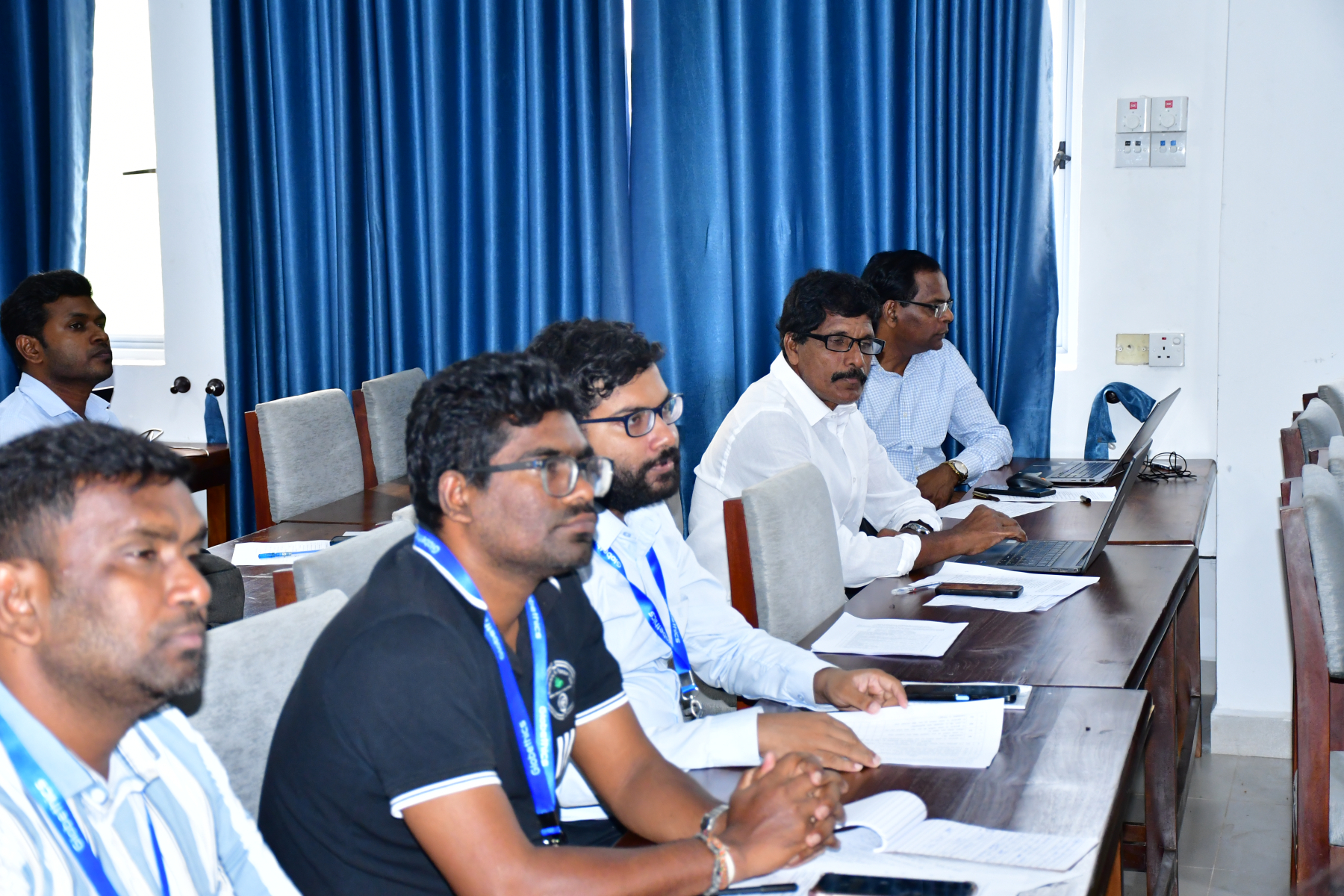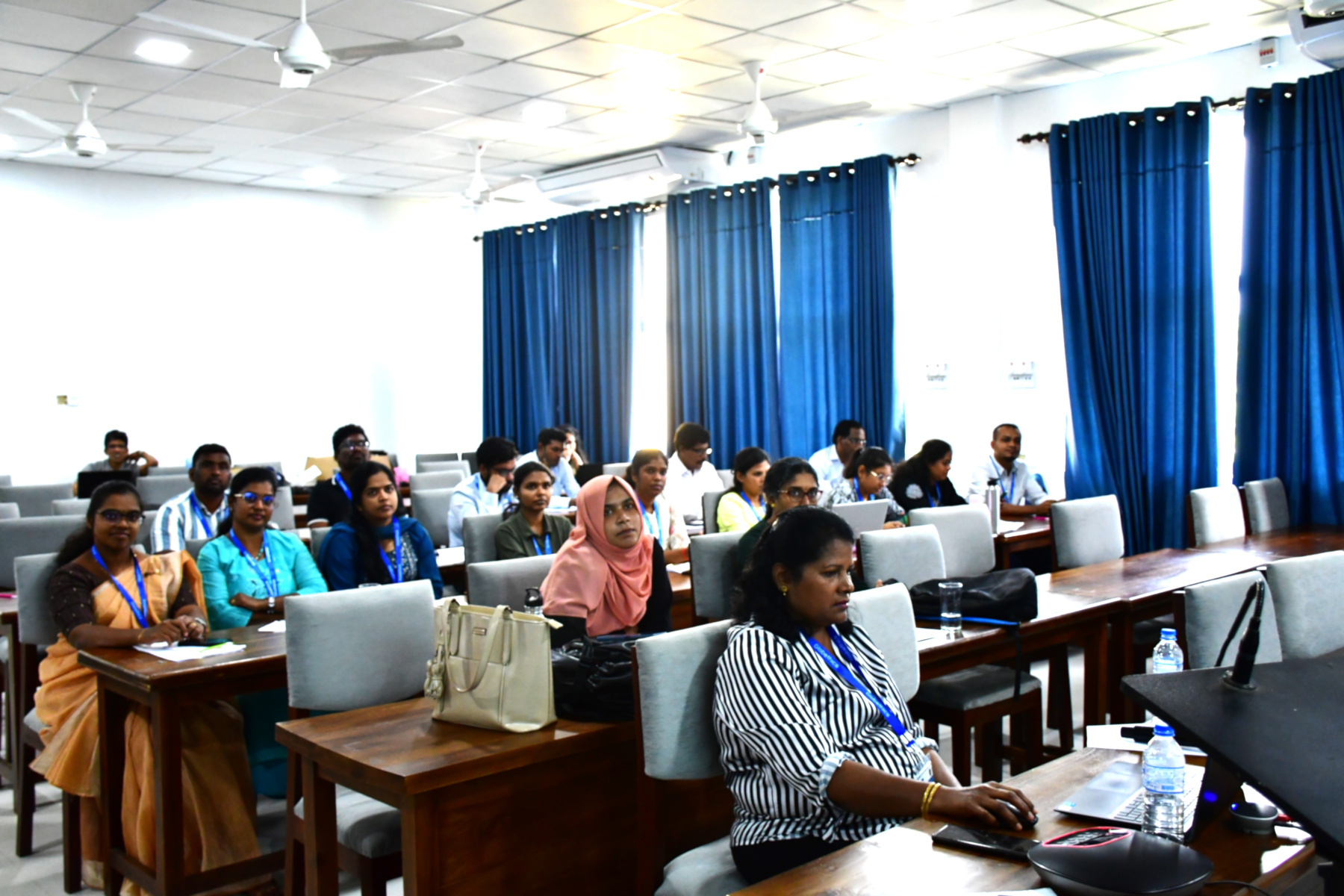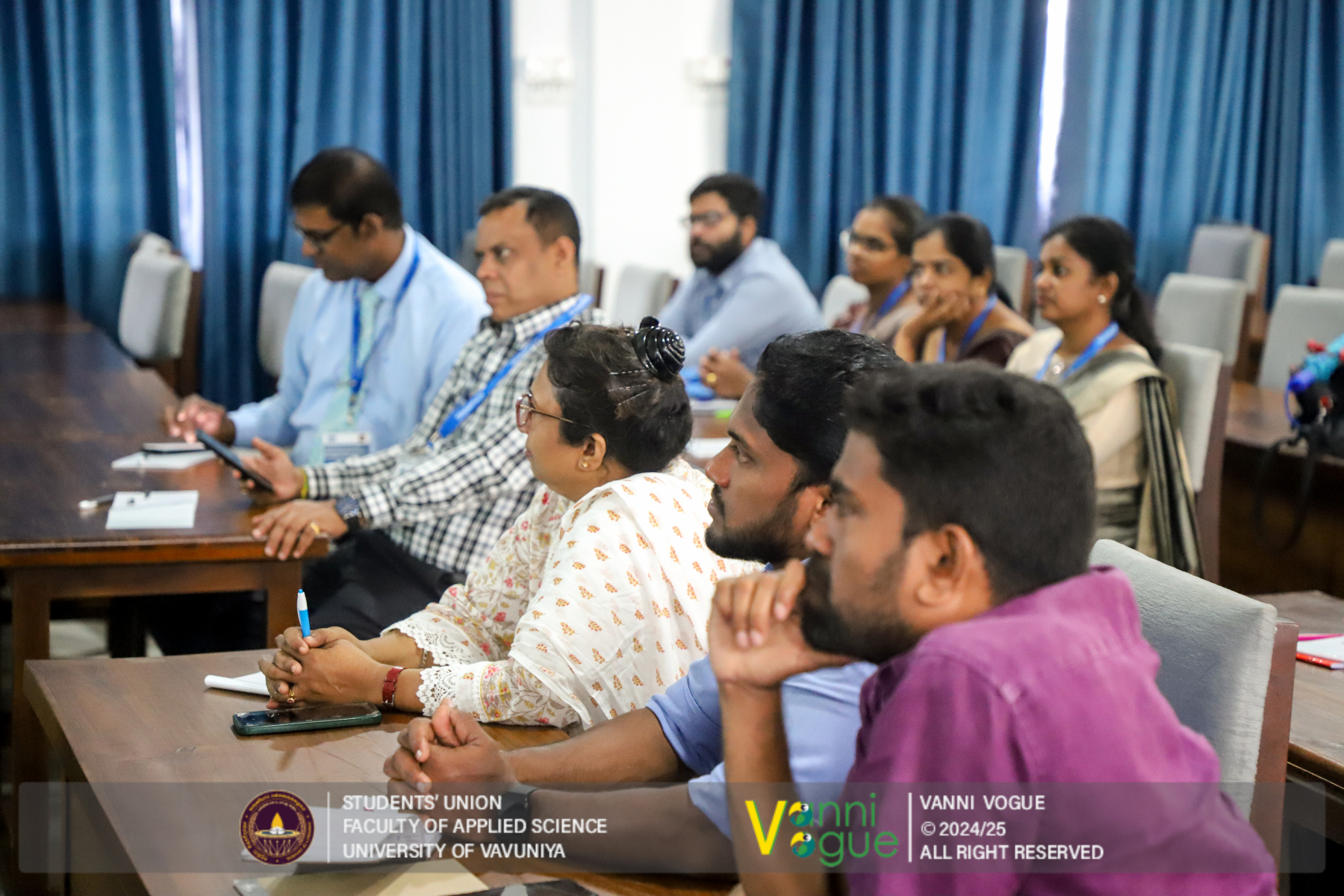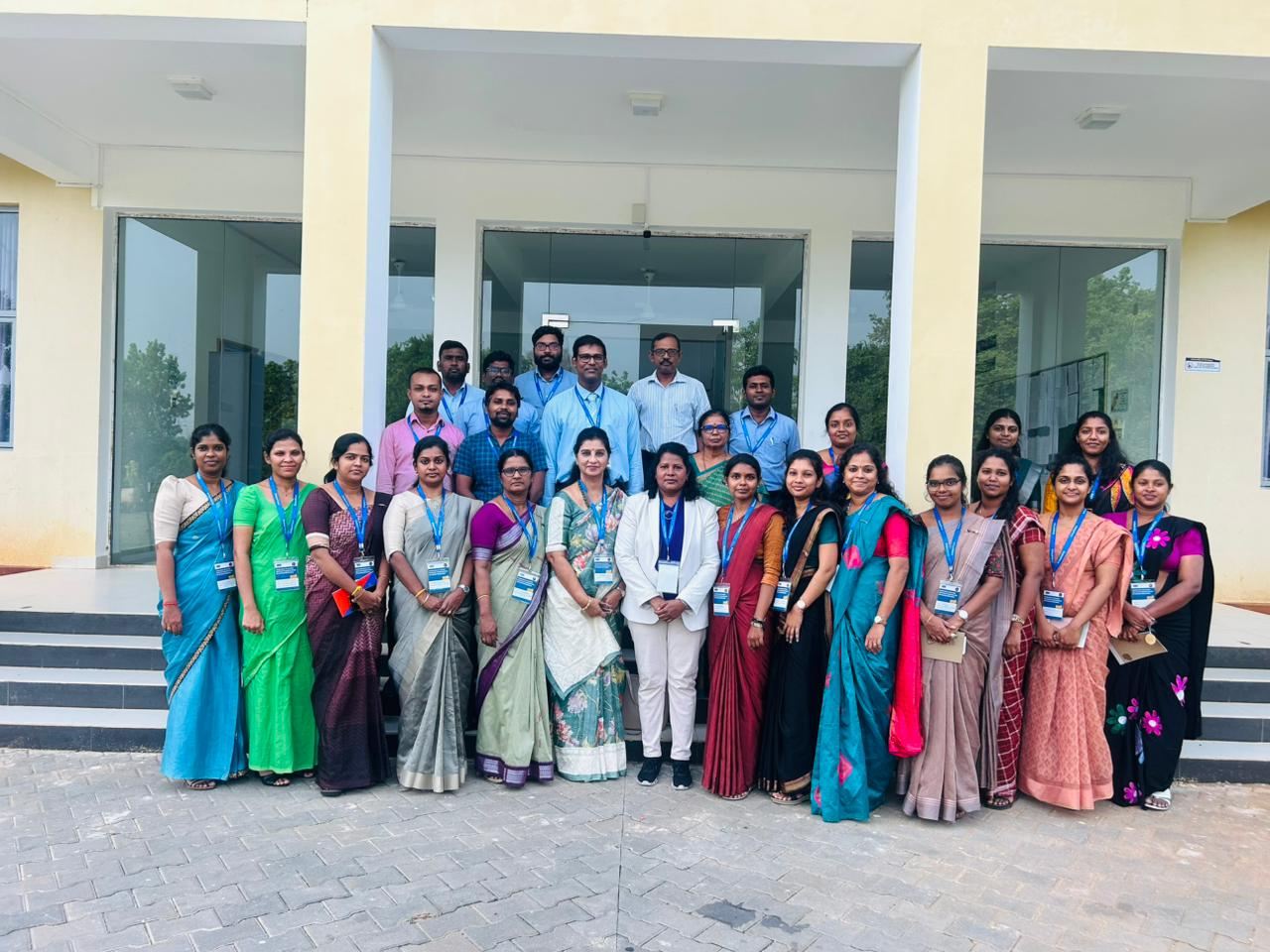

The Globethics South Asia Centre, Bangalore, organised a two-day Faculty Development Programme on Ethics in collaboration with the Staff Development Centre and the Centre for International Affairs of the University of Vavuniya. The programme took place at the Project Management Hall (PMH 1) on 14th and 15th November 2025. Sessions ran from 9.00 a.m. to 4.00 p.m. each day.
Resource Persons
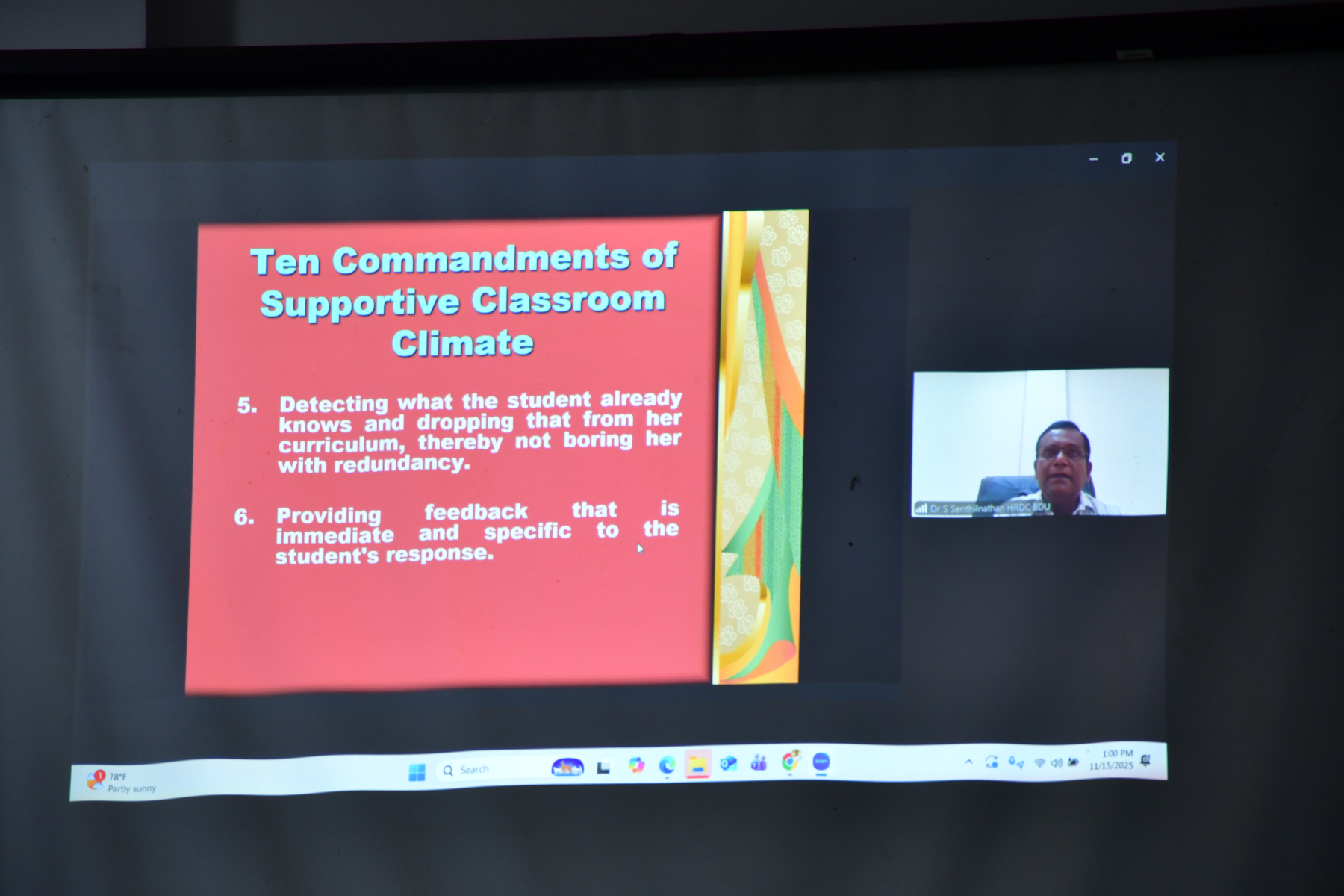
Three esteemed resource persons led the Faculty Development Programme on Ethics. Prof. V. Rajula, South Asia Regional Manager at Globethics, Bangalore, was one of them. Dr. K. Shailaja Rao, FDP Facilitator at Aditya University, Andhra Pradesh, also facilitated the sessions. In addition, Dr. S. Senthilnathan, Programme Director at the UGC–Malaviya Mission Teacher Training Centre and Professor of Educational Technology at Bharathidasan University, Tamil Nadu, contributed as a key resource person.
Inauguration
Mr. G.R.M. Gamlath, Director of the Staff Development Centre, delivered the inaugural remarks on Day 1. Dr. K. Kalainathan, Director of the Centre for International Affairs, then addressed the gathering. He highlighted the relevance of ethics in higher education. Subsequently, Senior Prof. A. Atputharajah, Vice-Chancellor of the University of Vavuniya, delivered the Special Address. He emphasised the need for ethical conduct and professionalism in academia.
Day 1 Sessions
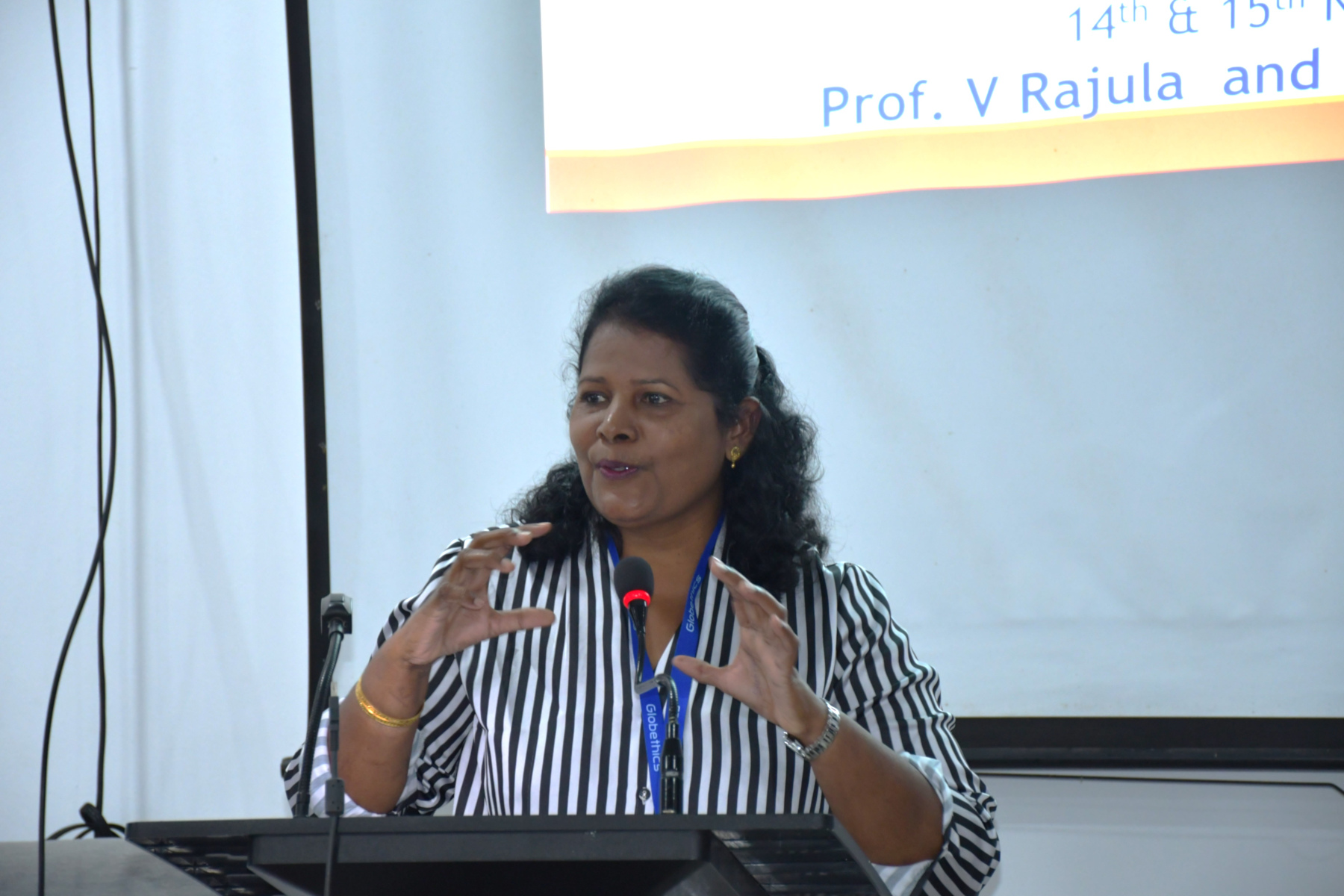
Dr. Shailaja Rao and Prof. V. Rajula conducted the morning session on the topic “Understanding the Ethical Purpose of Educational Excellence vs Institutional Excellence.” They explained the basic ideas of ethics in higher education. They also discussed why ethics matters for teachers and administrators. Participants learned about different ethical foundations and dimensions. Moreover, they explored how ethical alignment helps create a trustworthy academic environment. The facilitators further highlighted the role of leadership in practicing honesty, fairness, and responsibility. The session concluded with examples of global best practices in ethical frameworks.
The second session focused on “Building High-Performing Ethical Teams in Higher Education.” Participants learned the key features of an ethical team. These include good communication, shared values, responsibility, and teamwork. The facilitators explained how to set ethical goals and delegate tasks responsibly. They also discussed common challenges such as conflict and pressure. Furthermore, they offered practical solutions to overcome these issues using real-life examples.
Day 2 Sessions
Dr. S. Senthilnathan conducted the opening session on Day 2. He covered the Model Code of Educator Ethics. This was followed by an activity-based exploration of the PERMA Profiler. The session then concluded with a discussion on ethical dilemmas in higher education.
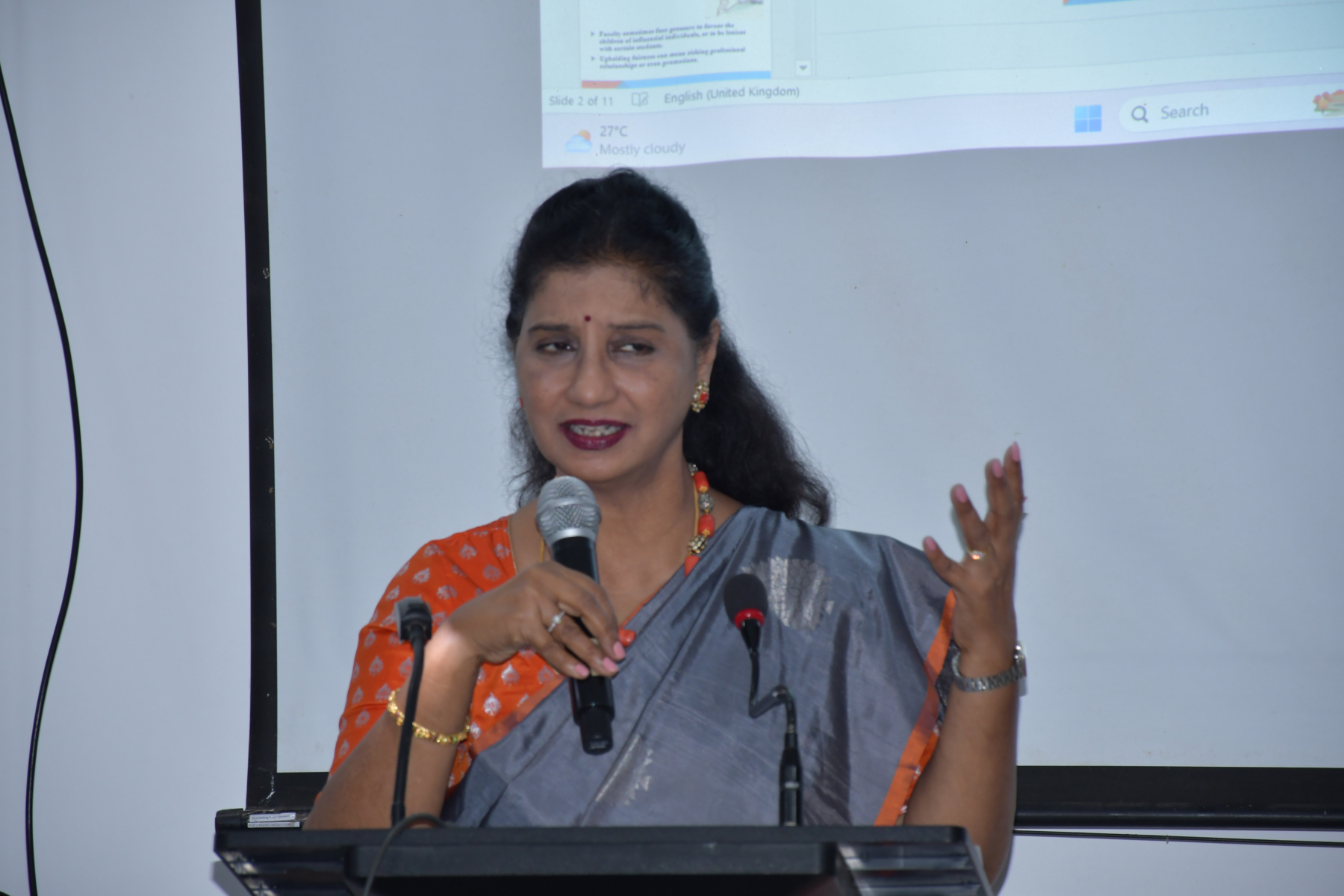
Dr. Shailaja Rao led the evening session on “Navigating Ethical Dilemmas in Higher Education.” She explained that ethical dilemmas act like mirrors. They reveal the values we uphold as educators. She noted that countries like India and Sri Lanka have a rich educational history. Consequently, they must set an example by promoting integrity and accountability. She reminded participants that a university’s greatness lies in the ethical strength of its people.
Conclusion
The Faculty Development Programme on Ethics concluded with participant reflections and closing remarks. Overall, the workshop strengthened ethical awareness and leadership among the academic community at the University of Vavuniya.